Episode 6
Cascodes: Raising Output Resistance
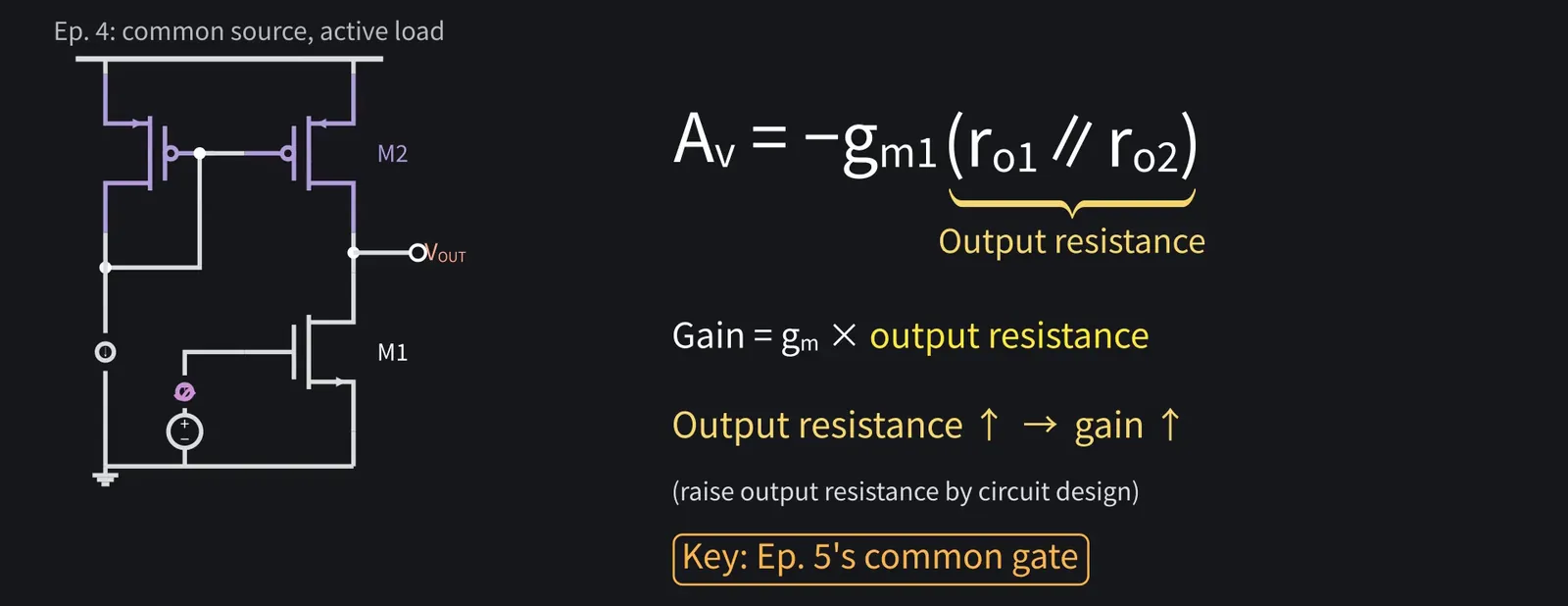
How can we get more gain from the same 1.8 V supply? Stack transistors to build a cascode, then examine the headroom tradeoff.
1Intro: more gain from a 1.8 V supply
Zundamon
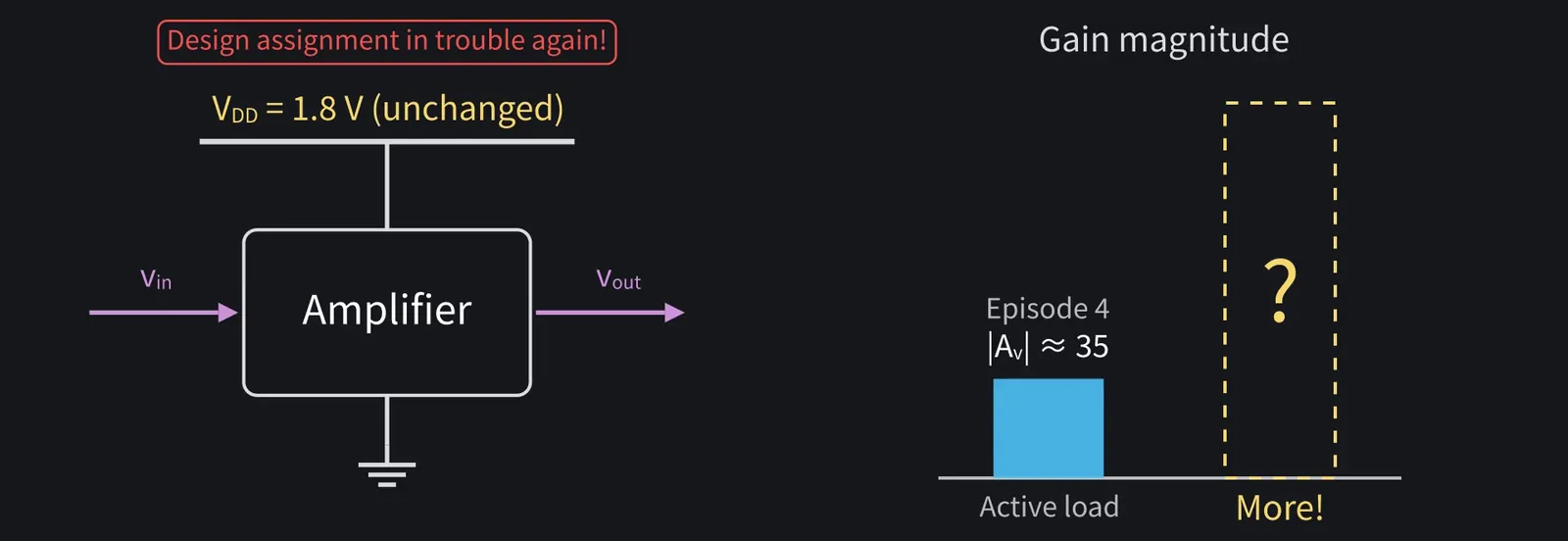
My design assignment's in trouble again, nanoda! I want more gain without changing the 1.8 V supply.

Zundamon
Let's do it, nanoda! This time we solve the assignment!

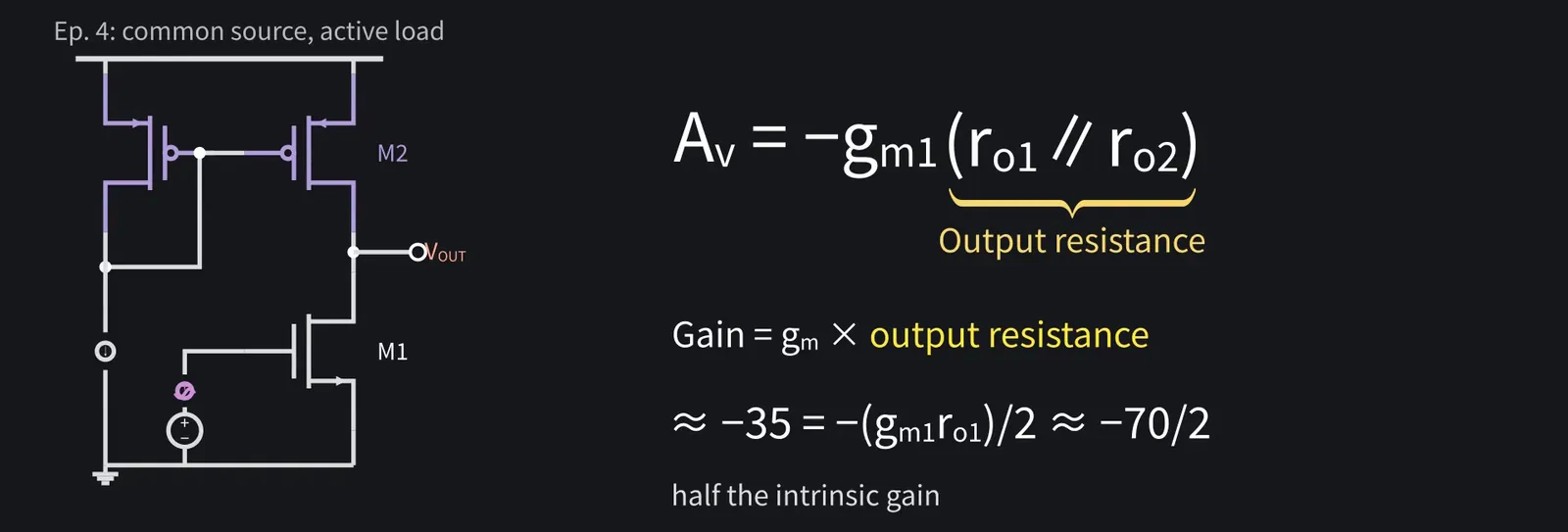
2Review: the intrinsic-gain limit
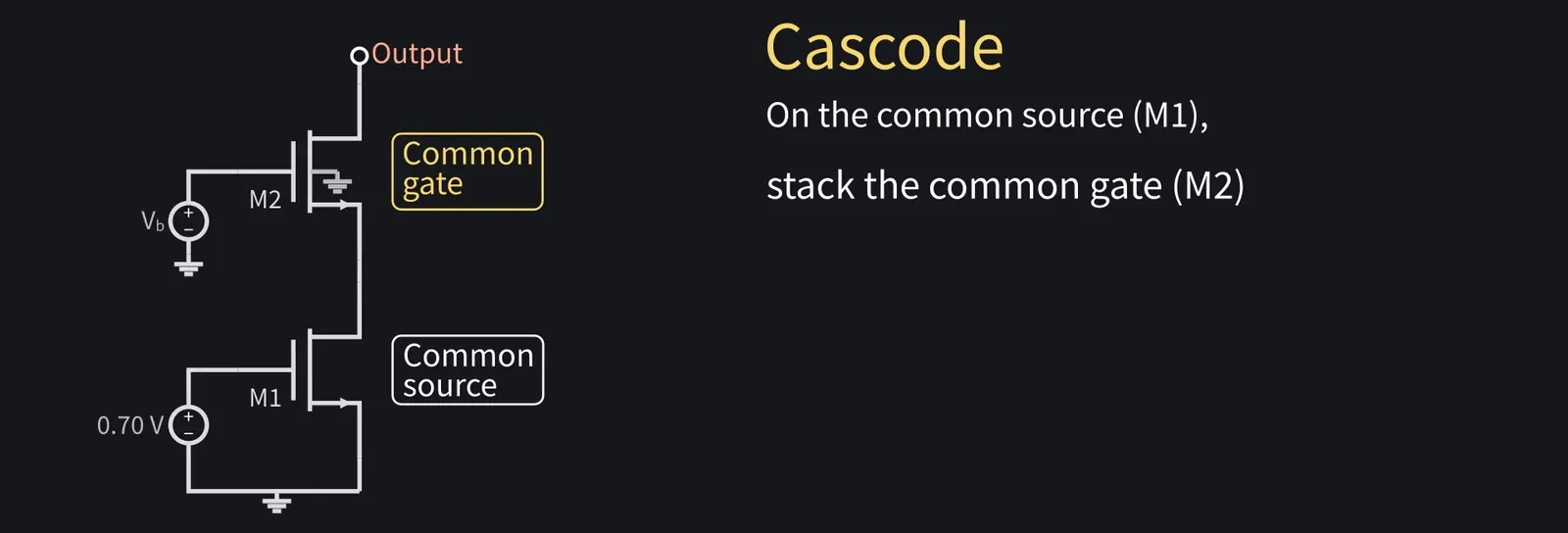
3The cascode circuit
4Why output resistance increases
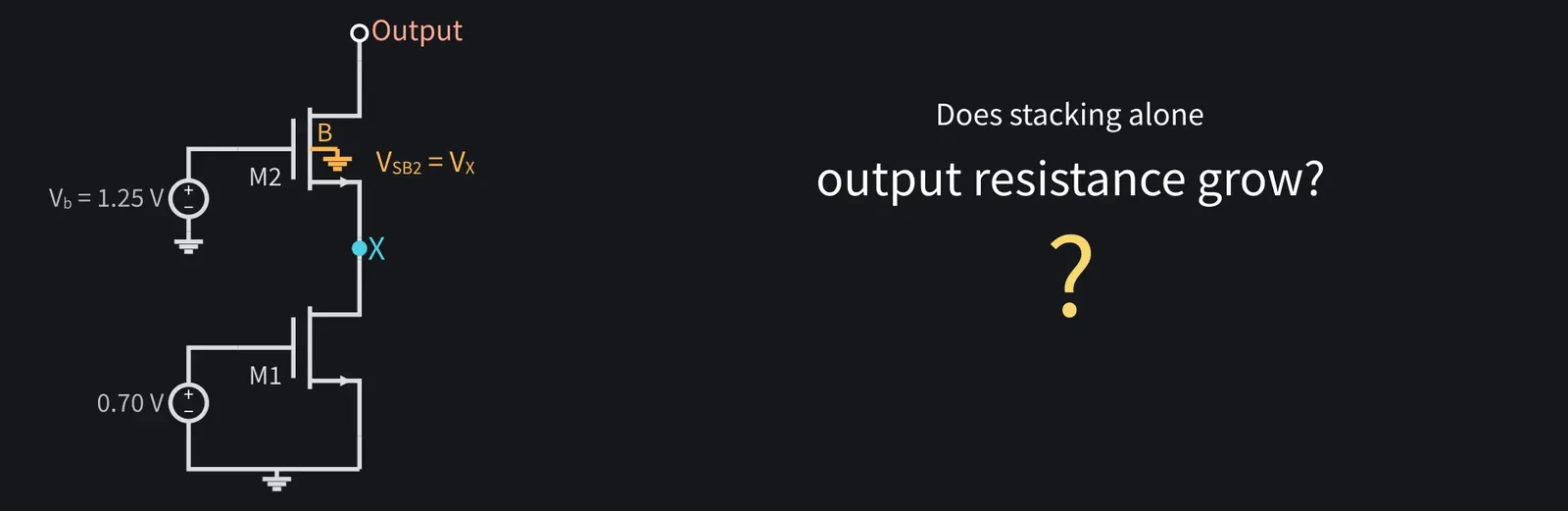
ZundamonQuestion
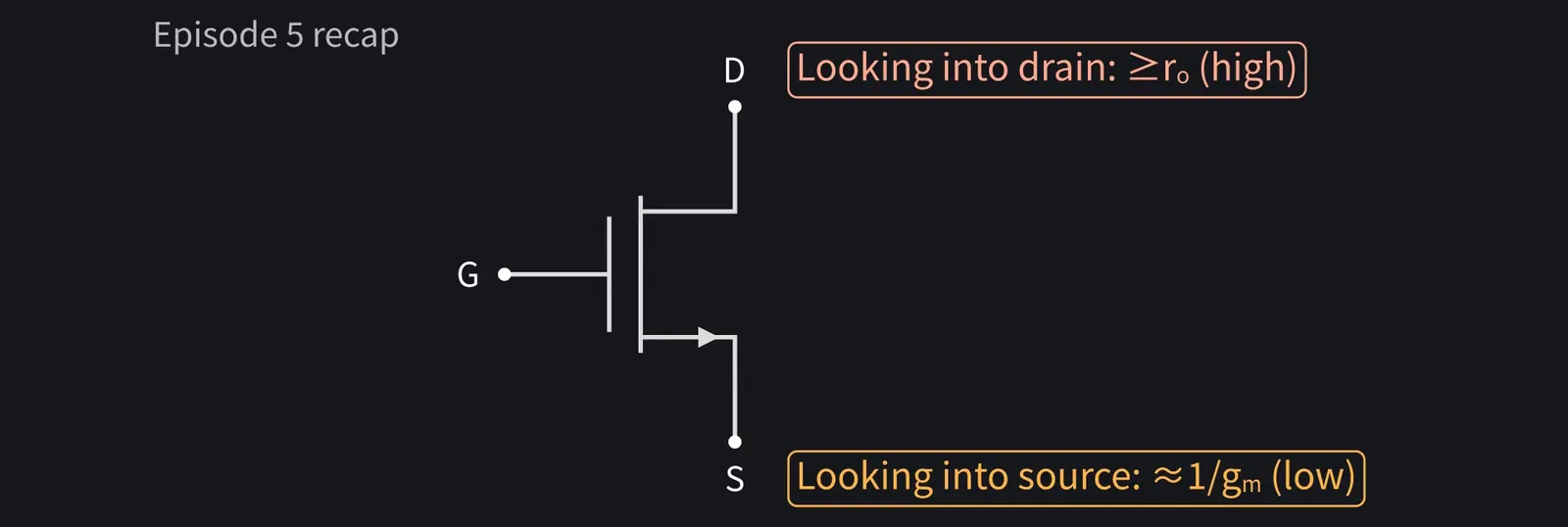
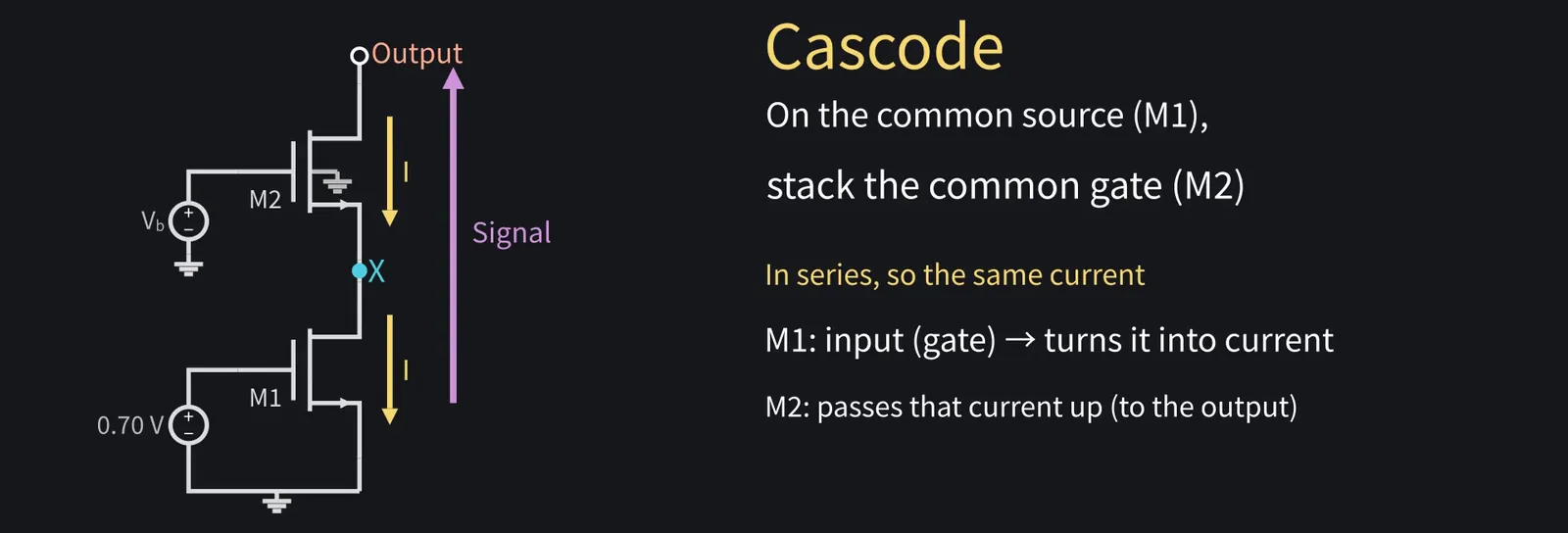
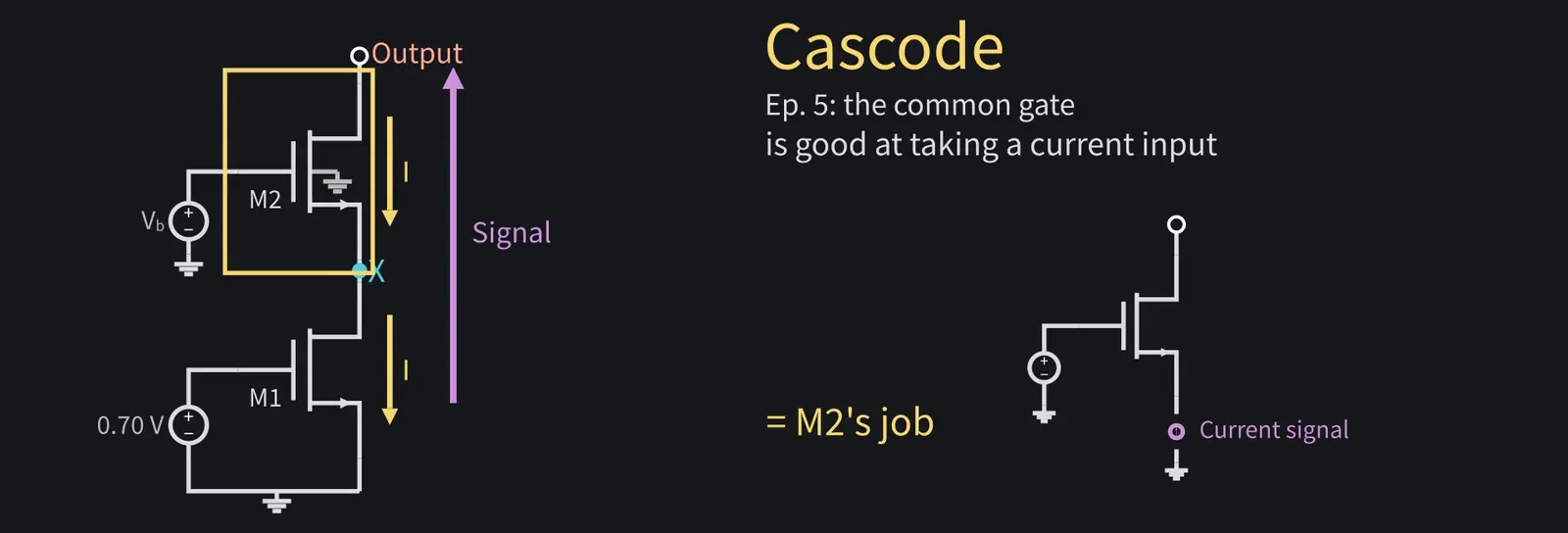
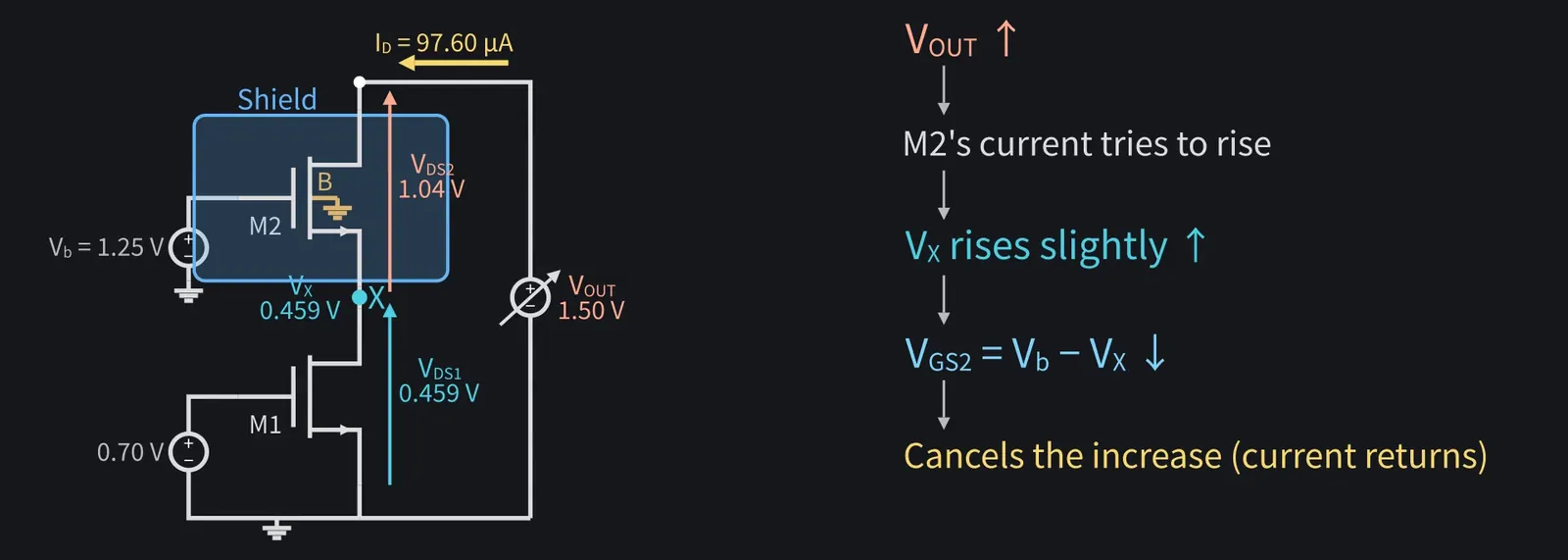
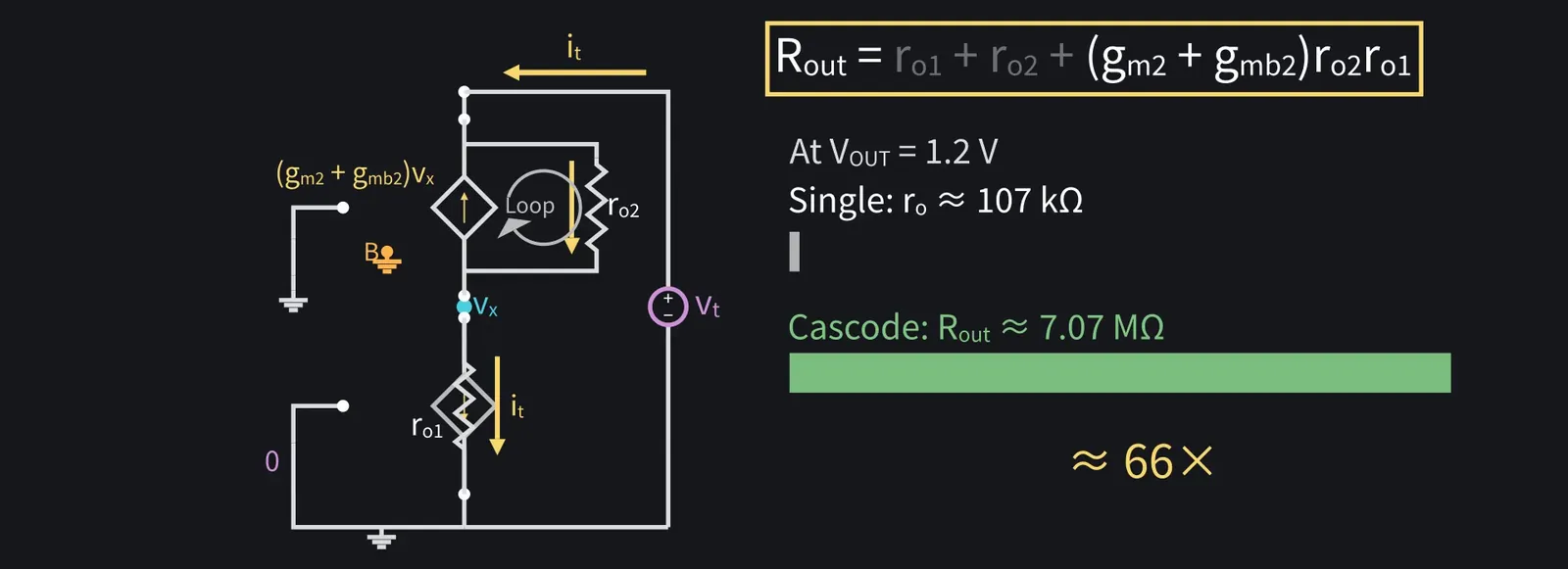
Why does stacking alone make the output resistance bigger?
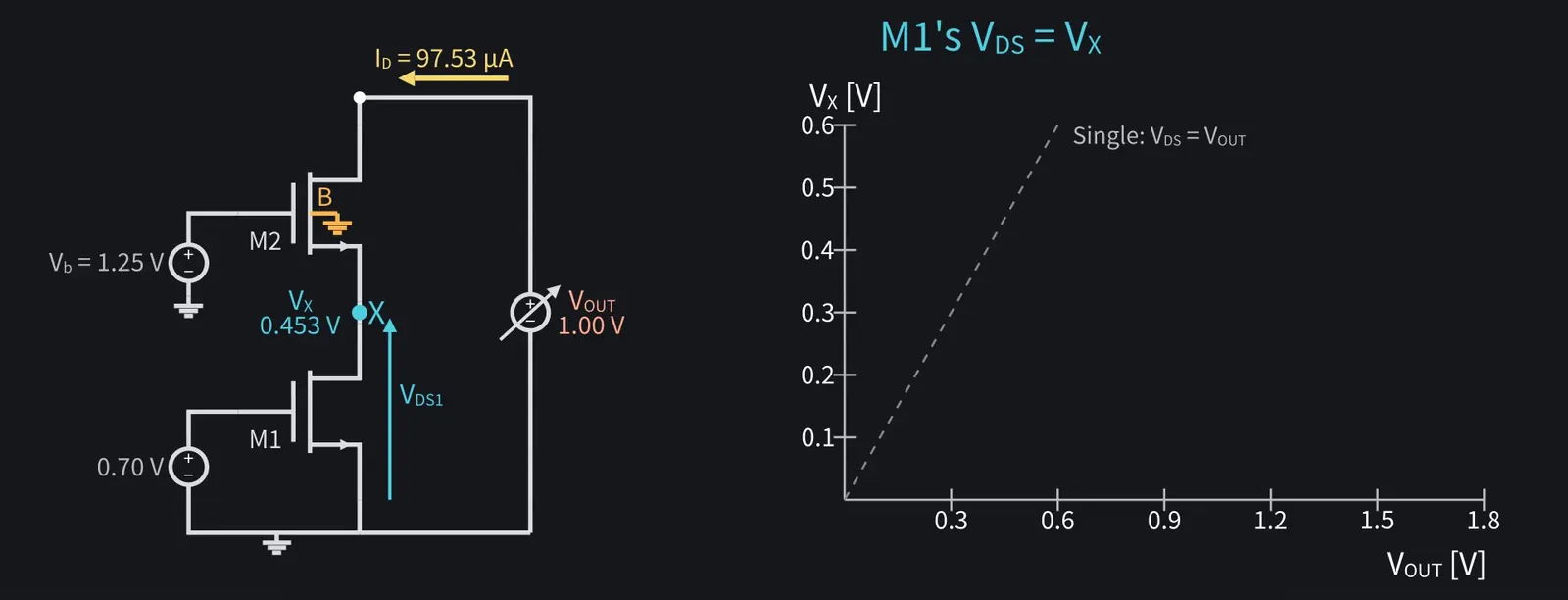
Zundamon
From M1's view, VDS hardly changes, nanoda!
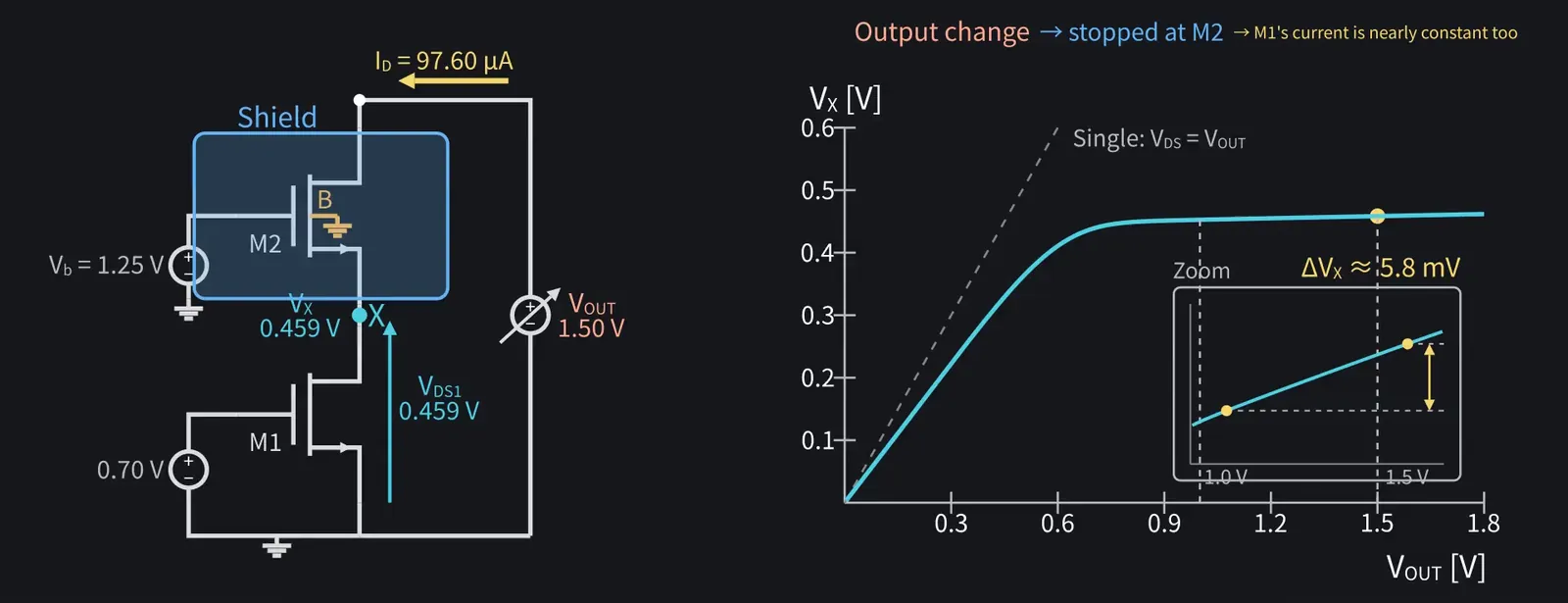
ZundamonQuestion
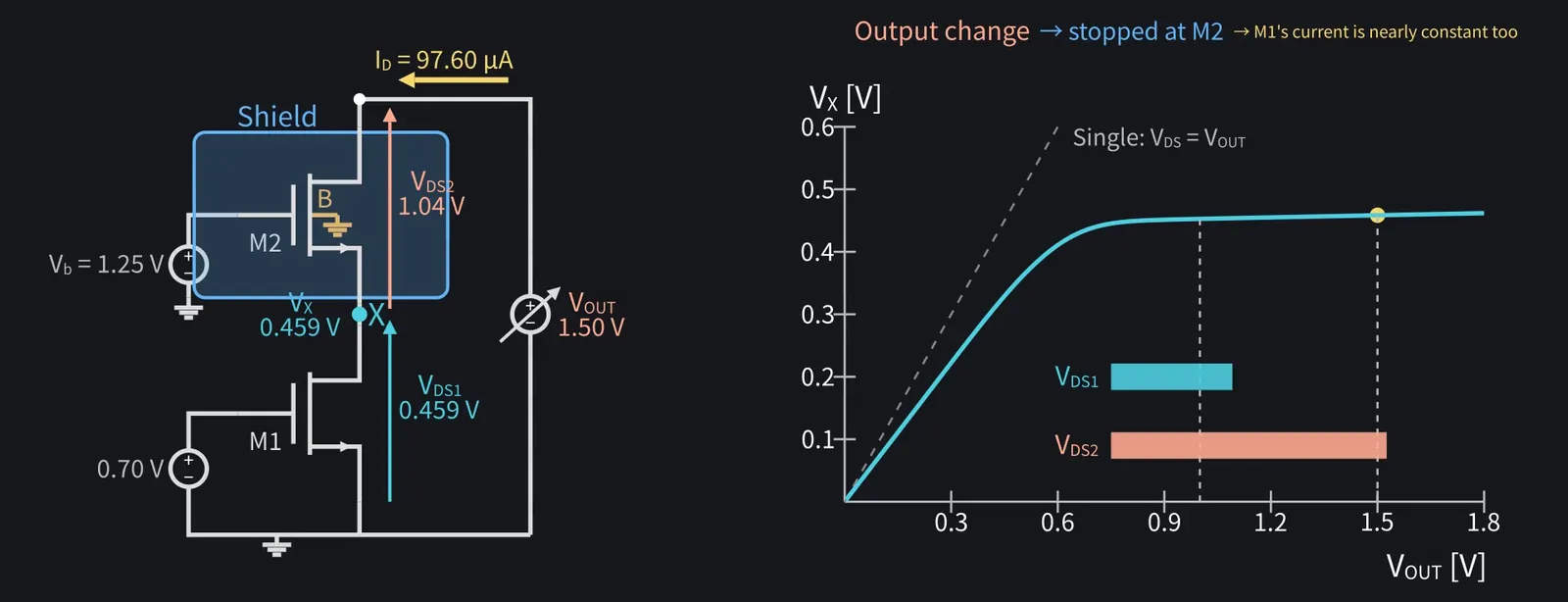
But M2's VDS changes a lot, nanoda. Doesn't M2's current increase?
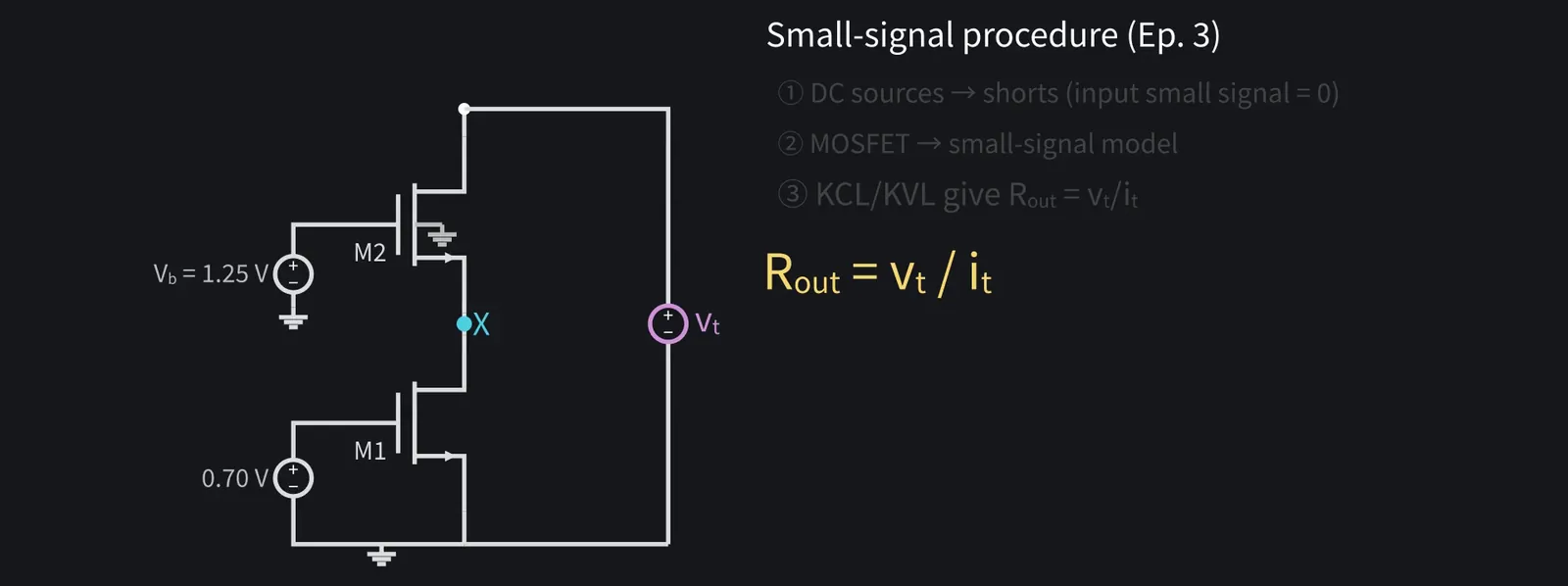
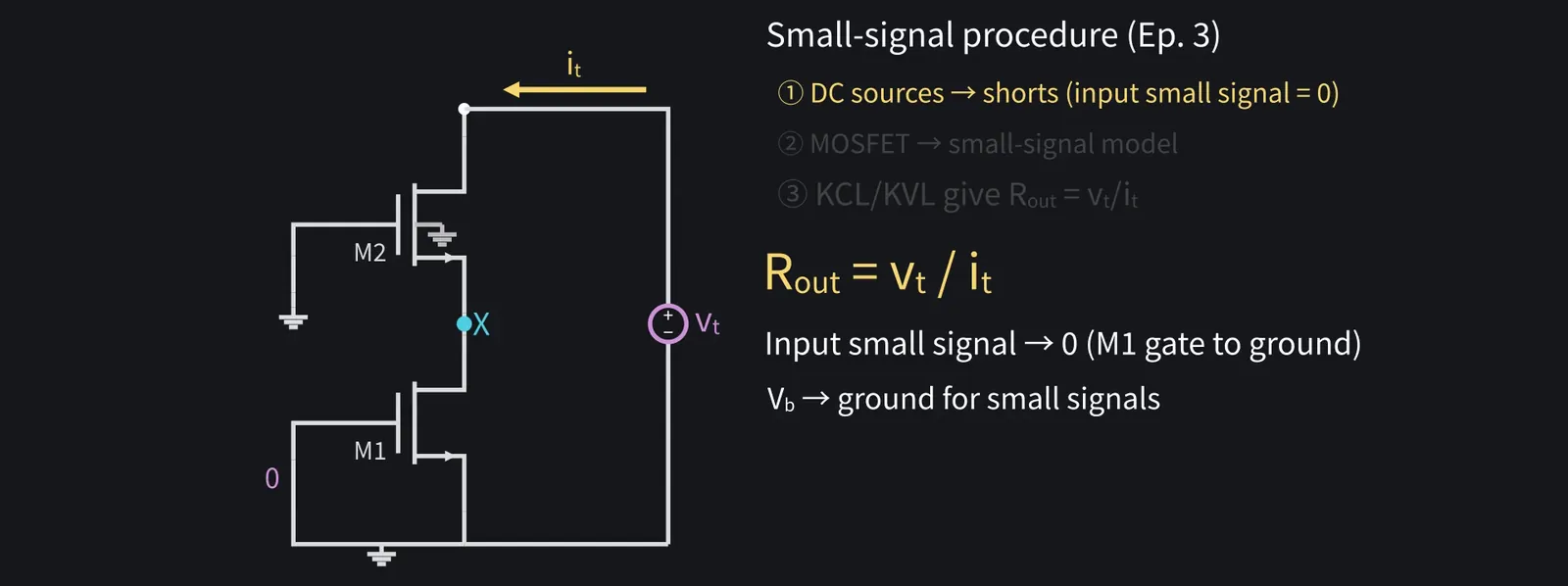
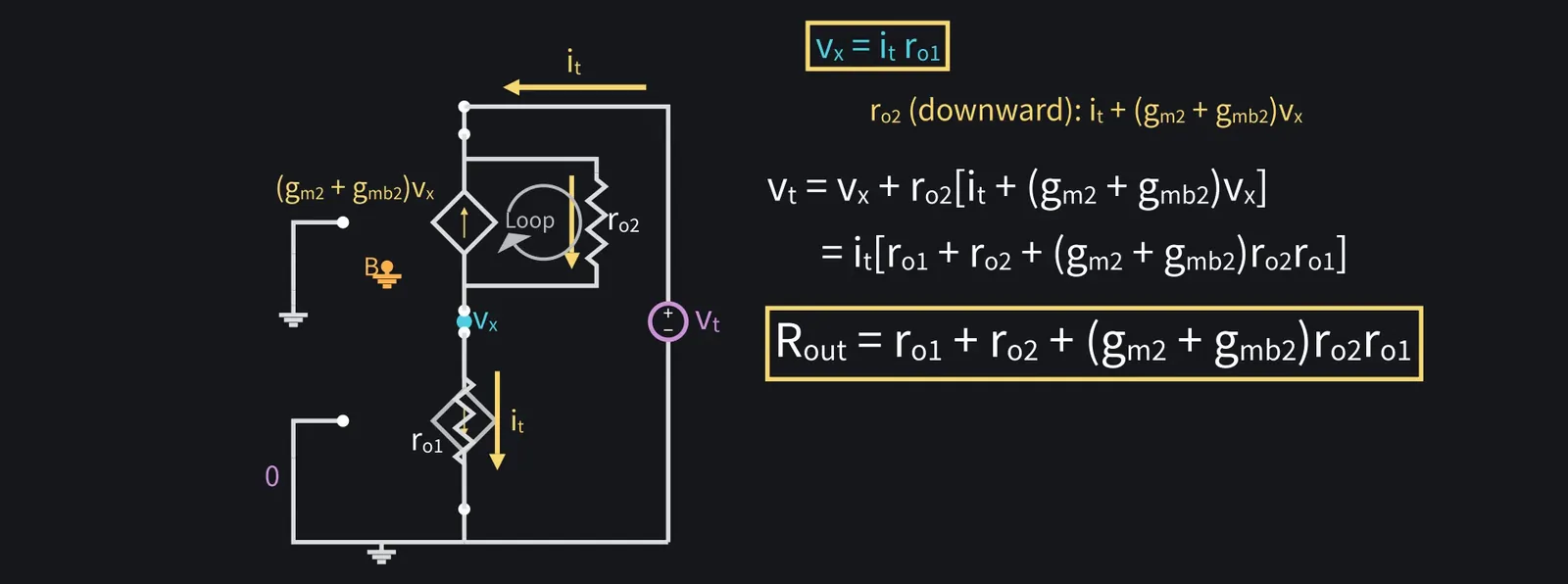
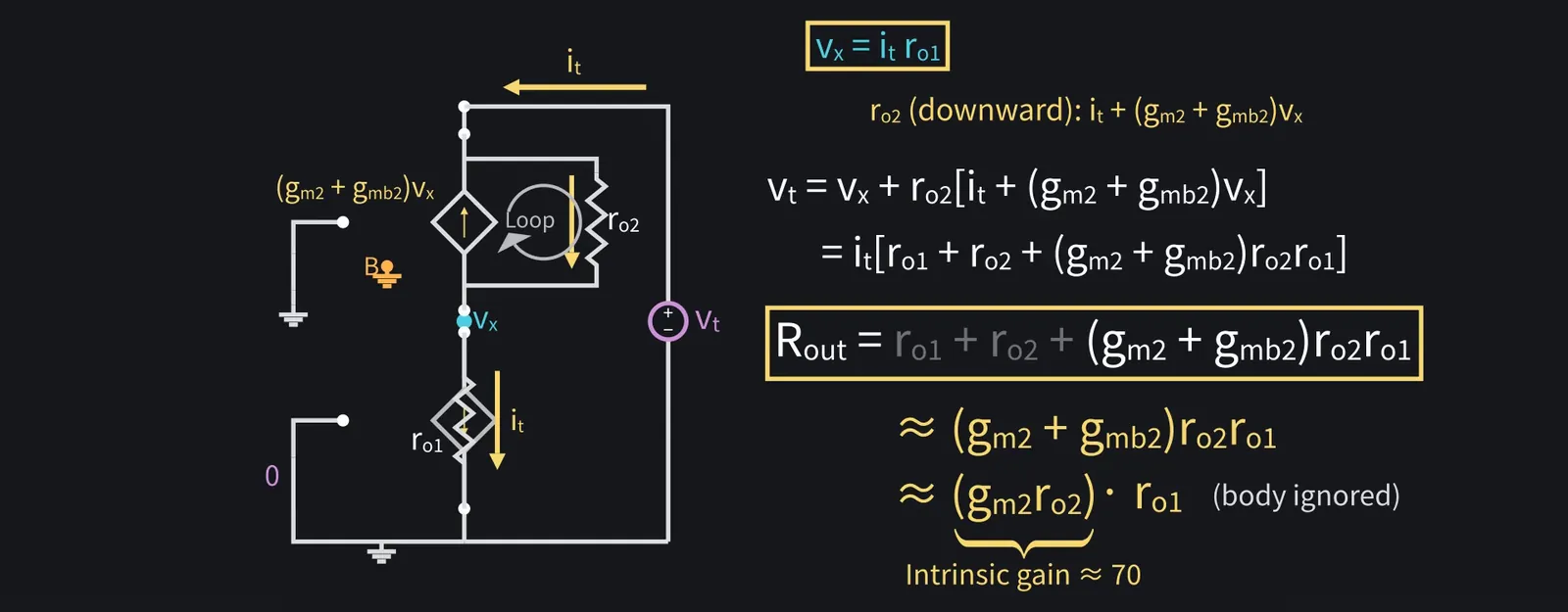
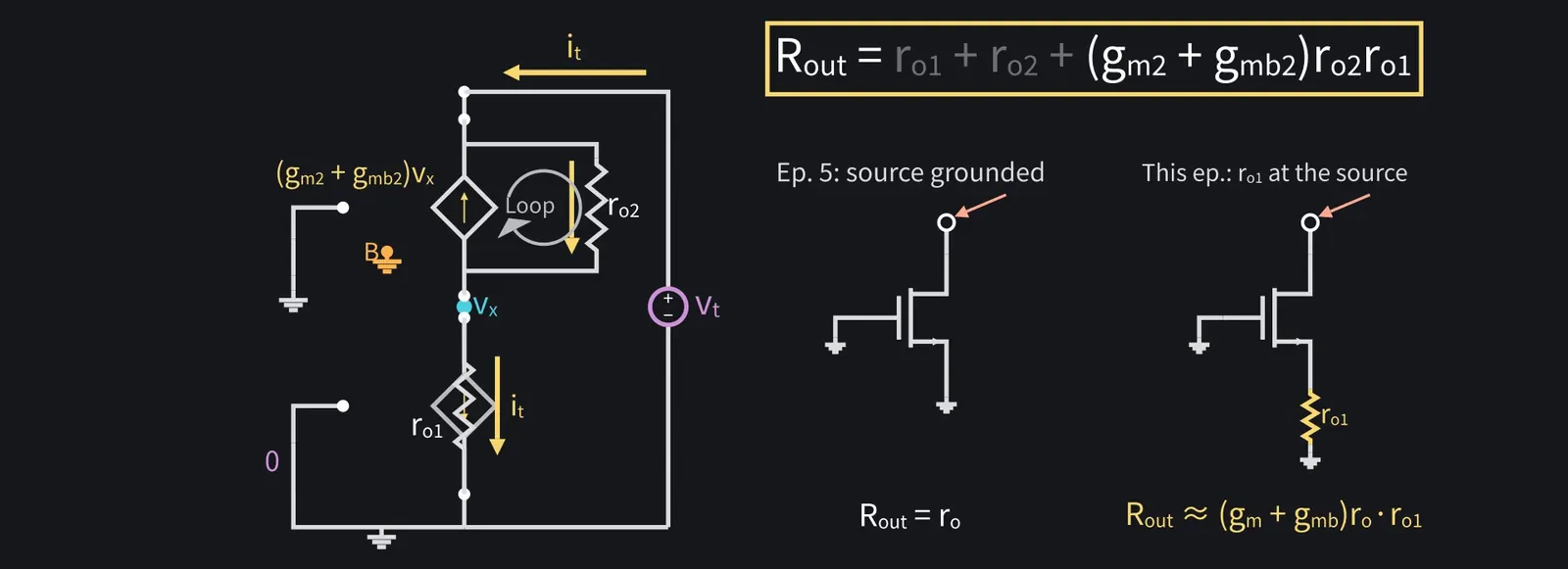
5Deriving output resistance with a small-signal model
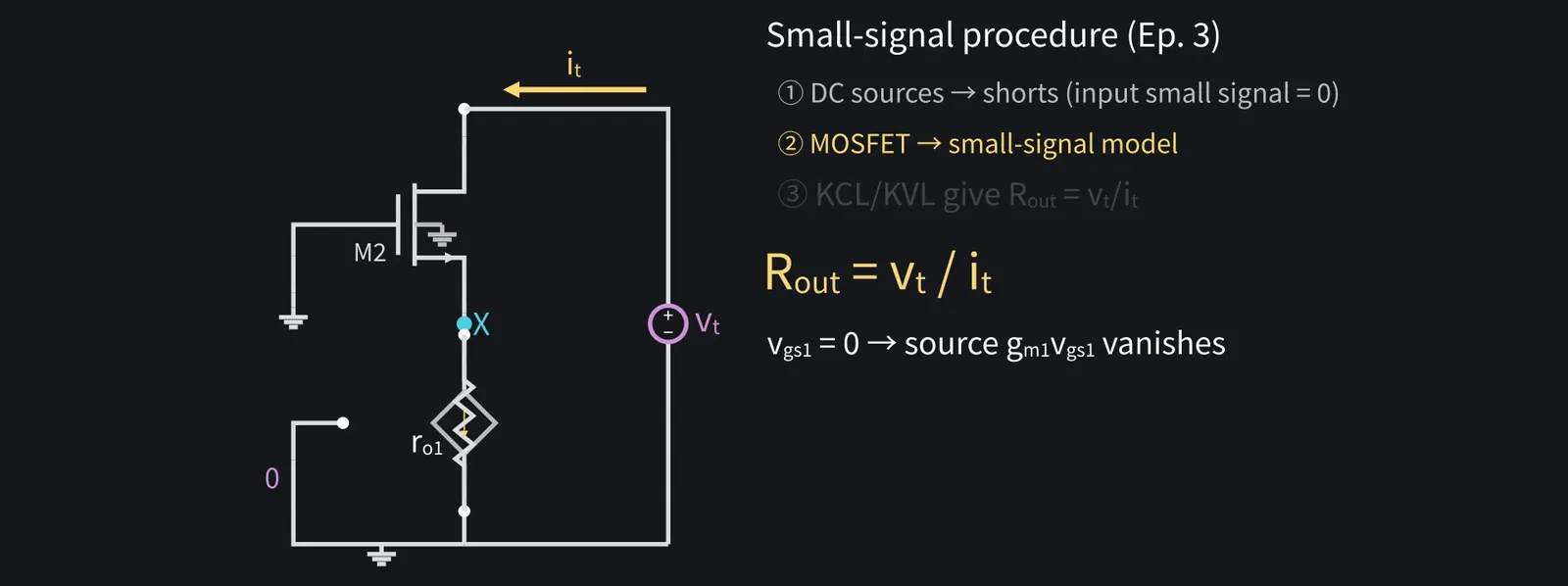
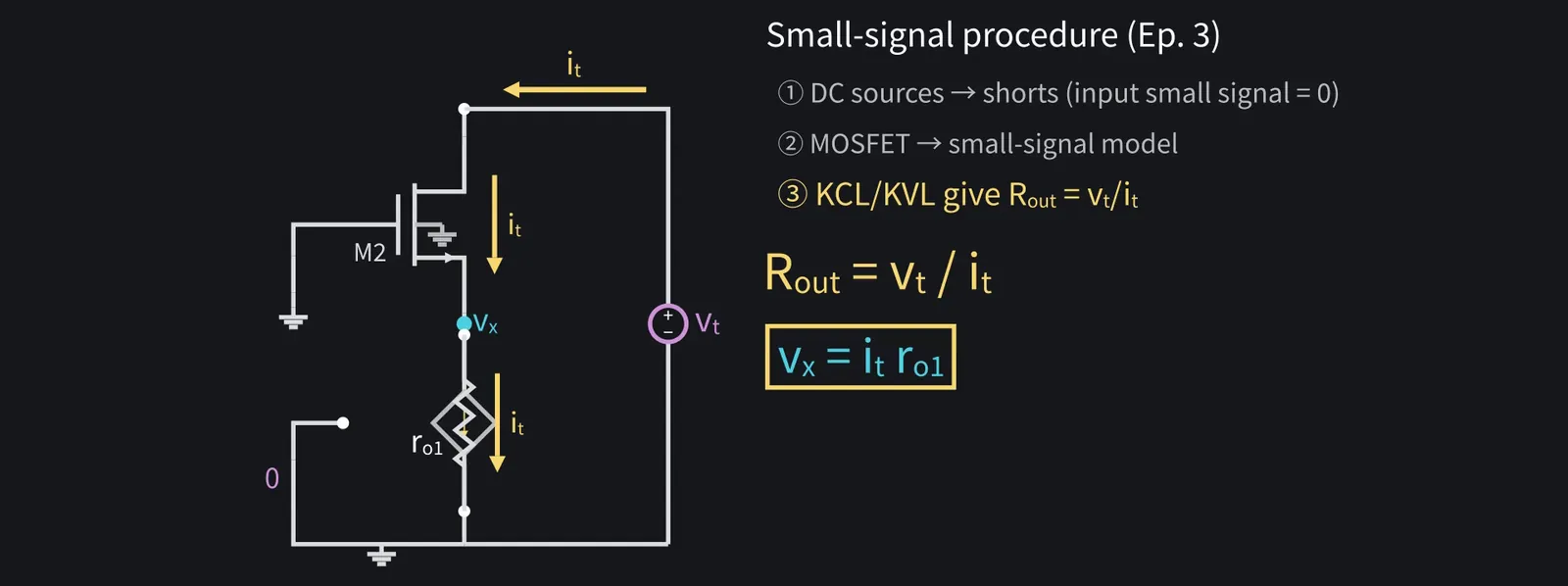
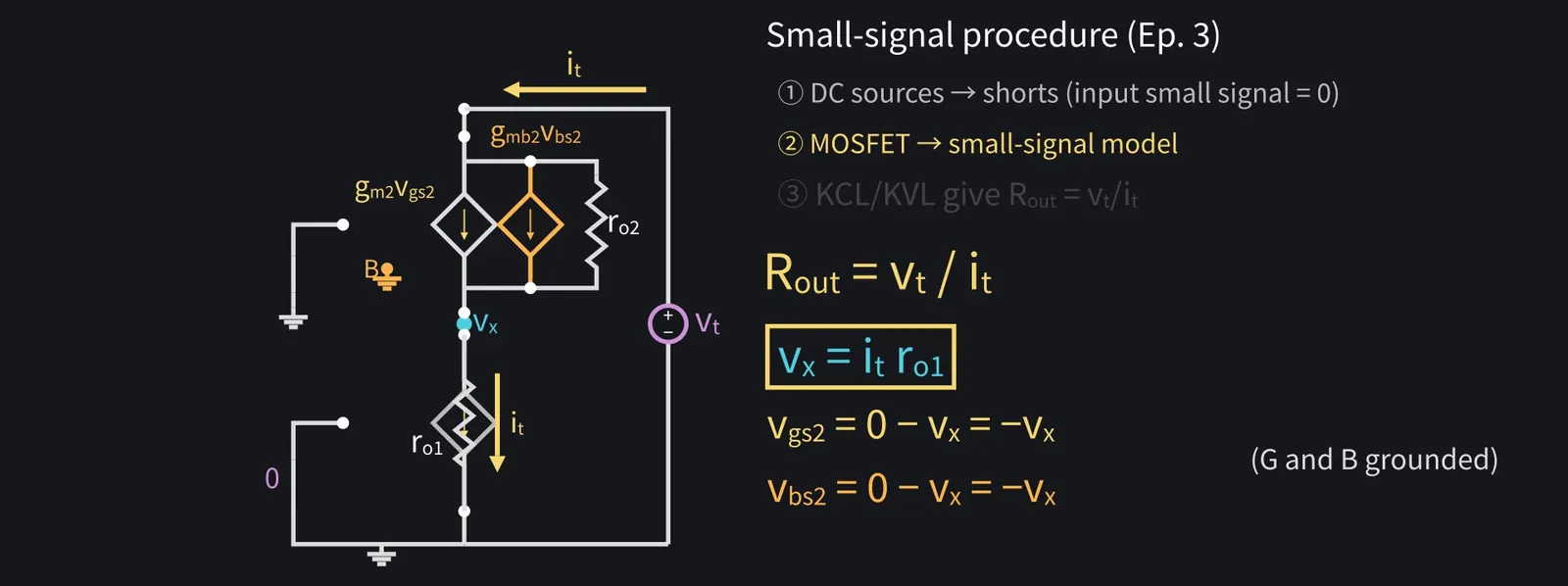
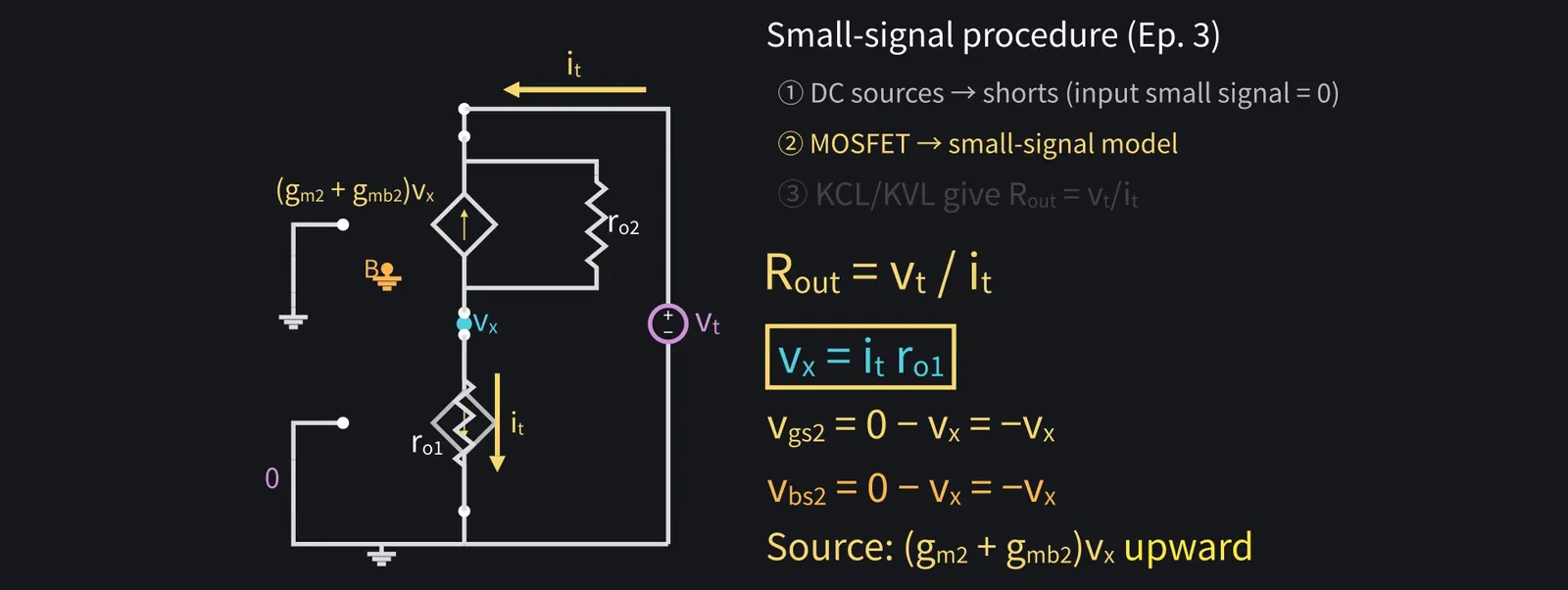
Zundamon
Upward, nanoda? The test current flows downward, nanoda.
Zundamon
What the source connects to changes so much, nanoda!
6Comparing output current–voltage curves
Zundamon
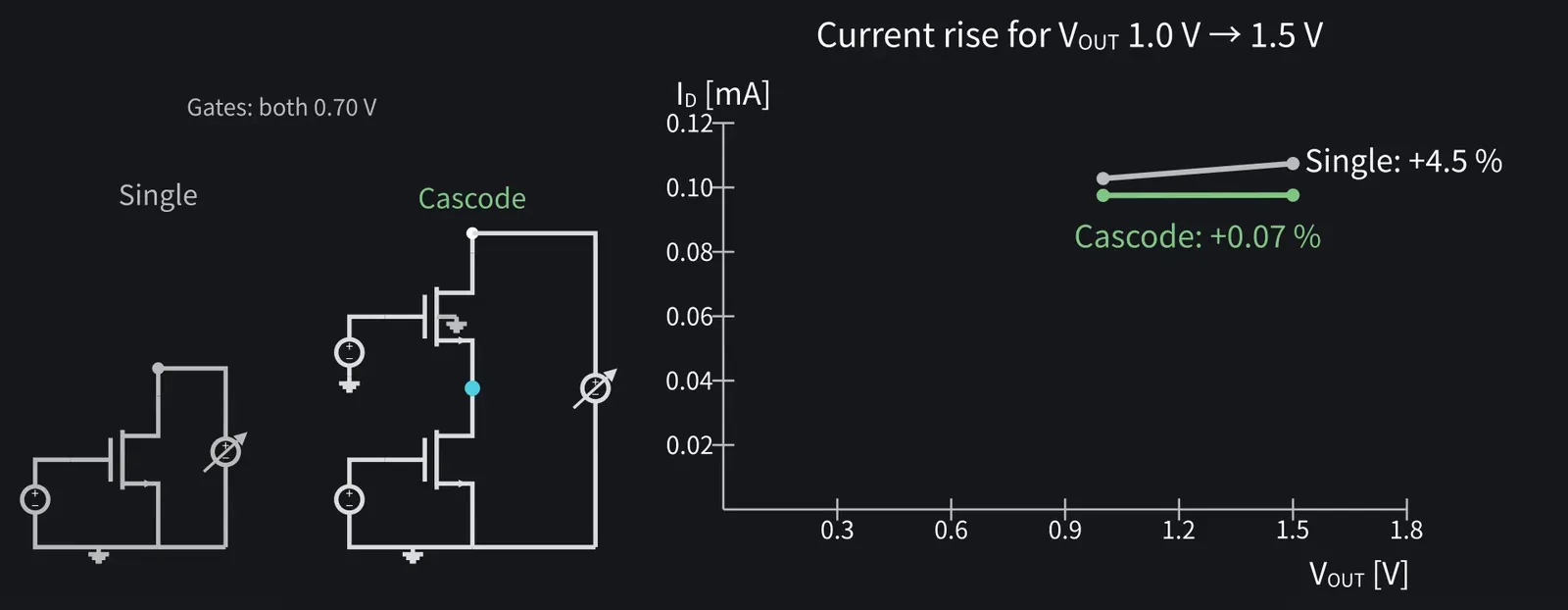
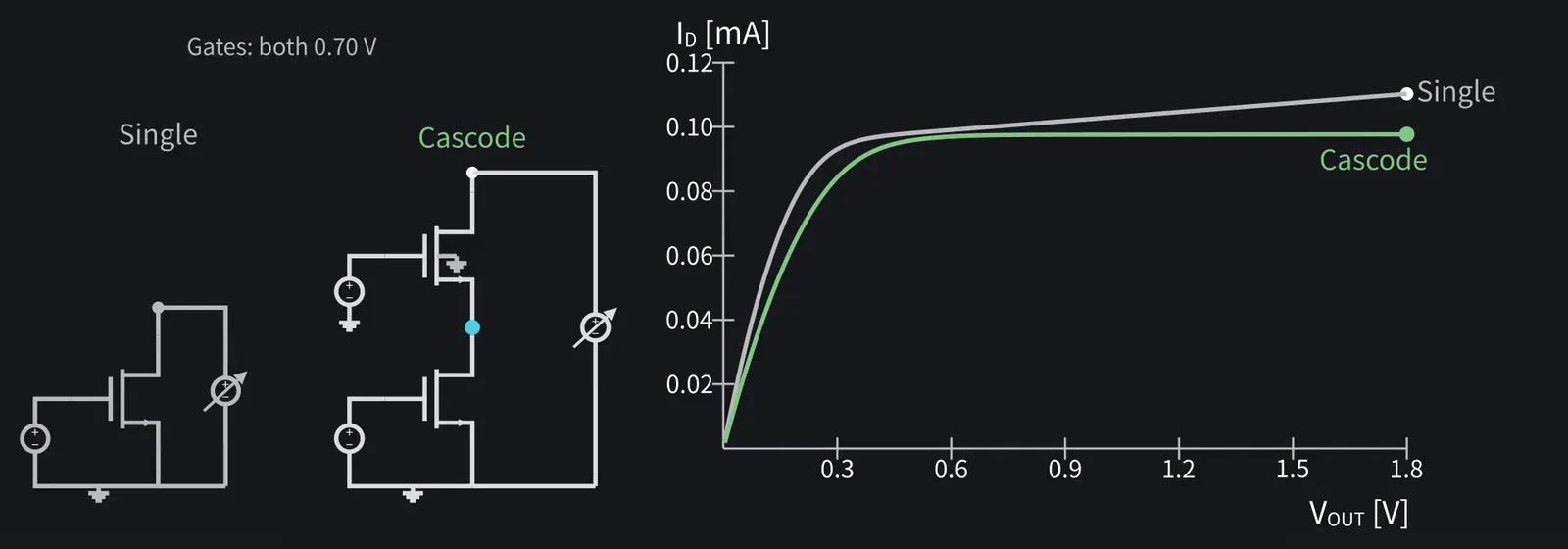
The cascode is much flatter, nanoda!
ZundamonQuestion
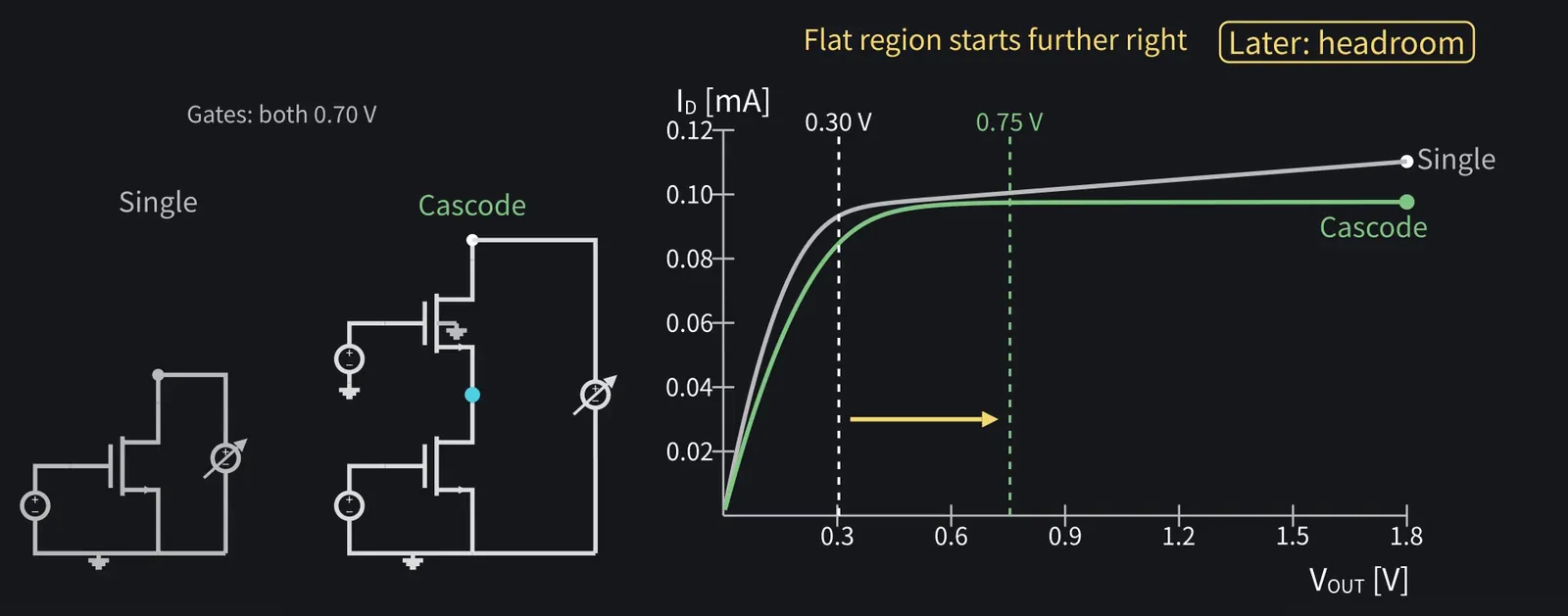
But the cascode's current is a bit smaller, nanoda?
7The cascode current mirror
ZundamonQuestion
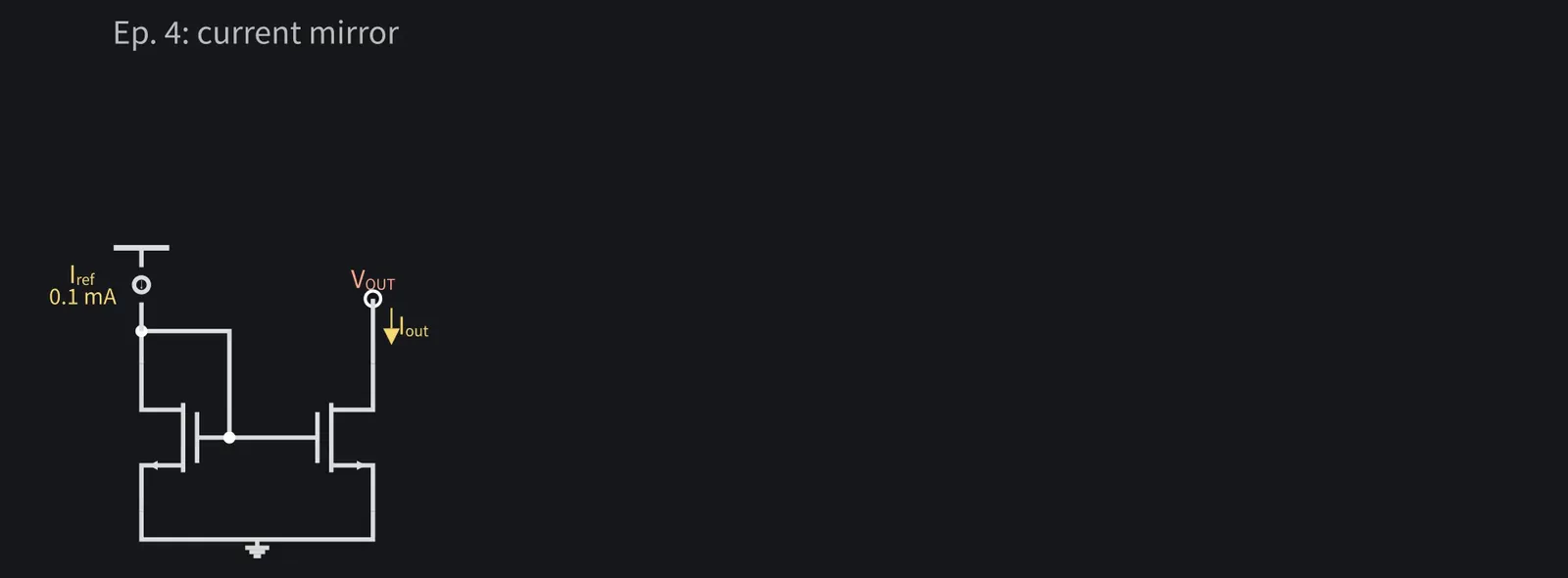
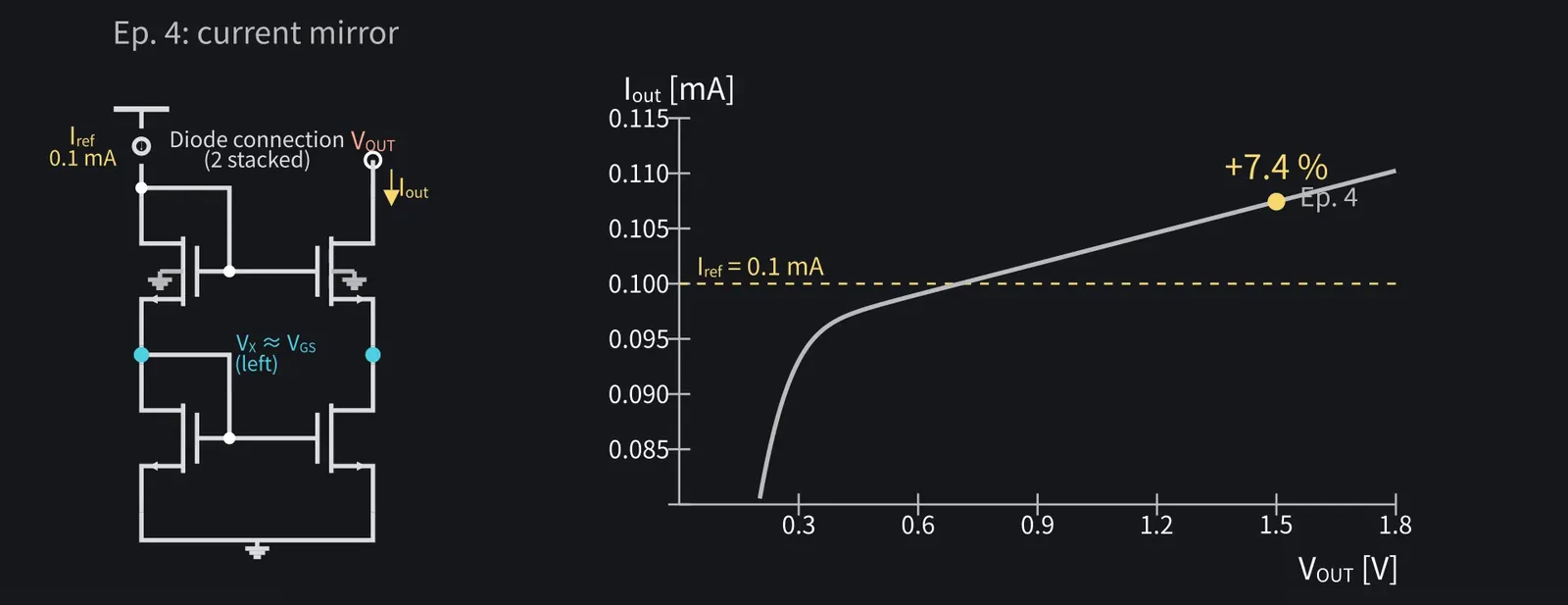
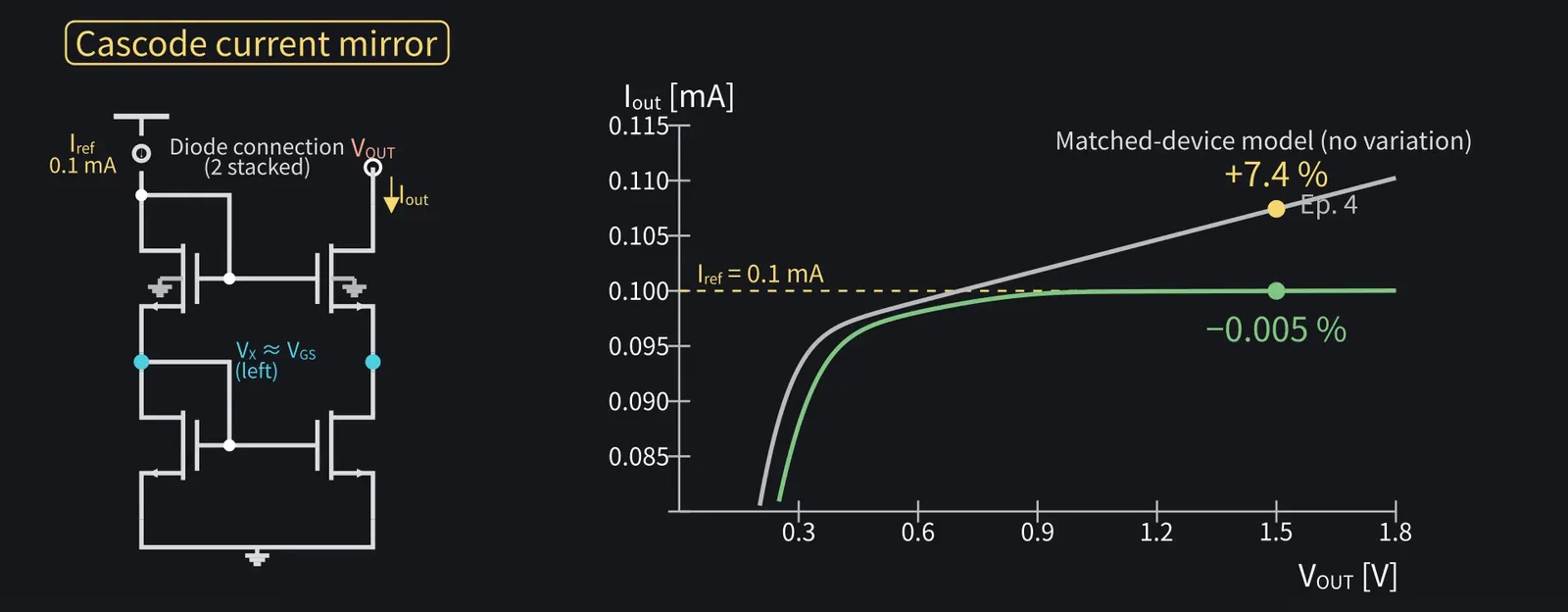
Can this shrink episode four's current-mirror error too, nanoda?
8The cascode amplifier

ZundamonQuestion
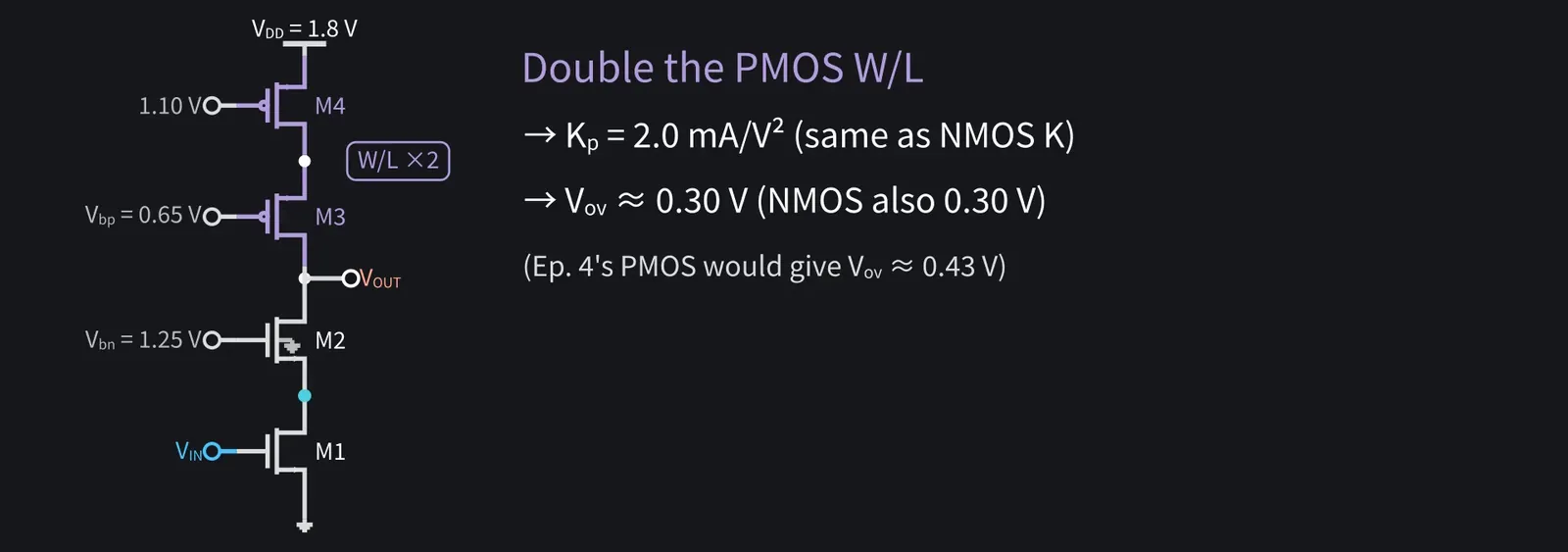
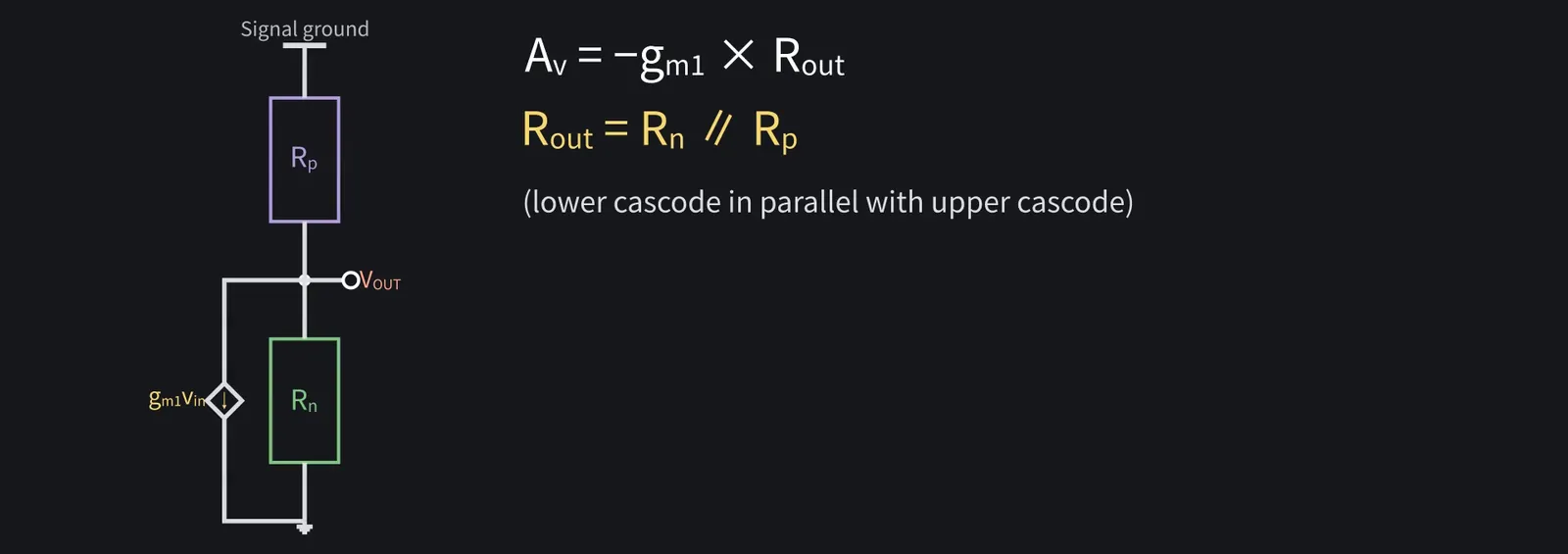
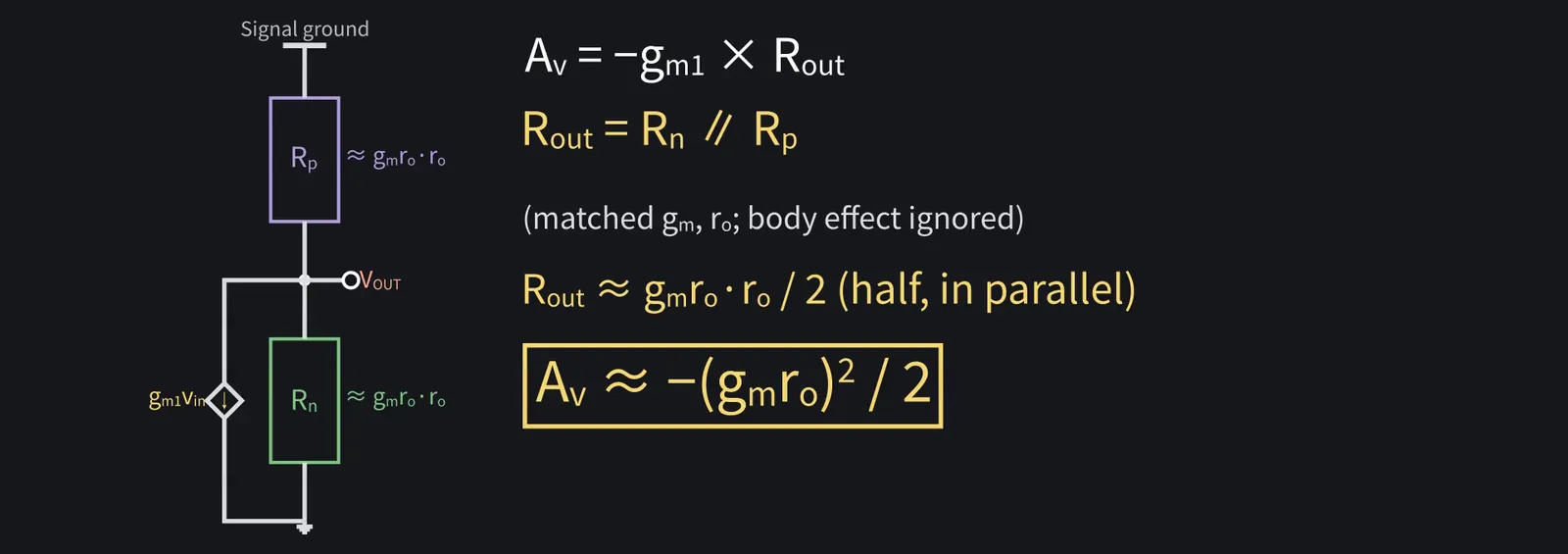
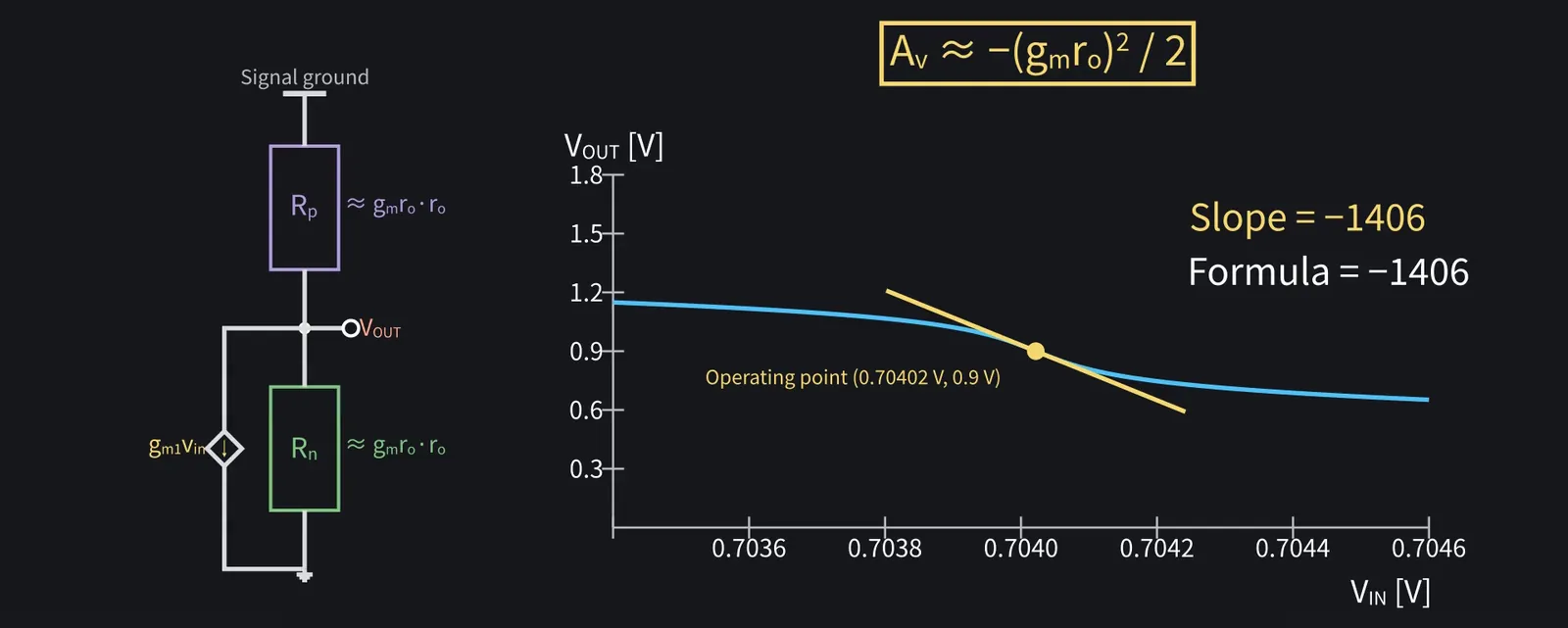
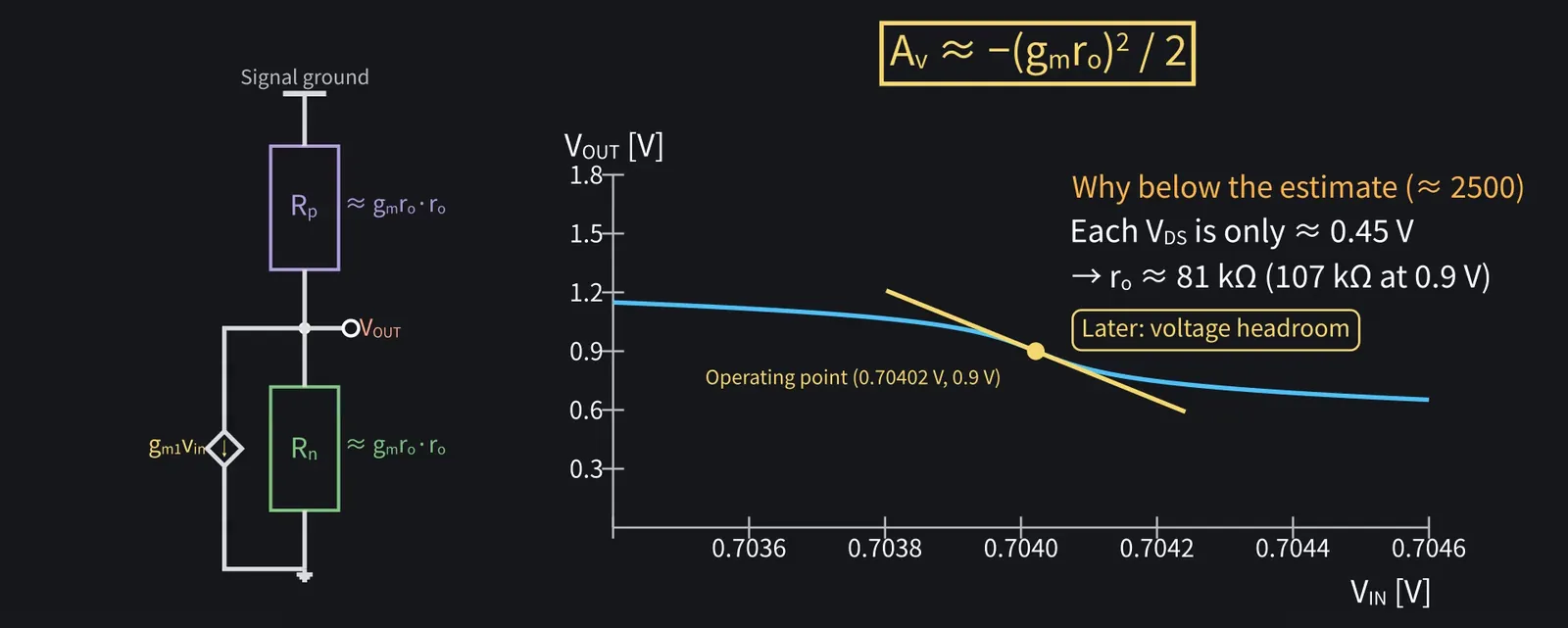
The intrinsic gain squared, nanoda! If gm·ro≈70, that's about 2500, nanoda?

Zundamon
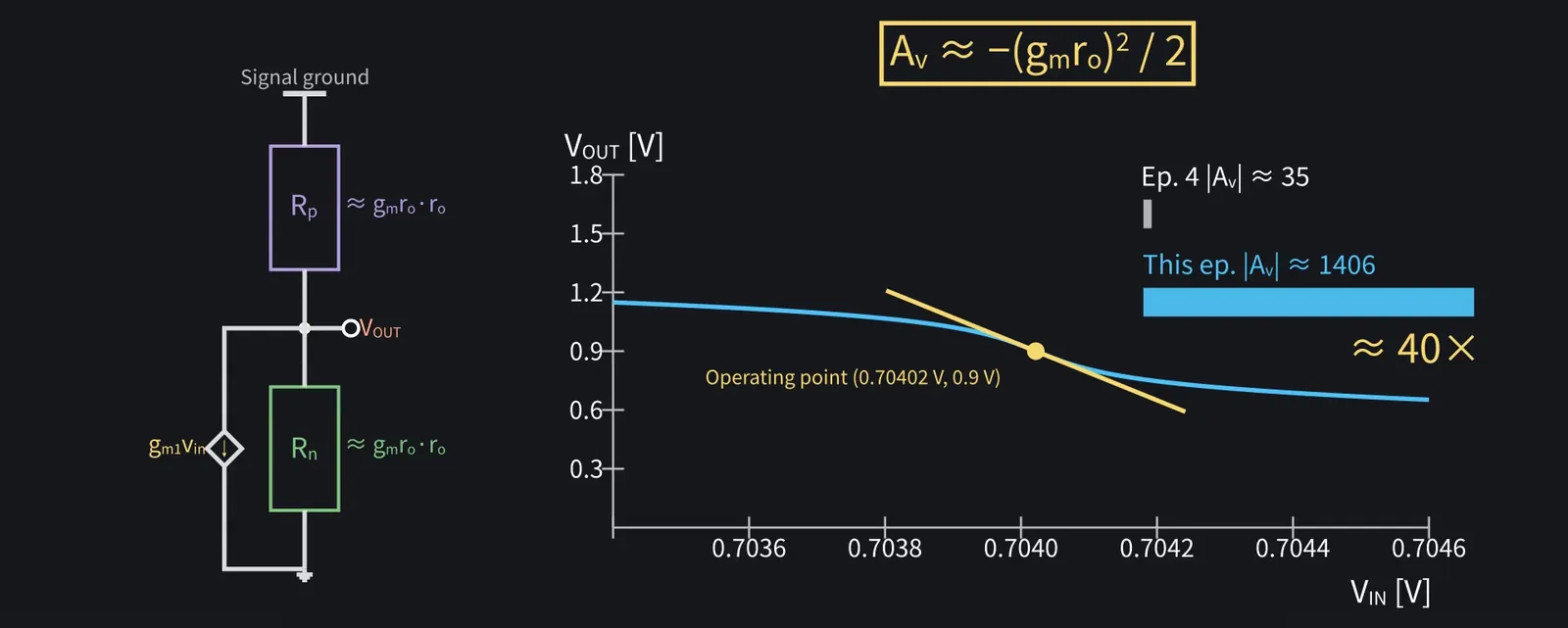
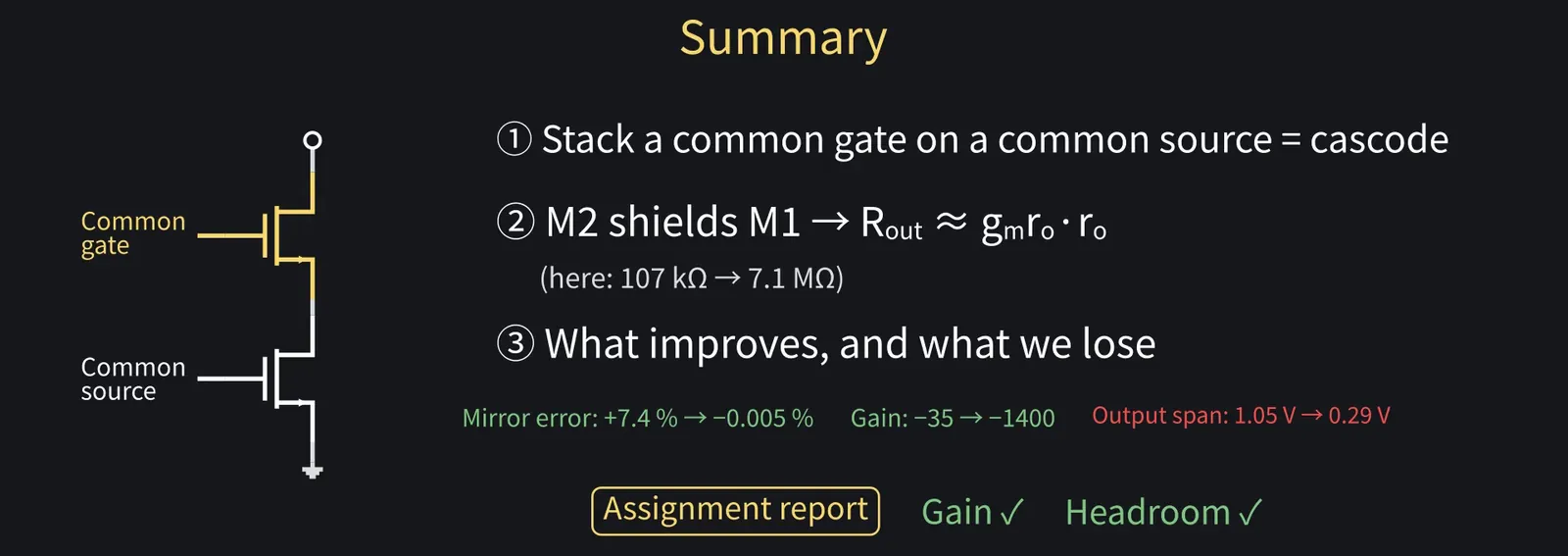
About 40 times episode four's −35, nanoda! Just two more transistors, nanoda.
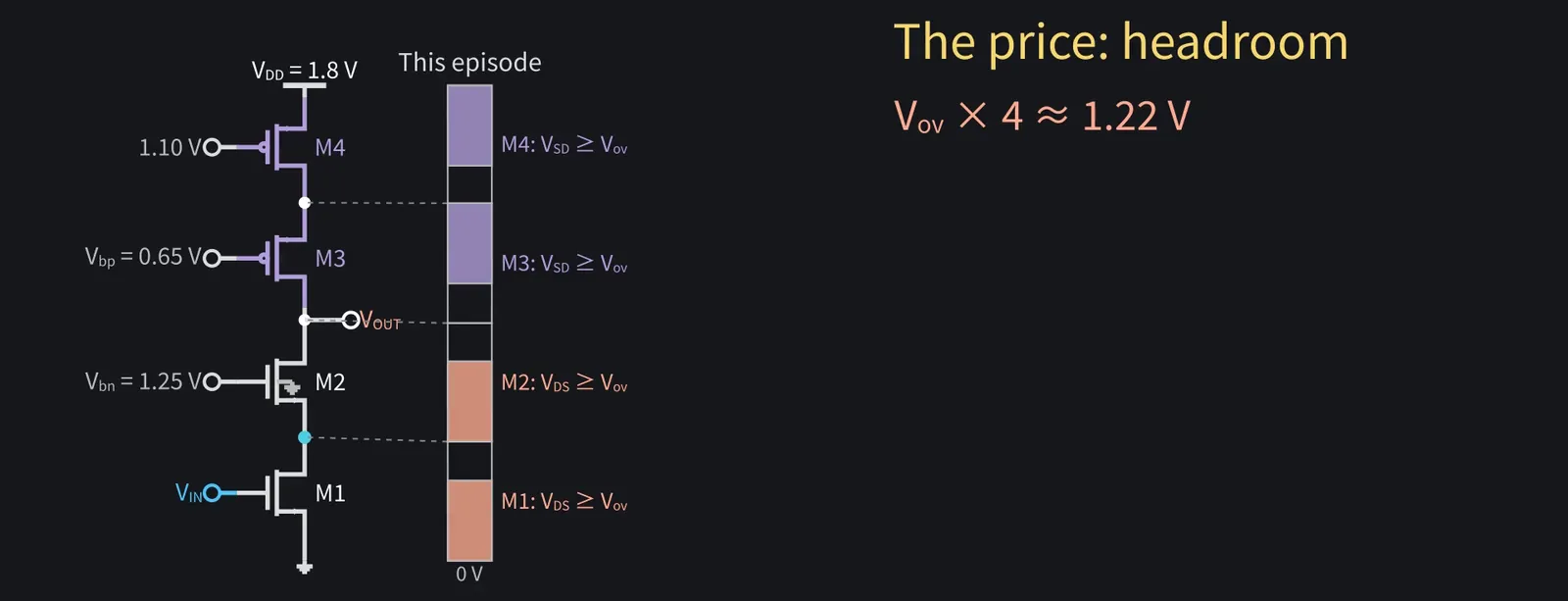
9The cost: voltage headroom
Zundamon
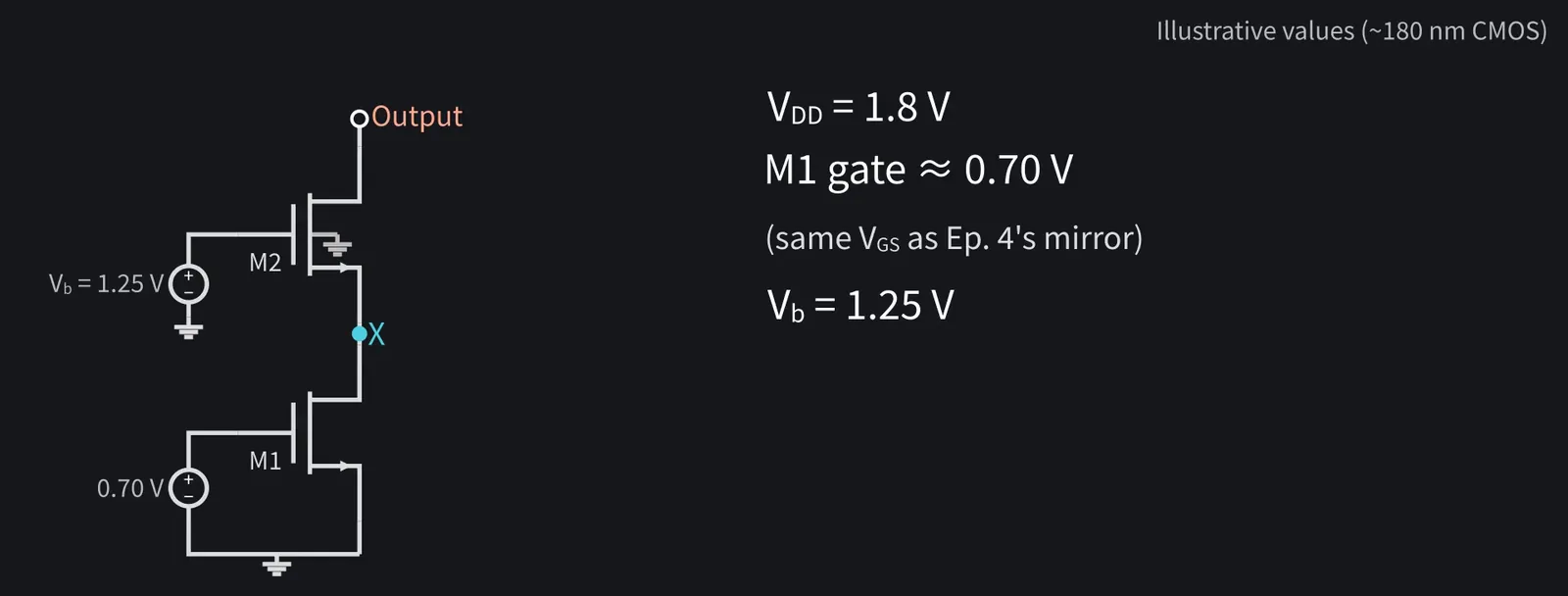
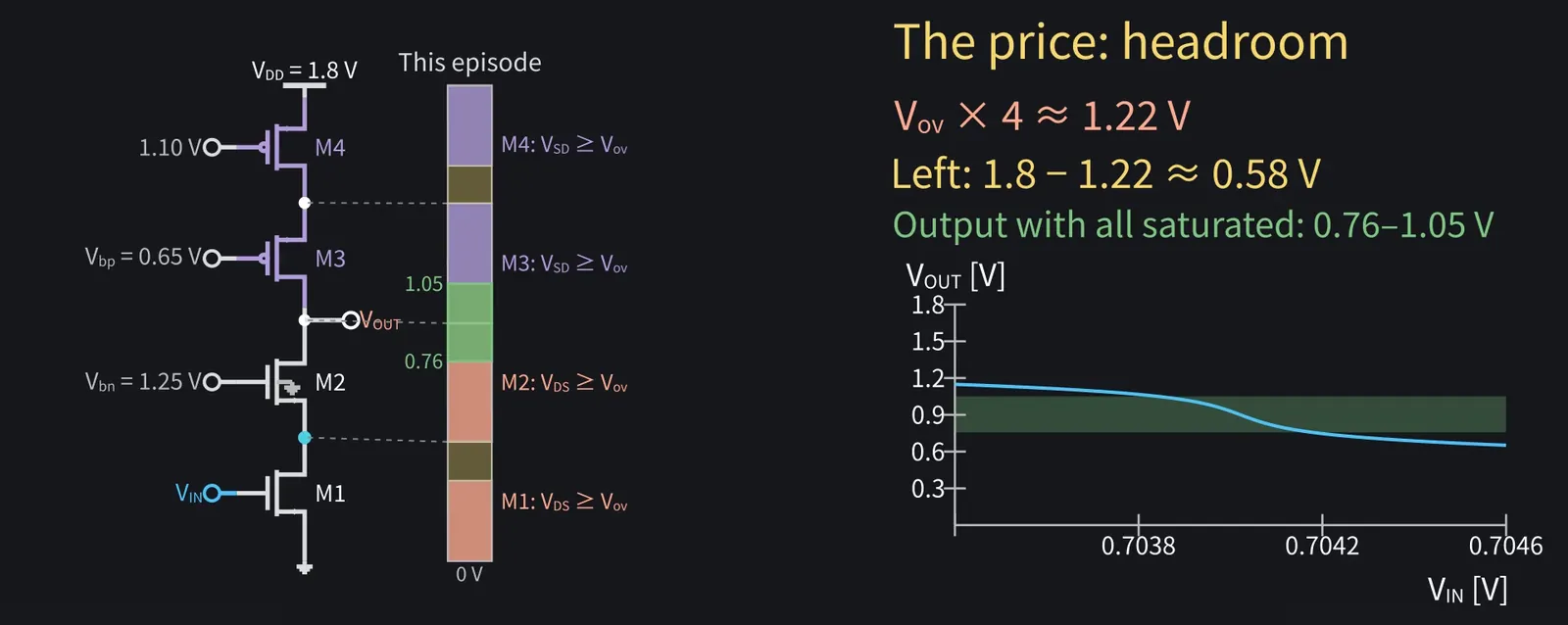
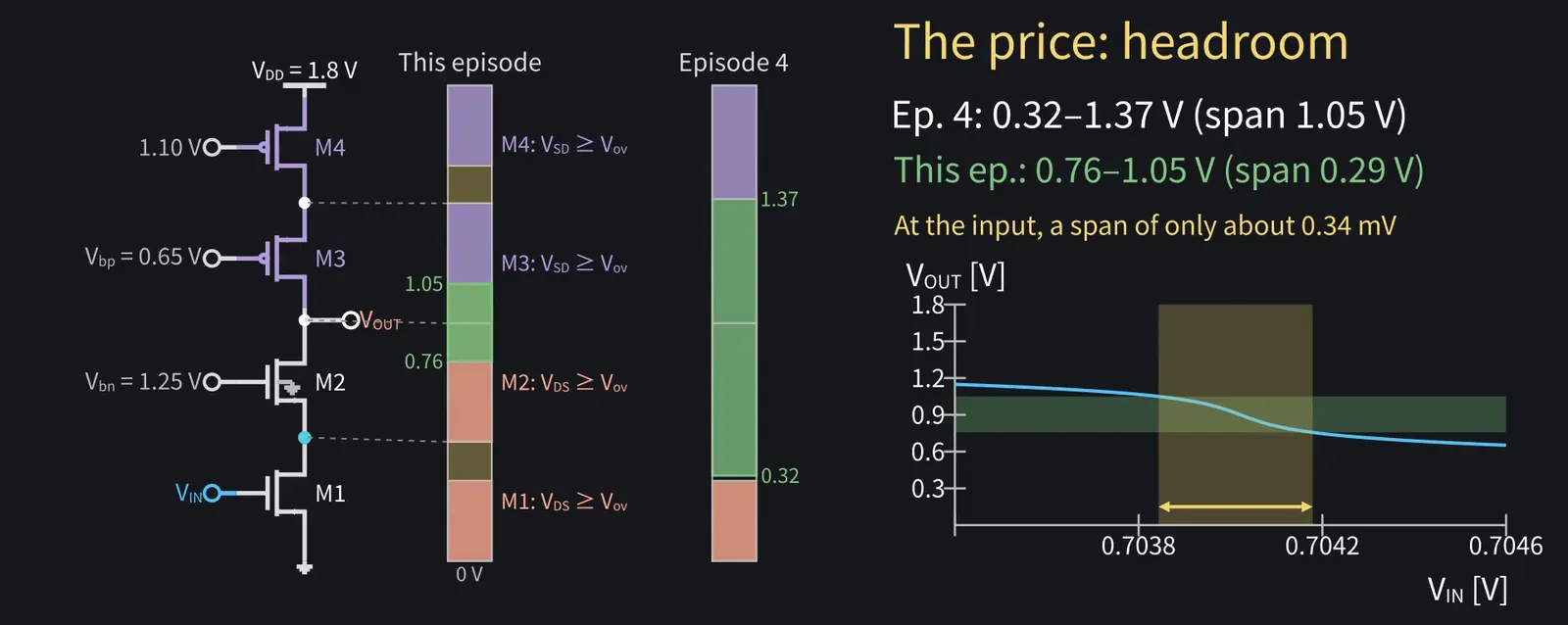
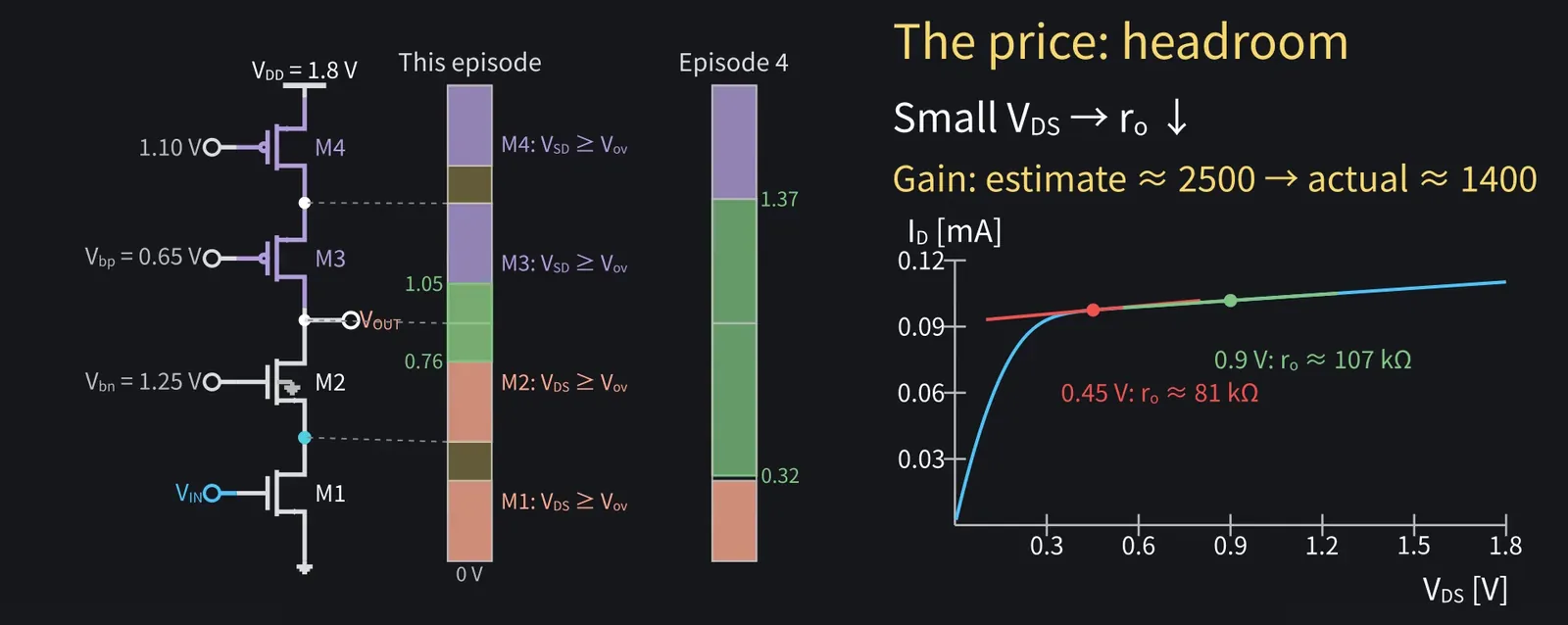
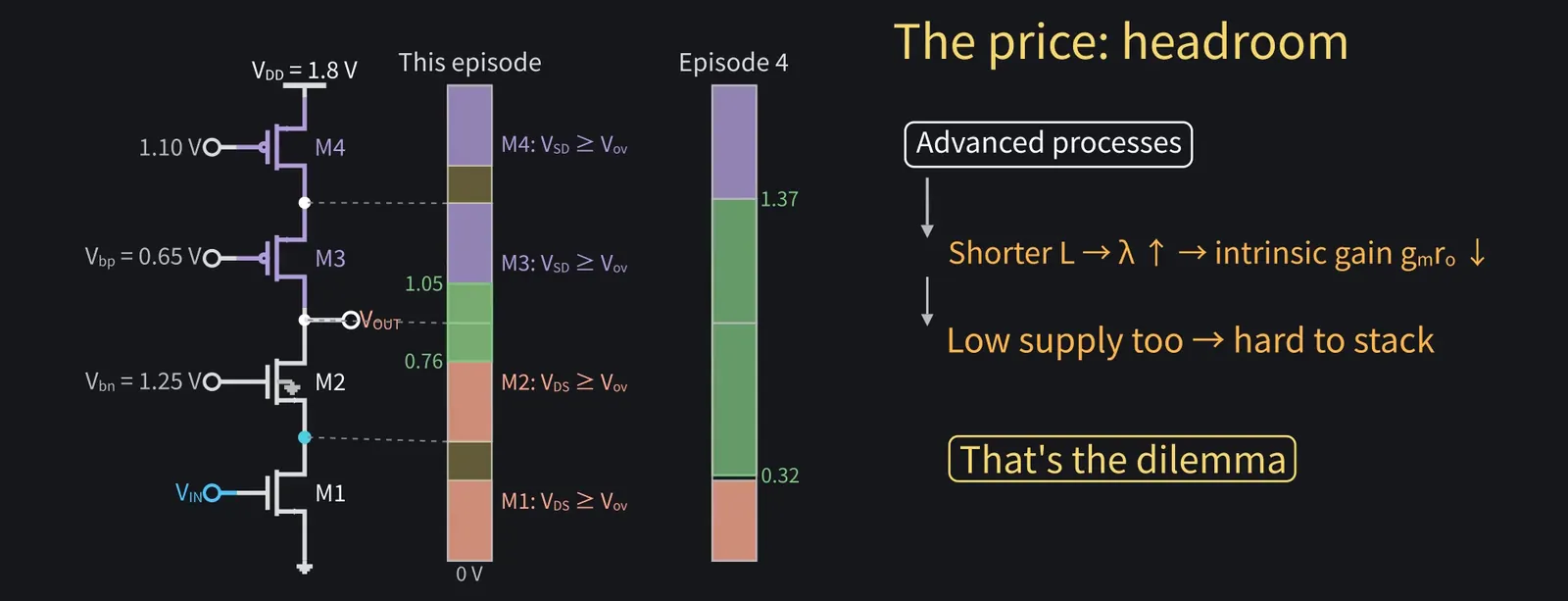
The supply is 1.8 V, so the output can only move about 0.6 V, nanoda!
10Summary

Zundamon
Mirrors and amplifiers both improve, but we lose voltage headroom, nanoda!
Zundamon: In the assignment, I'll check headroom as well as gain, nanoda!

Zundamon
Thanks for reading, nanoda!