
Yoshioka Lab · Keio University
Transforming the world
with circuits and sensing.
Autonomous vehicles, working robots, remote healthcare — technologies once confined to science fiction. The Computing and Sensing Group works at the frontier that makes them real.

- 50+
- Publications
- 30+
- Patents
- 9
- JSSC papers
- 5
- ISSCC papers
News
What's new
- Paper
Two full-waveform LiDAR papers, by Ryo Yoshida and Kazuma Ikeda, were accepted to NeurIPS 2026! 🎉 One is a joint effort with the Isogawa Lab.
- Grant
Proposals to JST-NSF VINES and JST CRONOS, with Ken as Co-PI, were both accepted.
- Award
Ryoya Matsuno received the dlab-VDEC Design Award (Excellence Prize) at the dlab Design Forum! 🎉
- Paper
Marino Watanabe's work on VLA security was accepted to CoRL 2026, a top venue in robot learning! 🎉
- Paper
Ozora Sako's stereo camera vulnerability research, with the University of Florida and UEC, was accepted to ACM CCS 2026 — a top security venue! 🎉
Research
The questions we're chasing
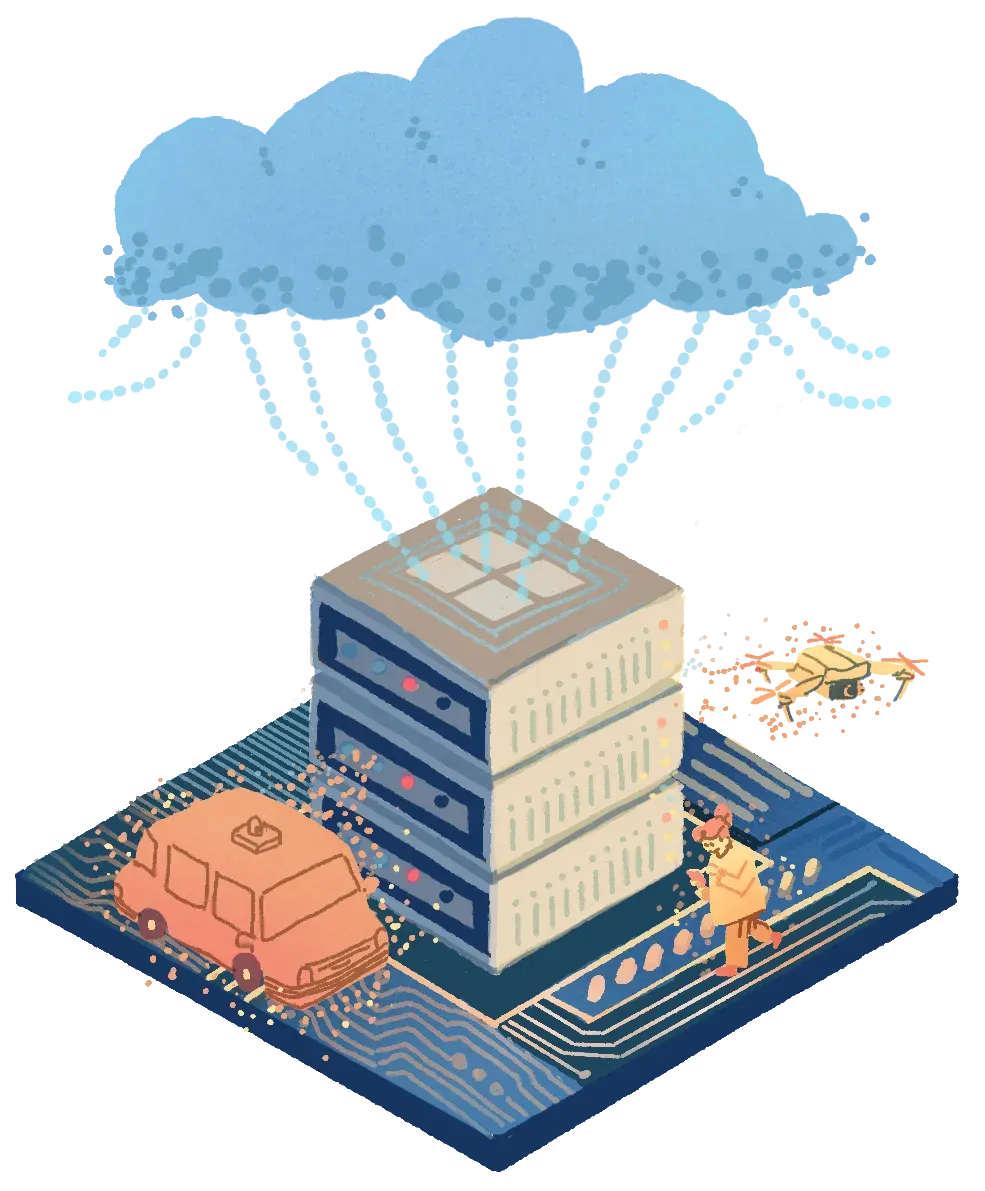
Can we run AI on a battery?
Advances in edge AI are turning once-futuristic applications — autonomous vehicles, working robots — into reality. At CSG, we develop innovative circuit technologies based on new computing principles that go beyond the performance limits of digital circuits.
Edge ComputingCan you show a moving self-driving car something that isn't there?
As autonomous driving spreads, sensor security grows ever more critical. CSG researches security analysis of LiDAR and other sensors, and designs systems that remain robust under attack.
Autonomous Driving Security
If you could see the world in 3D, what would you build?
As autonomous driving advances, 3D sensors like LiDAR have become indispensable. CSG develops high-performance, low-cost LiDAR systems and applies them to sports and healthcare.
LiDAR 3D SensingWhy CSG
What you get at CSG
This is not a lab where you only write papers. Here is concretely what you will experience if you join as an undergraduate or master's student.
You tape out real silicon
Research doesn't stop at simulation. Circuits designed by students are fabricated in real semiconductor processes, measured, and published. We have tape-outs in 65nm, 28nm, and 12nm FinFET, supported by TSMC.
5 ISSCC · 9 JSSC papers
You attack and defend real vehicles
We build our own LiDAR attack rigs and validate them against actual driving autonomous vehicles — and sometimes design the LiDAR sensors themselves. Only a handful of labs worldwide work at this level.
NDSS two years running
You engage the world directly
Every member aims to present at international venues. We run joint projects with UC Irvine, University of Florida, Nanjing University, Southeast University, Sony, and Aisin — and host visiting students from abroad.
NeurIPS · CVPR · ICCV · NDSS · IROS · ICRA
Your work reaches the public
Our research has been covered by GIZMODO, Nikkei xTECH, IEEE Spectrum, and Tech Xplore, in Japan and abroad. We actively issue press releases.
15+ media features
You can start from zero
Prior programming or AI experience isn't required. Onboarding training and study sessions build the fundamentals and depth that last a career. What matters is the will to tackle both hardware and software.
You won't lack resources
We hold multiple large grants — two JST CREST projects, JST PRESTO, JST ASPIRE, the Next-Gen Edge AI program, and KAKENHI (B). Fabrication and conference travel are covered so you can focus on research.
Projects
Featured work
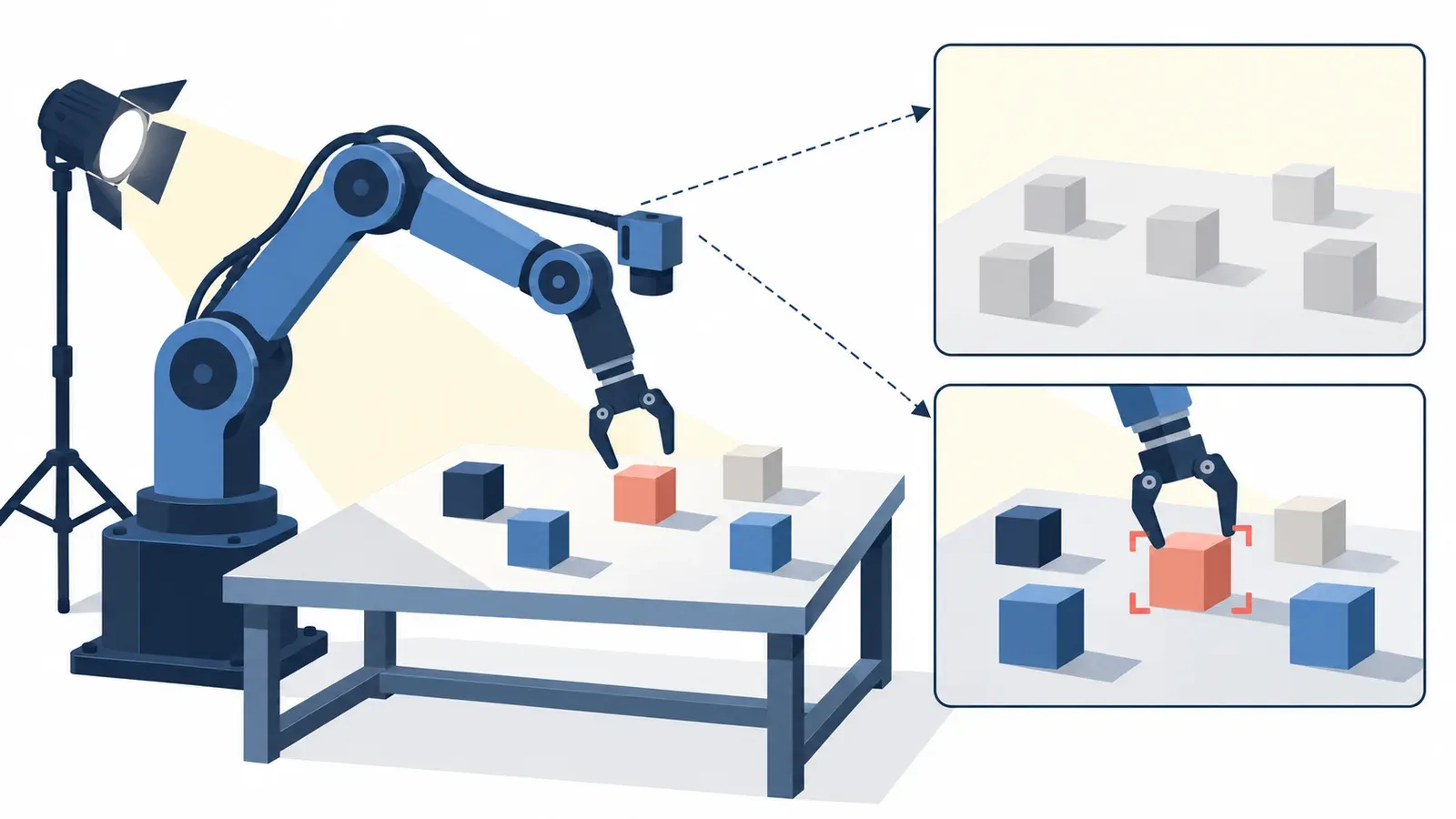
FLARE & ChromaGuard
Vision-Language-Action models have become a powerful paradigm for general-purpose robot manipulation, but moving them into the real world exposes a vulnerability to minor environmental perturbations. FLARE is an optimized physical spotlight attack that exploits this through targeted illumination, dropping baseline task success rates to zero without any access to model internals. Adversarial training is the standard countermeasure — but it hides a pitfall. Naive data augmentation conditions VLA models to treat color as noise, collapsing their perception into a purely shape-biased processor. A diagnostic grayscale evaluation exposes the damage: the defended model keeps high success rates on grayscale inputs while its success on benign, color-dependent tasks falls to at most 47.5%, below the undefended baseline. ChromaGuard is a chroma-preserving adversarial training method that closes the gap. On a physical 6-DoF robotic platform it reaches 97.5% success on benign color-dependent tasks and 92.5% under attack.
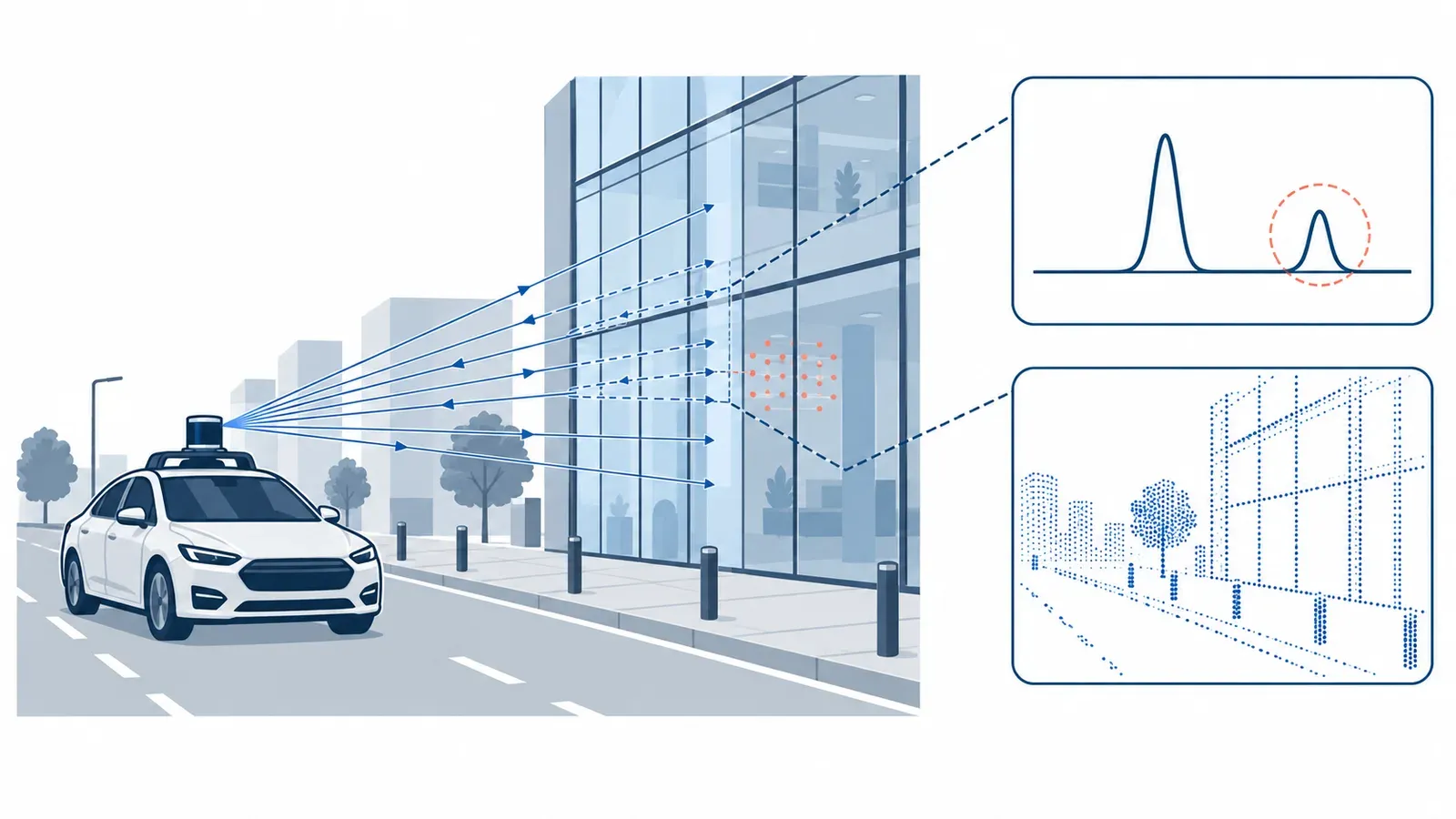
Ghost-FWL
The first large-scale annotated mobile full-waveform LiDAR dataset for ghost artifact detection and removal, with 24,412 frames and 7.5 billion peak-level annotations — 100× more than prior work. Ghost points arise from multi-path reflections off glass and reflective surfaces, degrading 3D mapping and object detection in autonomous driving. Includes FWL-MAE pretraining and transformer-based detection baselines across Ghost, Object, Glass, and Noise categories.
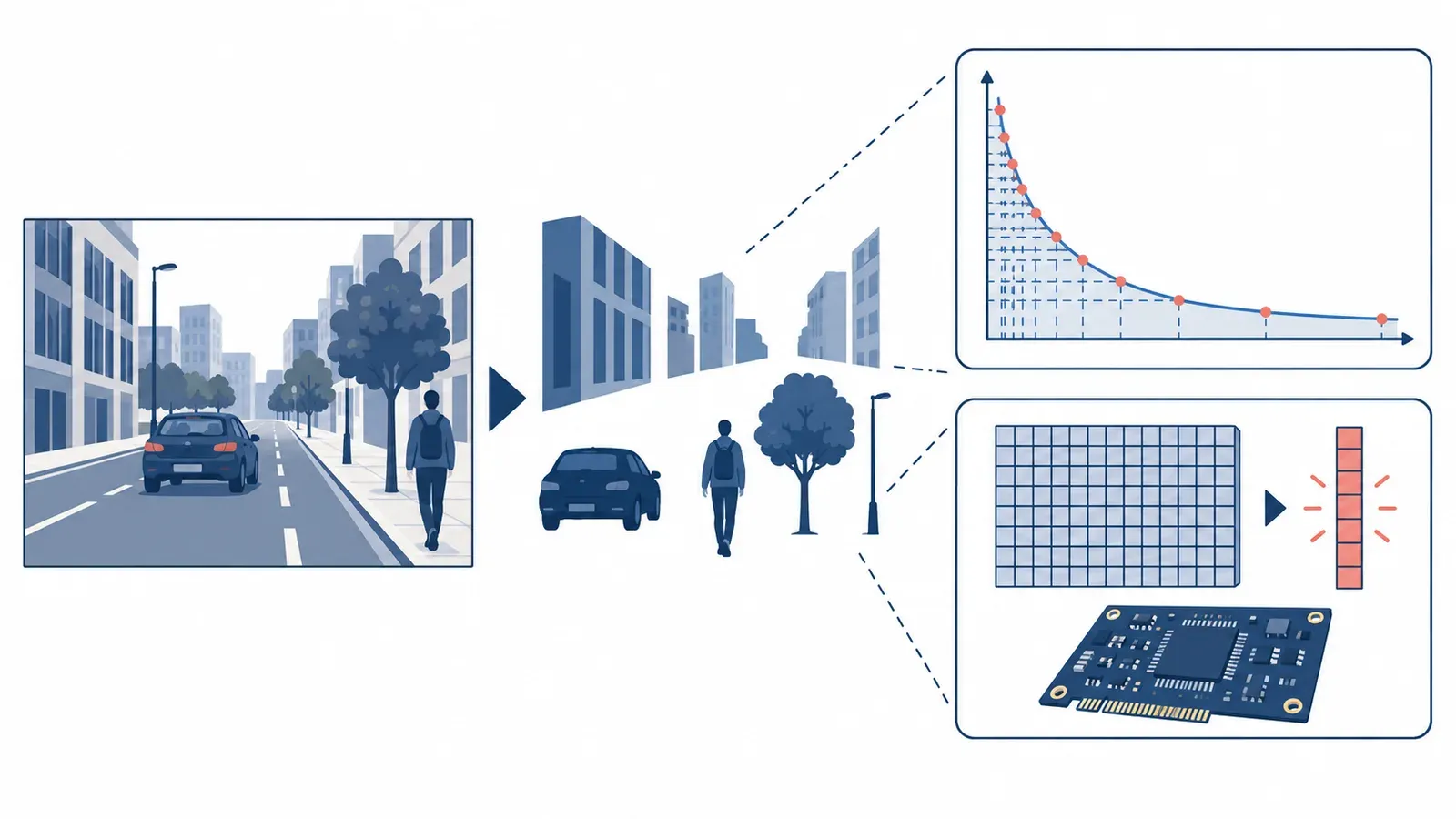
AHCPTQ
Enables the first functional 4-bit post-training quantization of the Segment Anything Model (SAM) via two hardware co-designed innovations: Hybrid Log-Uniform Quantization (HLUQ) for heavy-tailed post-GELU activations, and Channel-Aware Grouping (CAG) cutting on-chip register overhead by 99.7%. FPGA deployment achieves 7.89× speedup and 8.64× energy efficiency over float at W4A4 with 36.6% mAP.
From Keio to the world.
We welcome lab visits from undergraduates, and we're recruiting Ph.D. students, post-docs, and industry collaborations. Feel free to reach out.