Episode 4
Current Mirrors and Active Loads
Increasing the load resistor stopped the amplifier from working. Learn how current mirrors and active loads provide high gain while preserving the bias current.
1Intro: why did a larger RD stop amplification?
Zundamon
My design is in trouble! I increased RD for more gain, and it stopped amplifying!
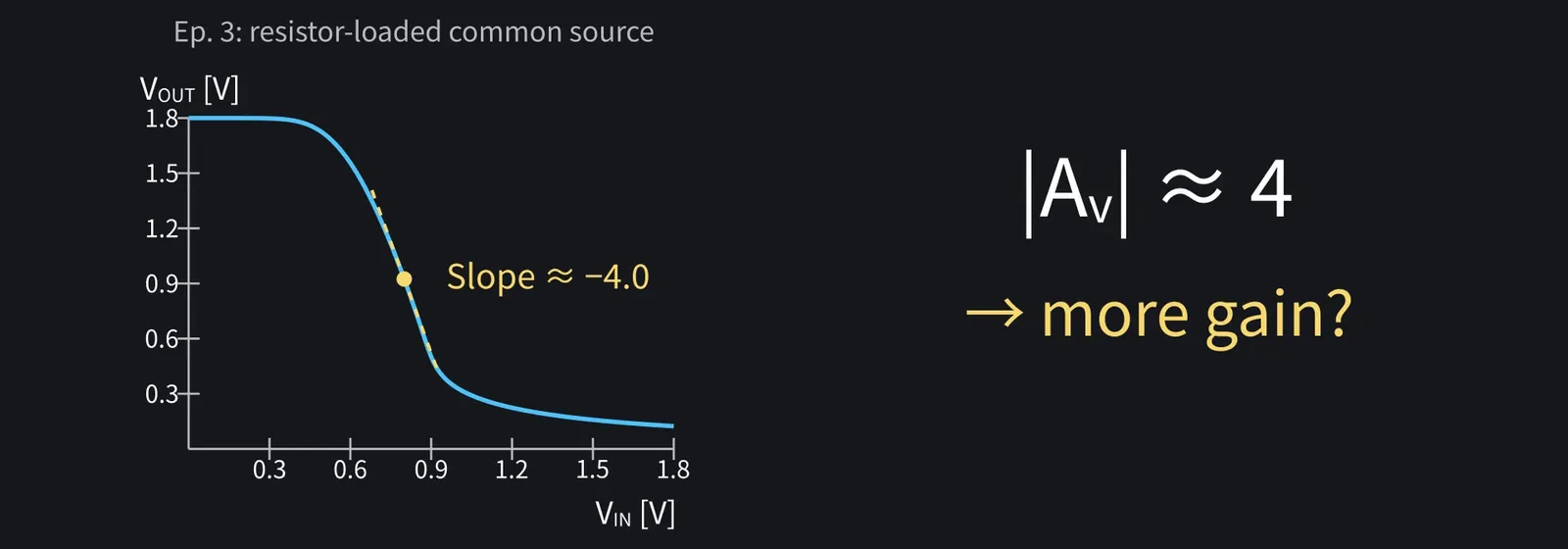

Zundamon
Please! I need to fix it before the deadline, nanoda!

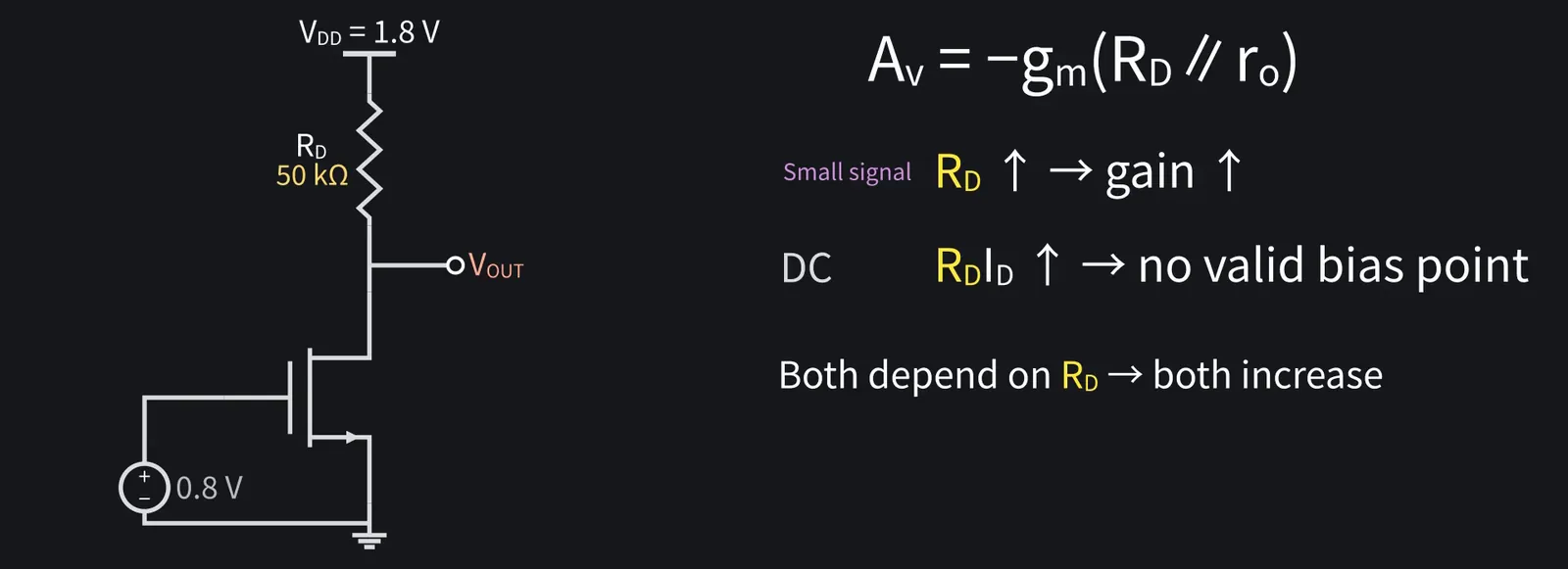
2Review: increasing RD
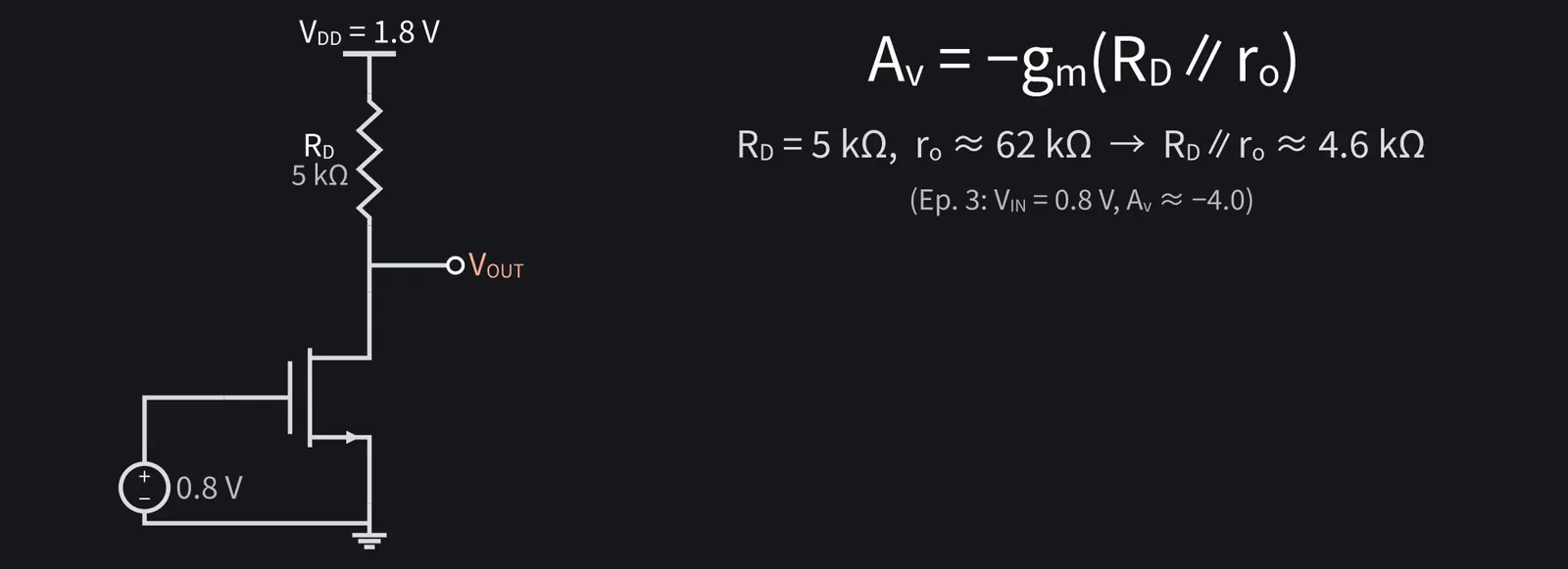
Zundamon
I thought a larger RD would give more gain.
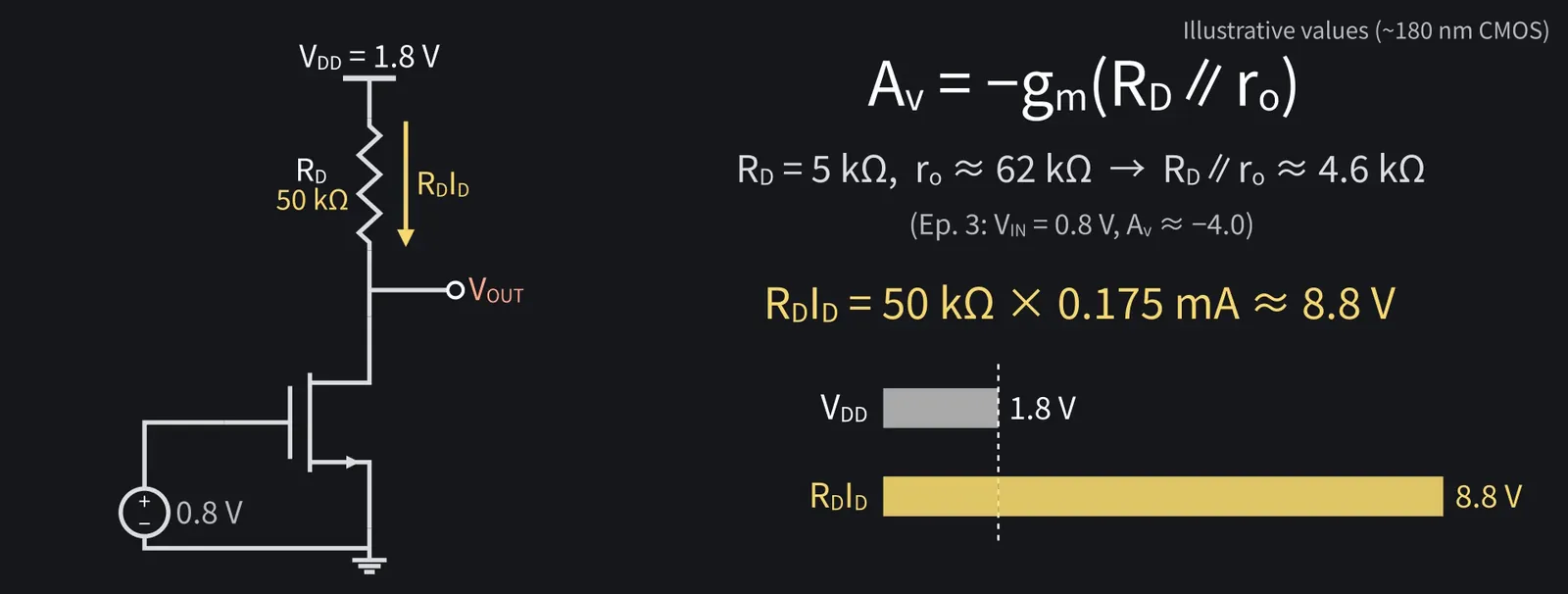
Zundamon
But the supply is only 1.8 V! That's nowhere near enough!
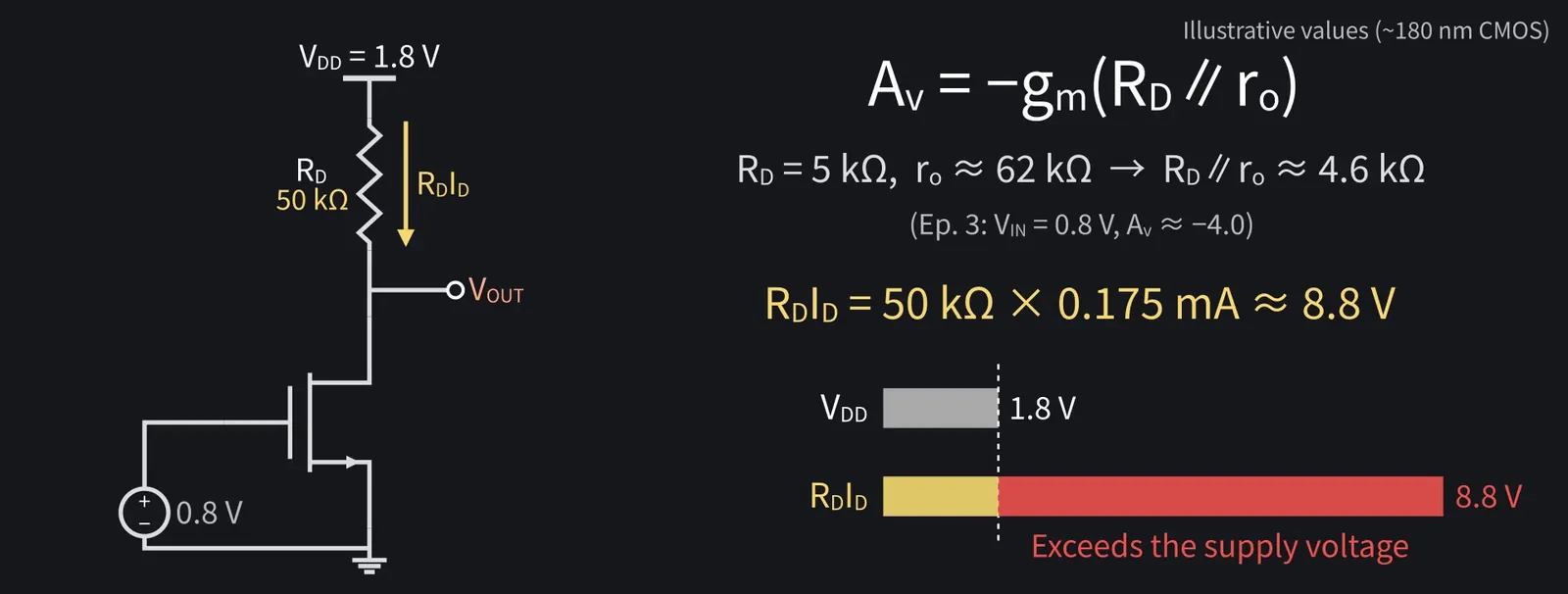
3Using a current source as the load
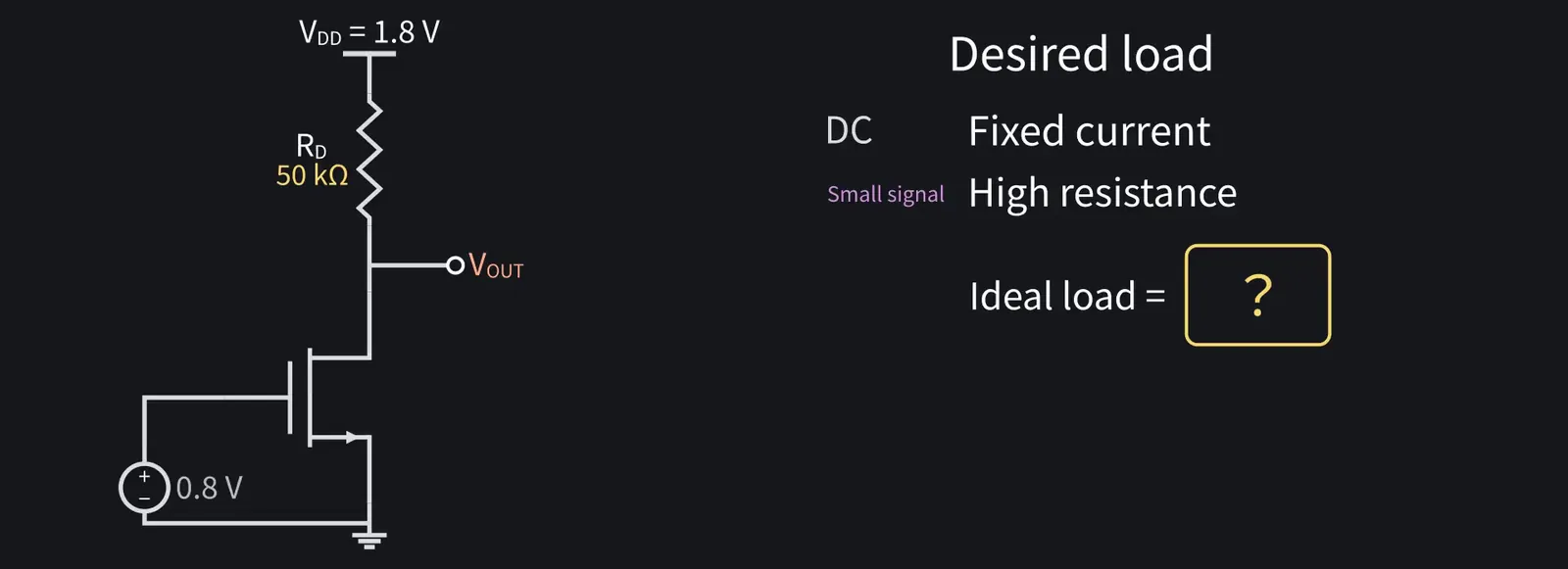
ZundamonQuestion
You mean a current source?
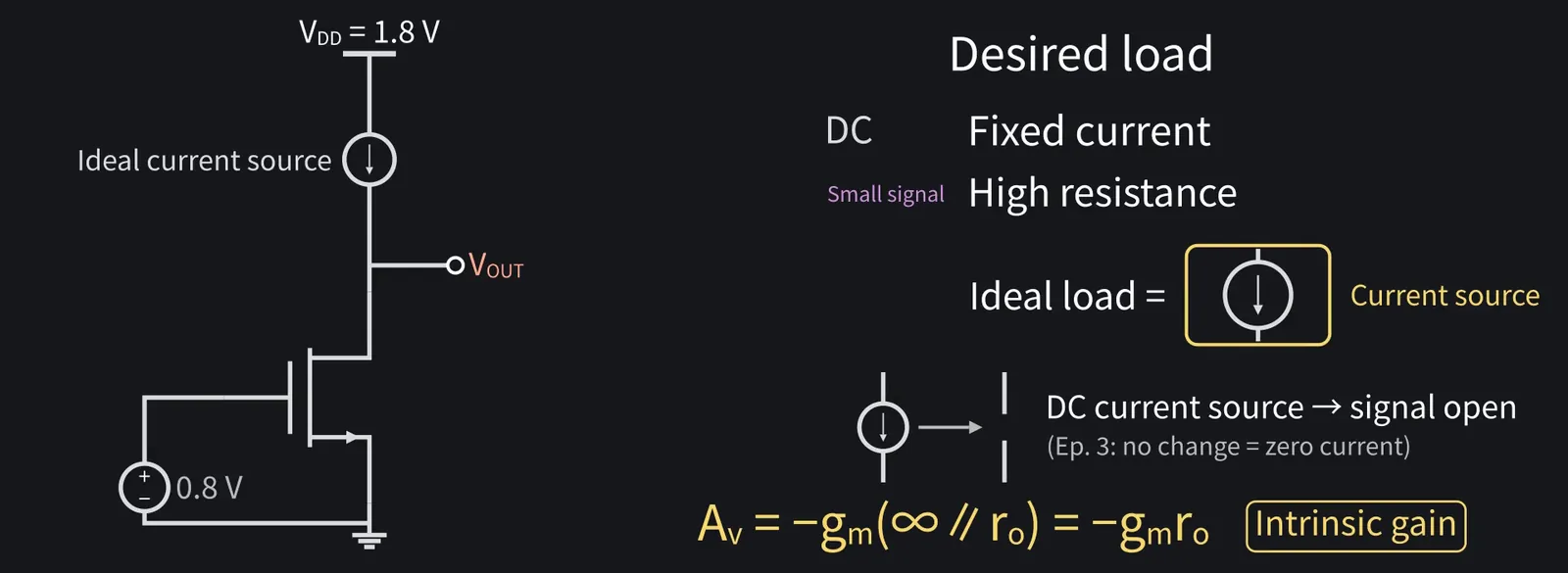
ZundamonQuestion
How do we build such a current source?
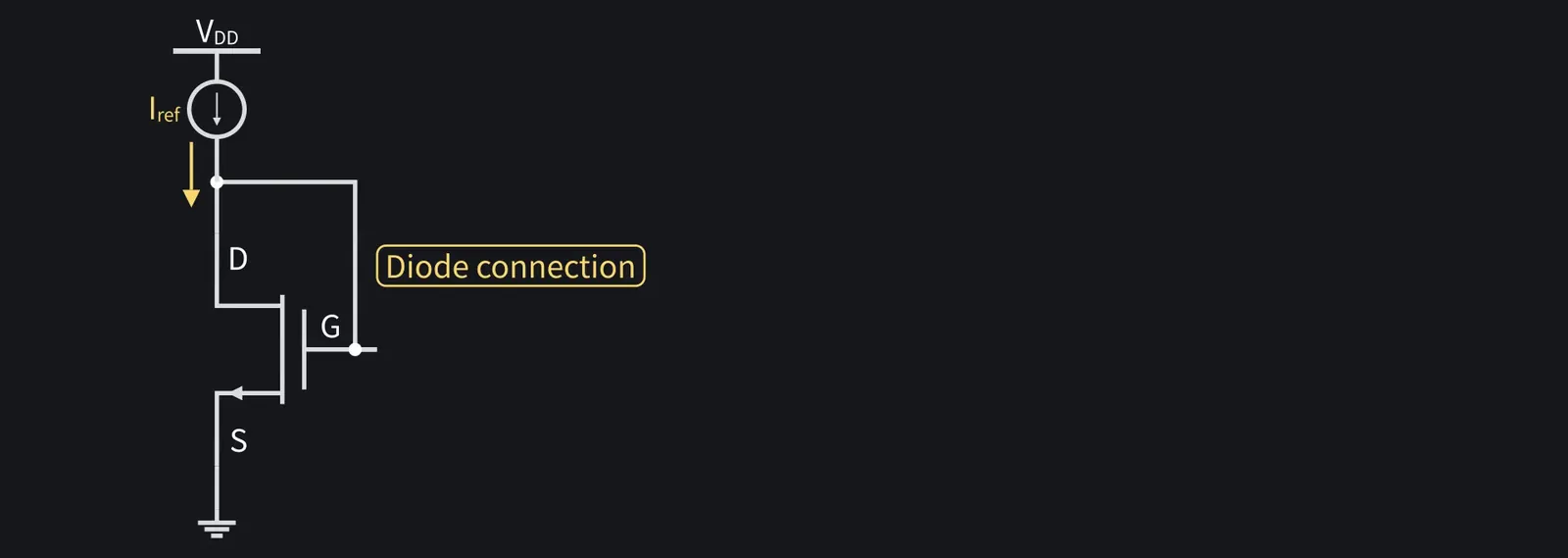
4Creating a current source with a diode connection
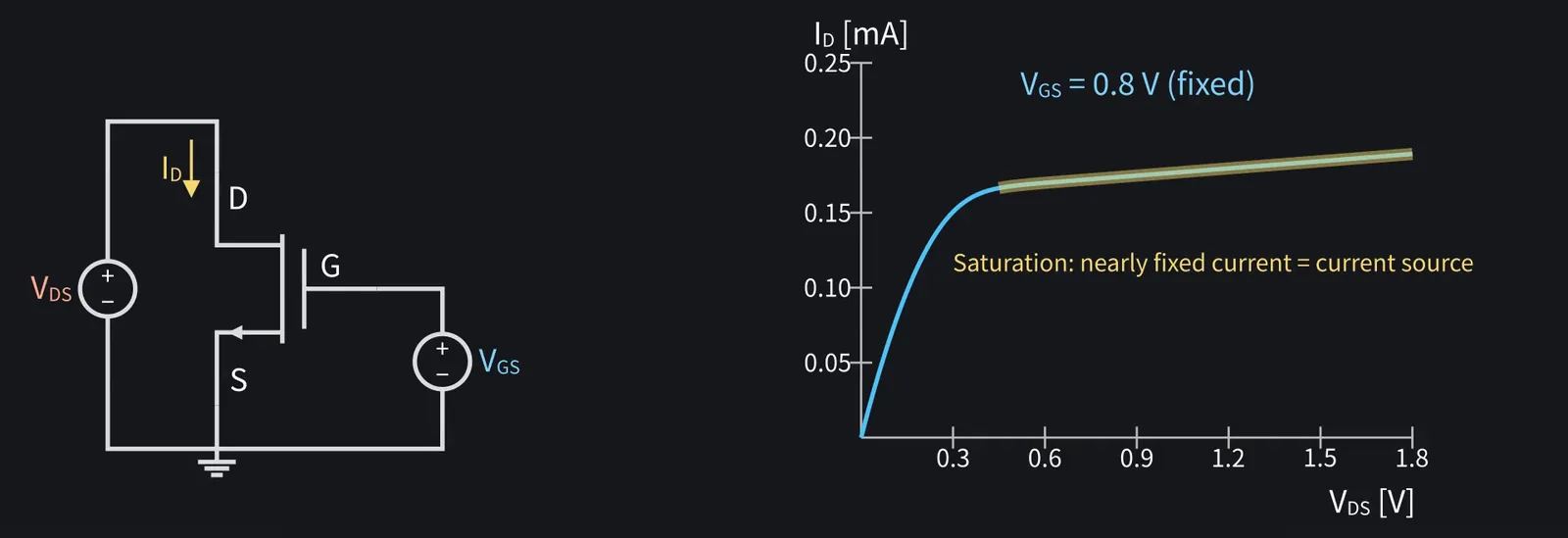
ZundamonQuestion
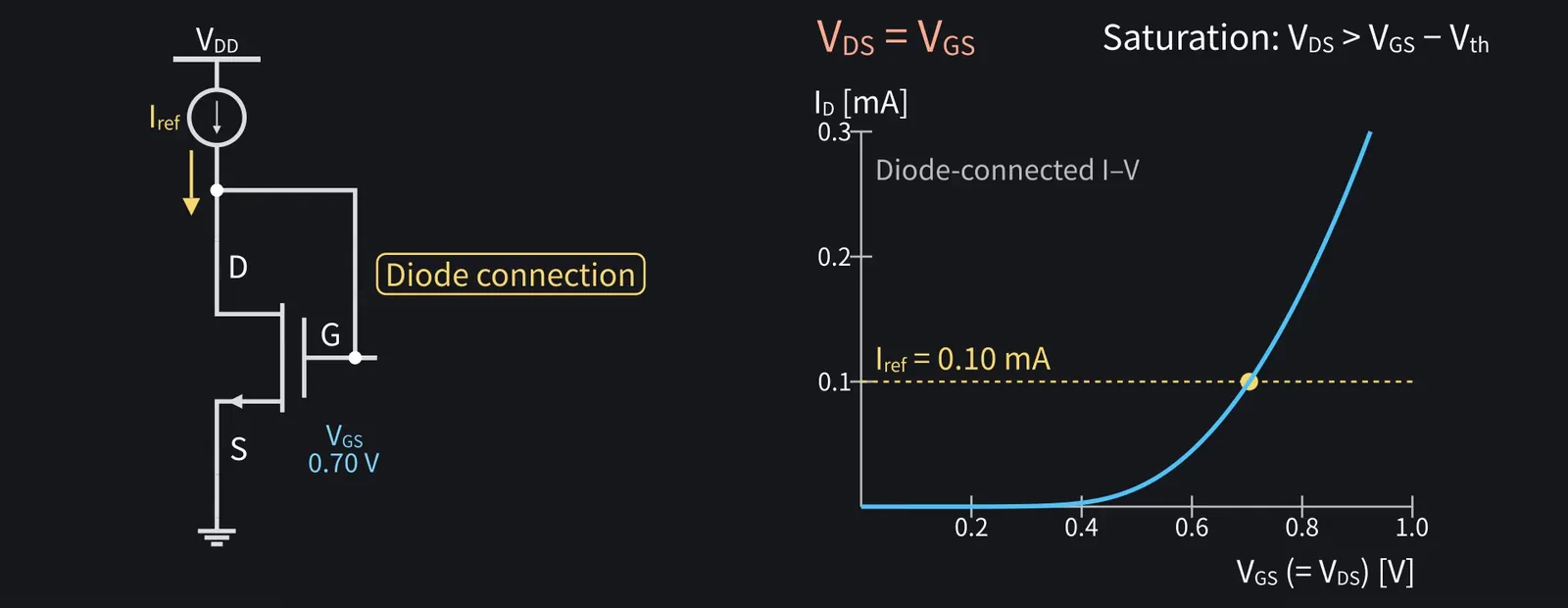
How do we find the VGS that gives the current we want?
ZundamonQuestion
Is it still in saturation with gate and drain connected?
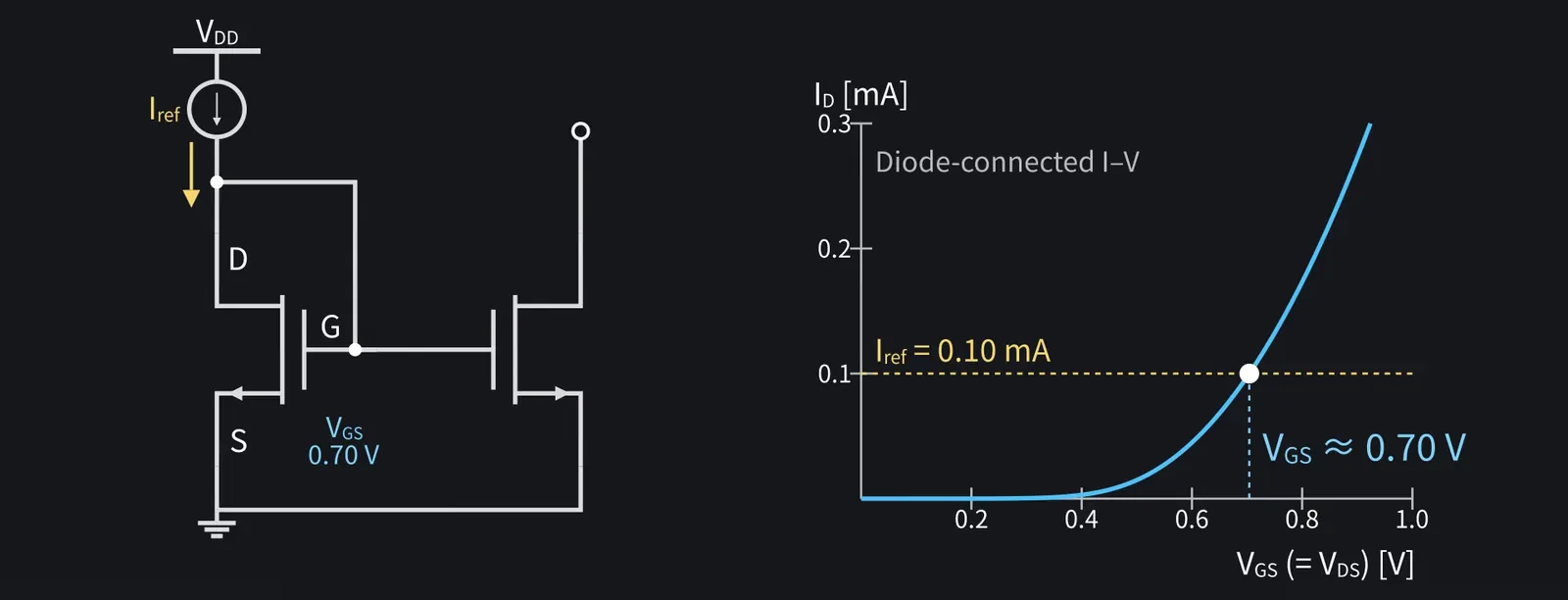
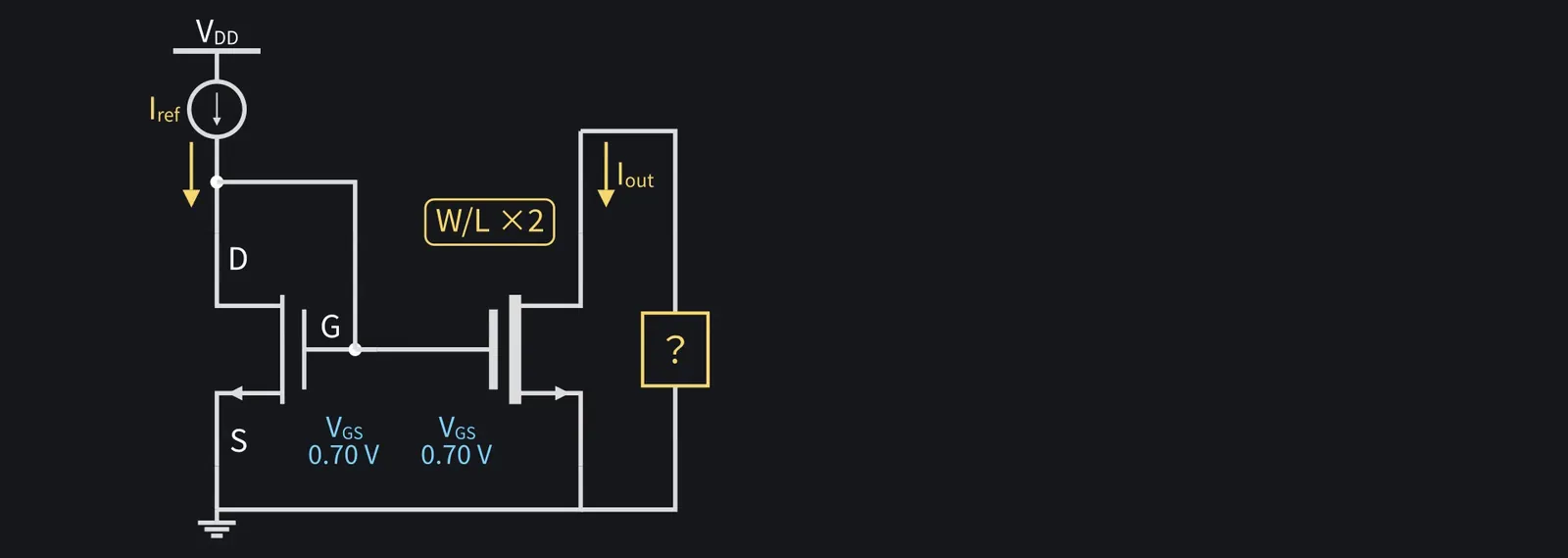
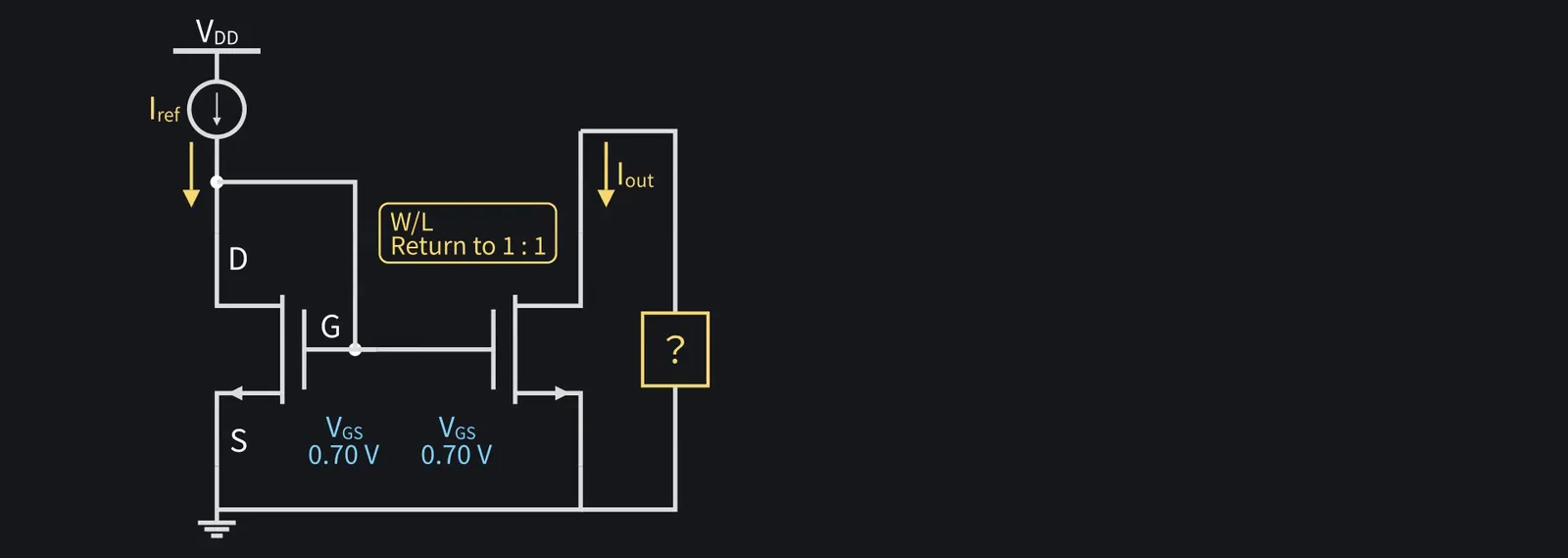
5The current mirror
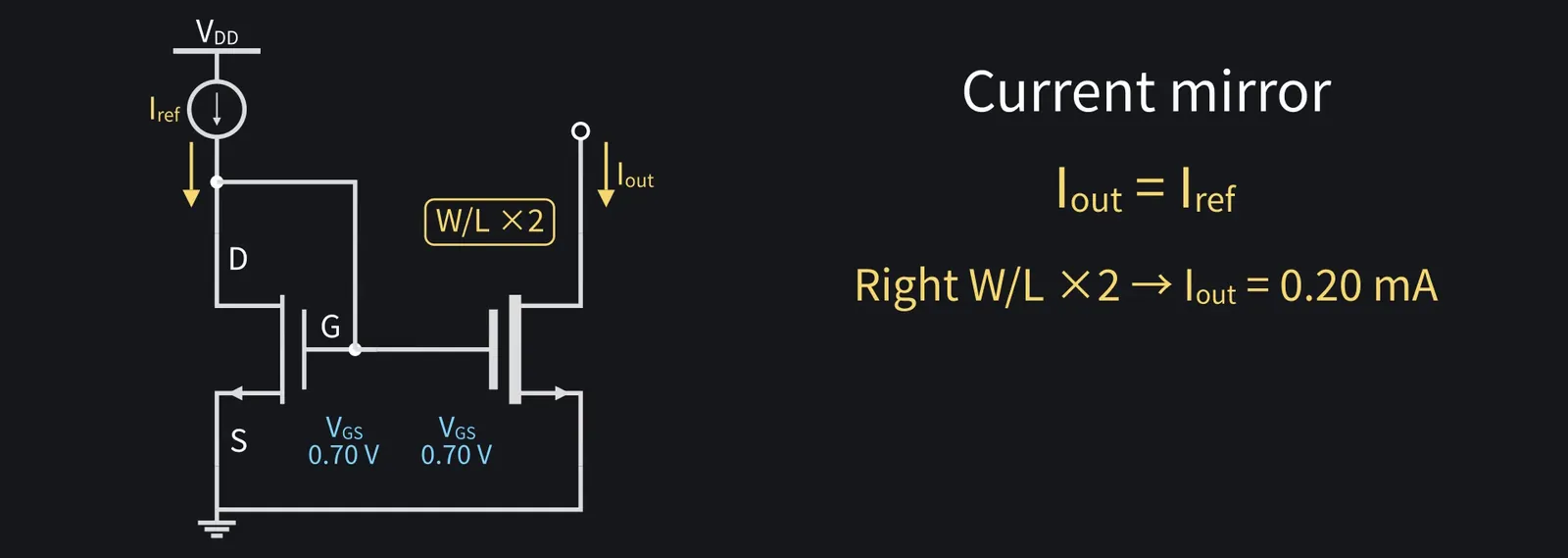
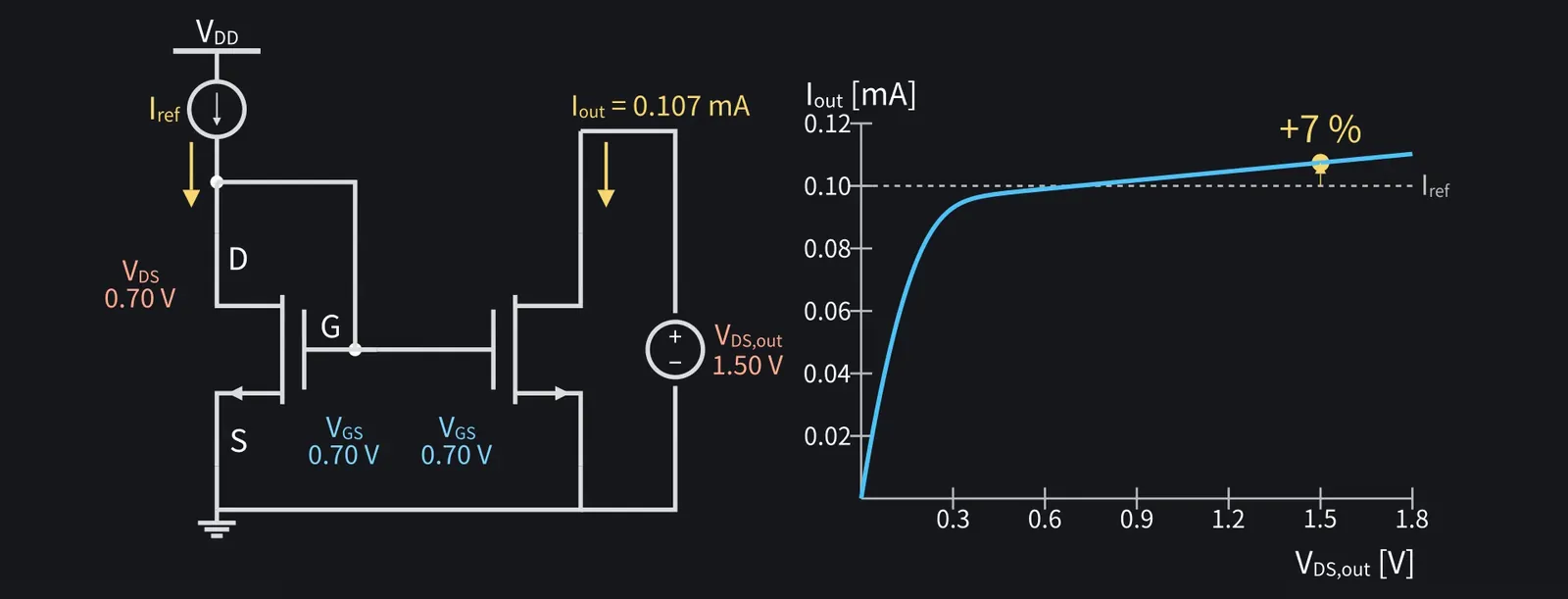
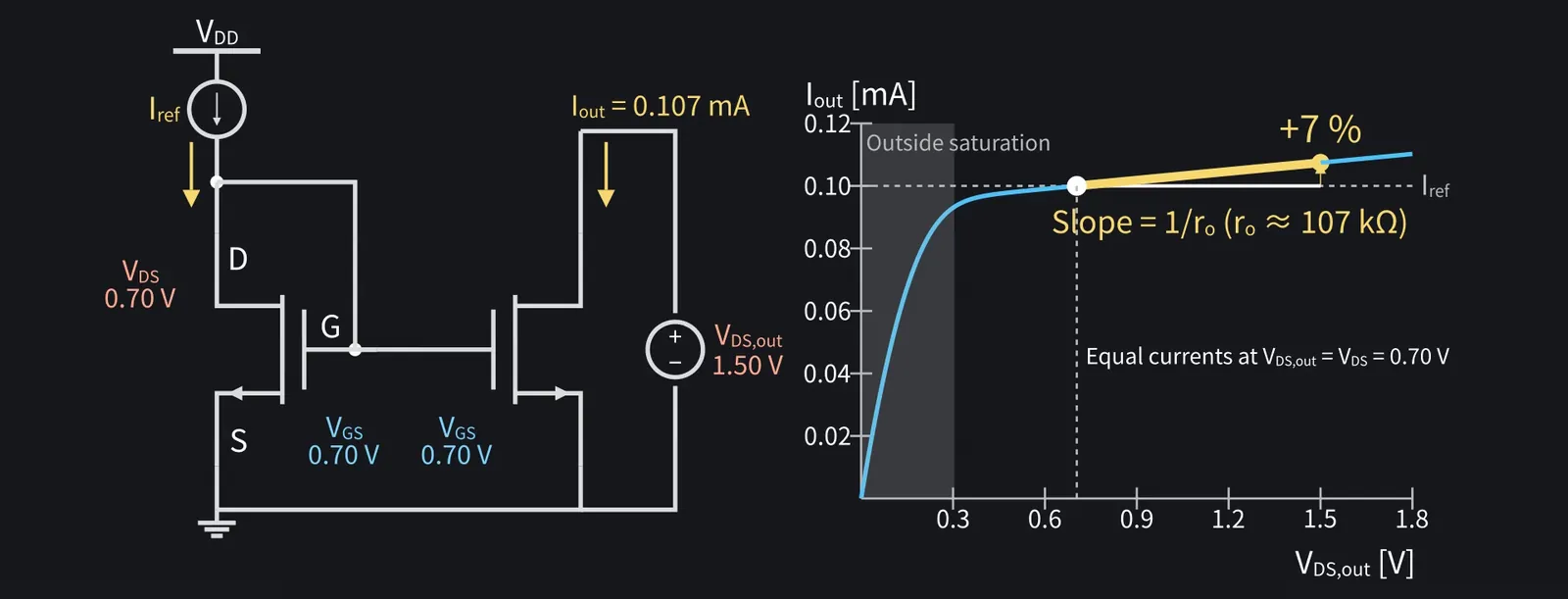
6Mirror error from ro and the saturation condition
ZundamonQuestion
So it's exactly the same current whatever circuit we connect on the right?
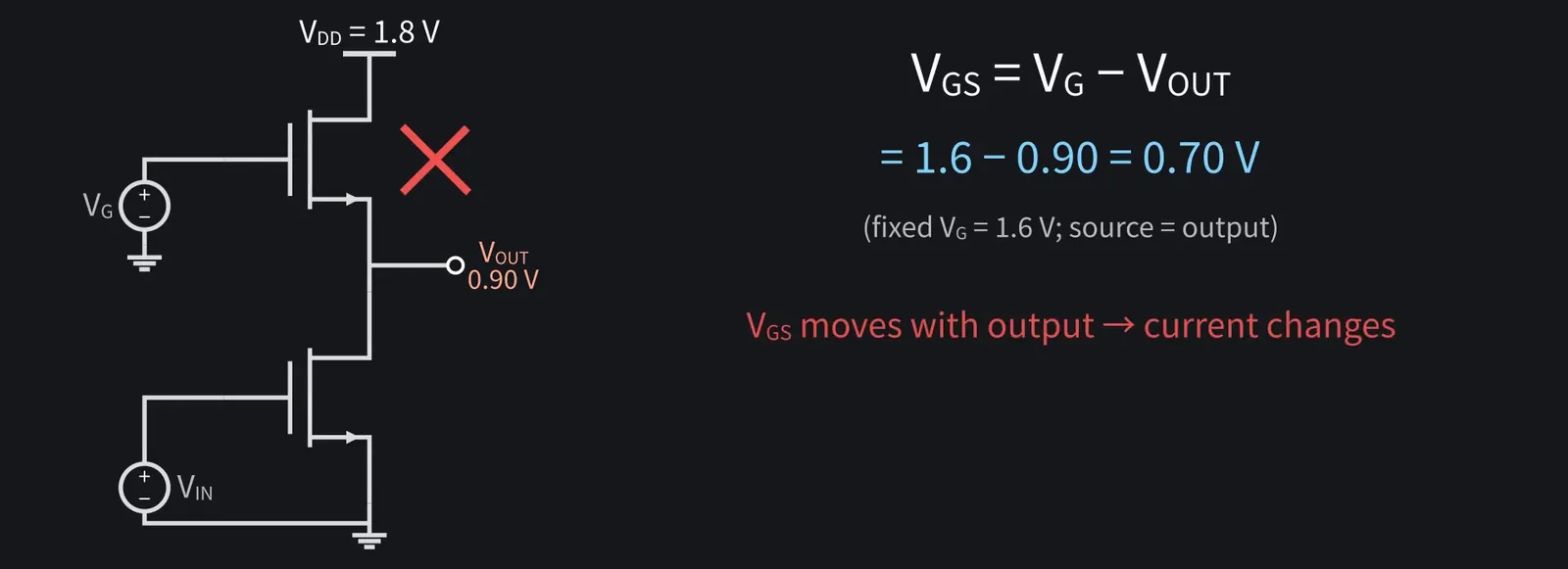
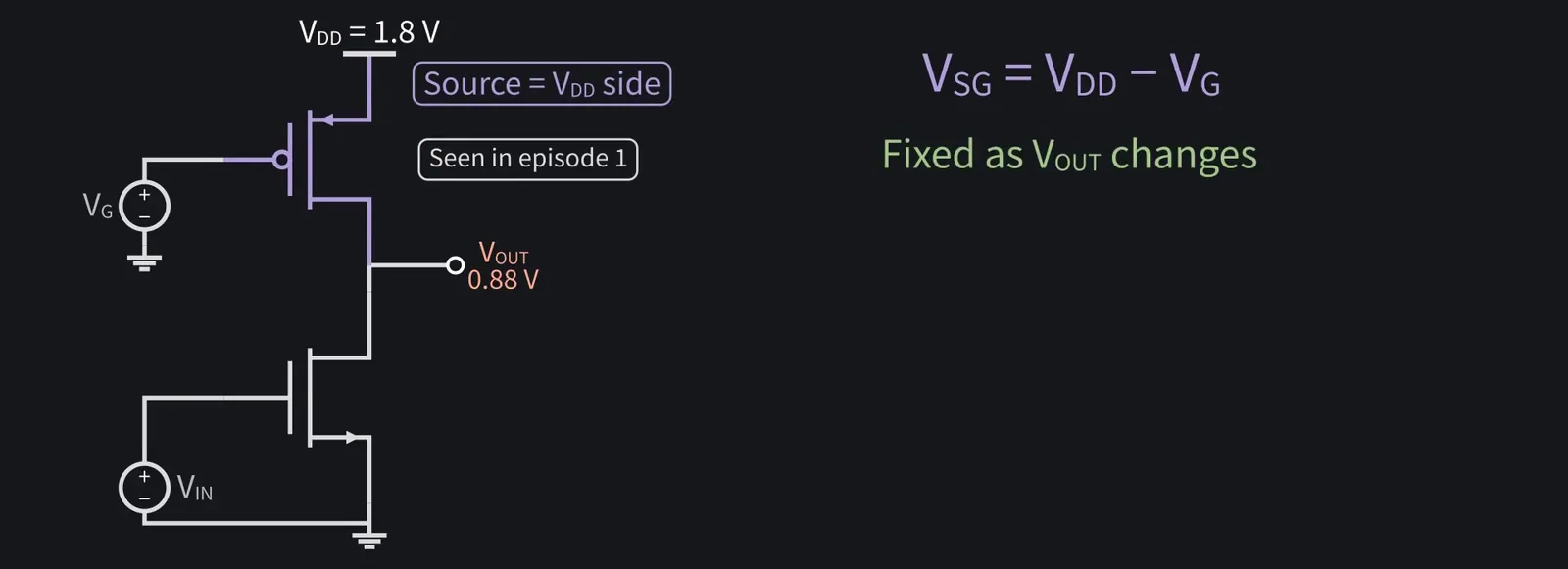
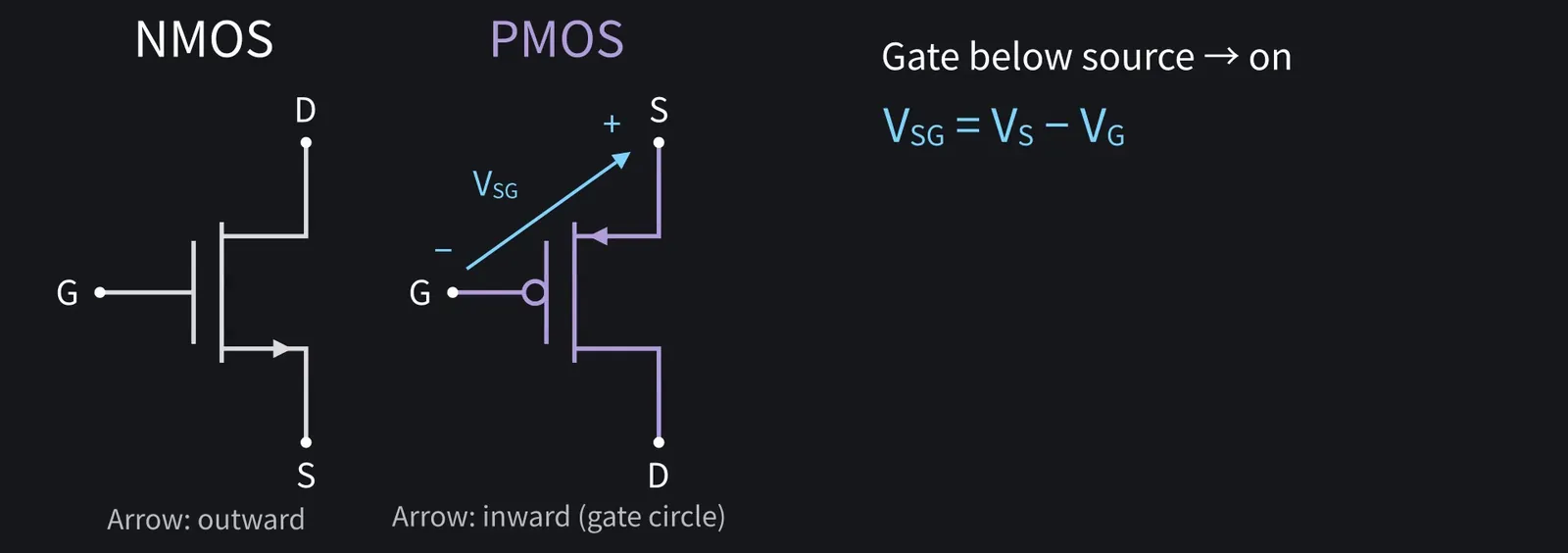
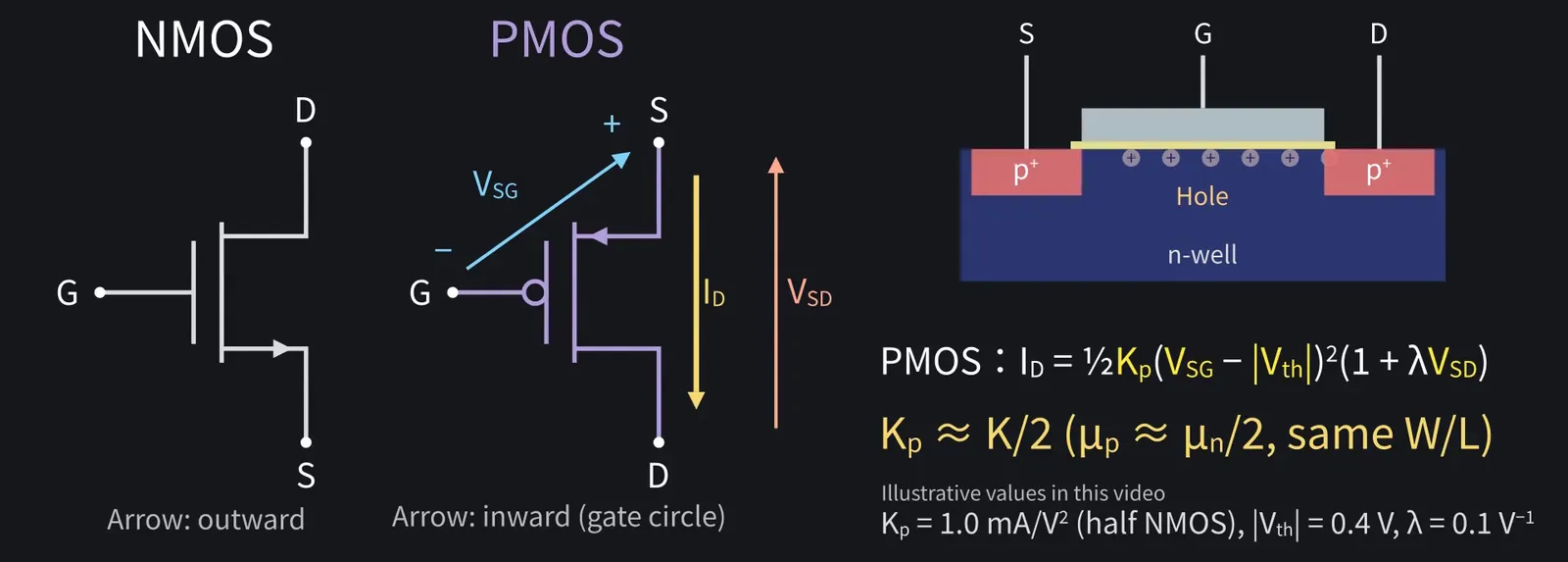
7A closer look at PMOS
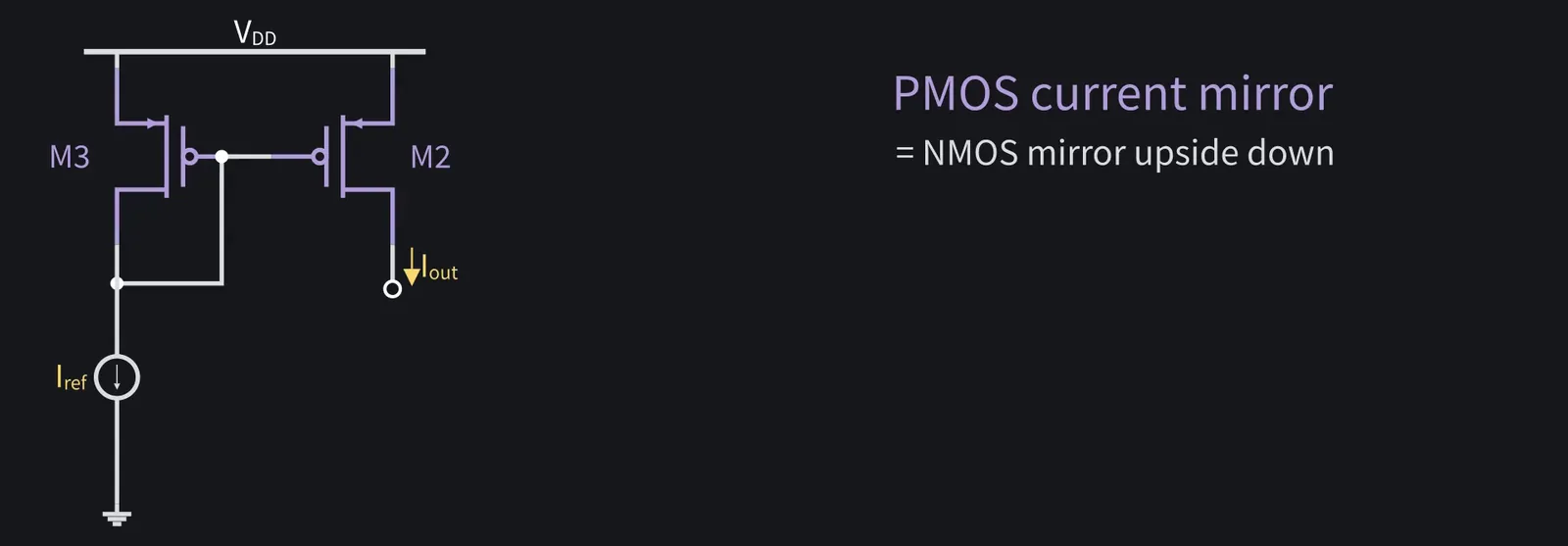
ZundamonQuestion
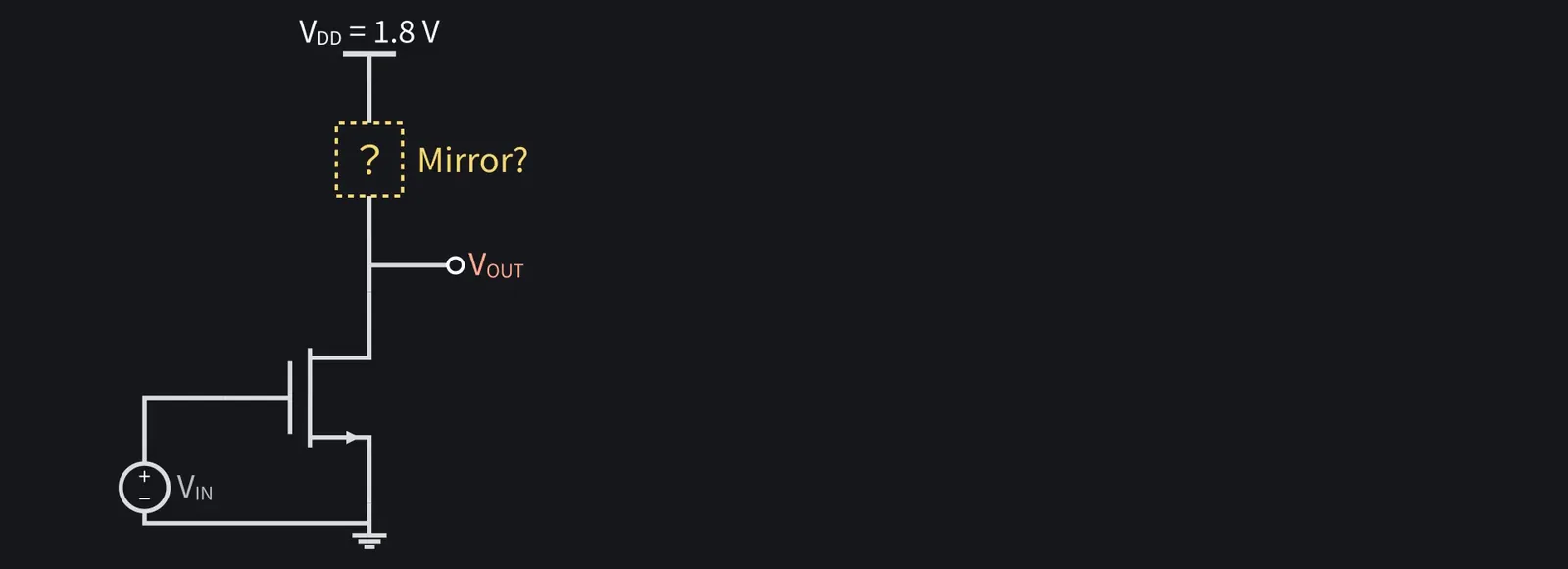
Can we just put that mirror in place of RD?
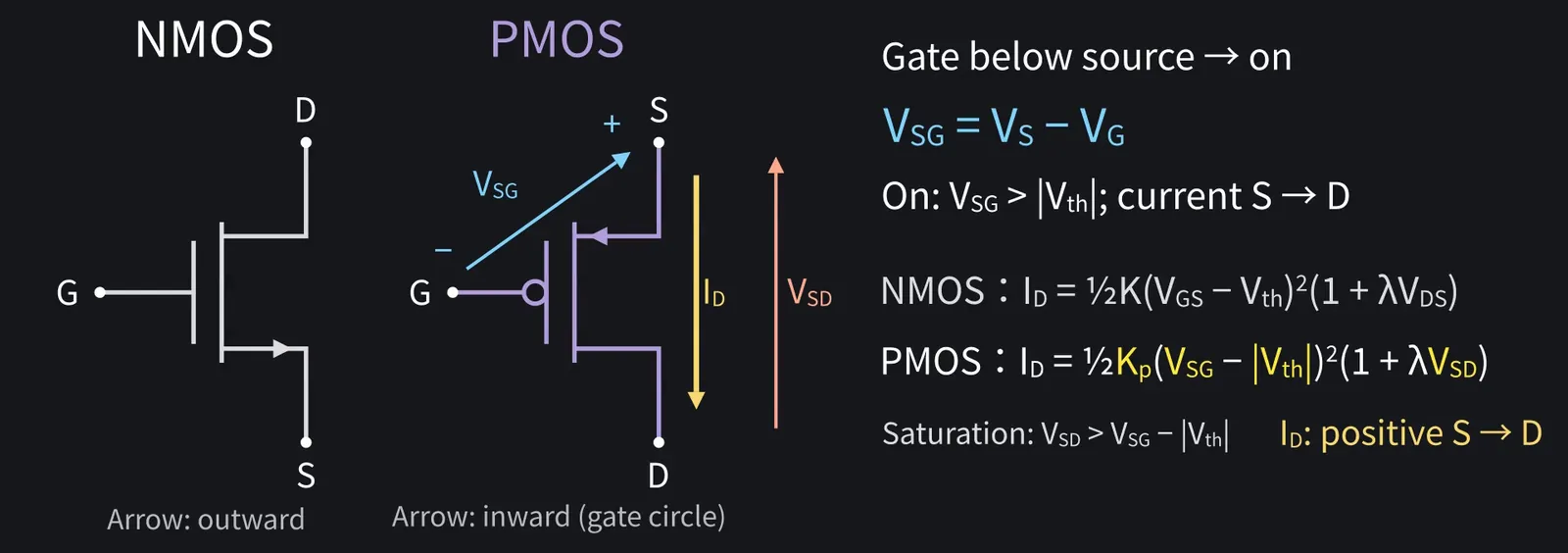
ZundamonQuestion
Is the current magnitude the same as NMOS too?
8The common-source amplifier with an active load
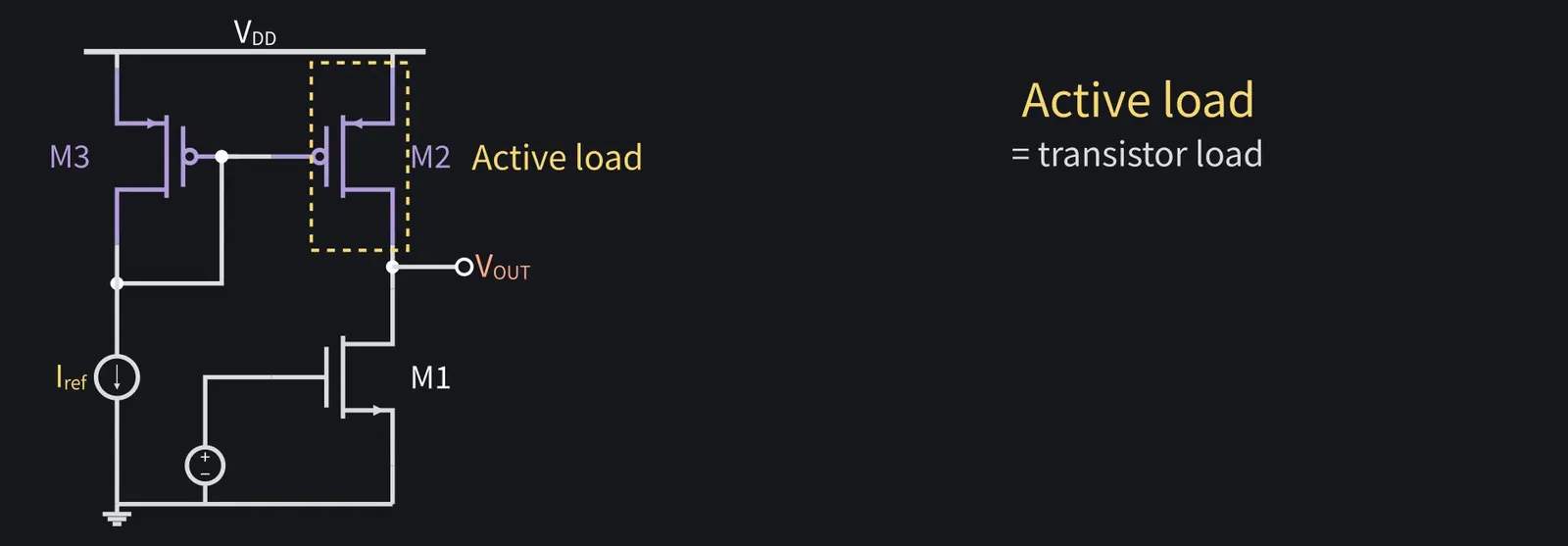
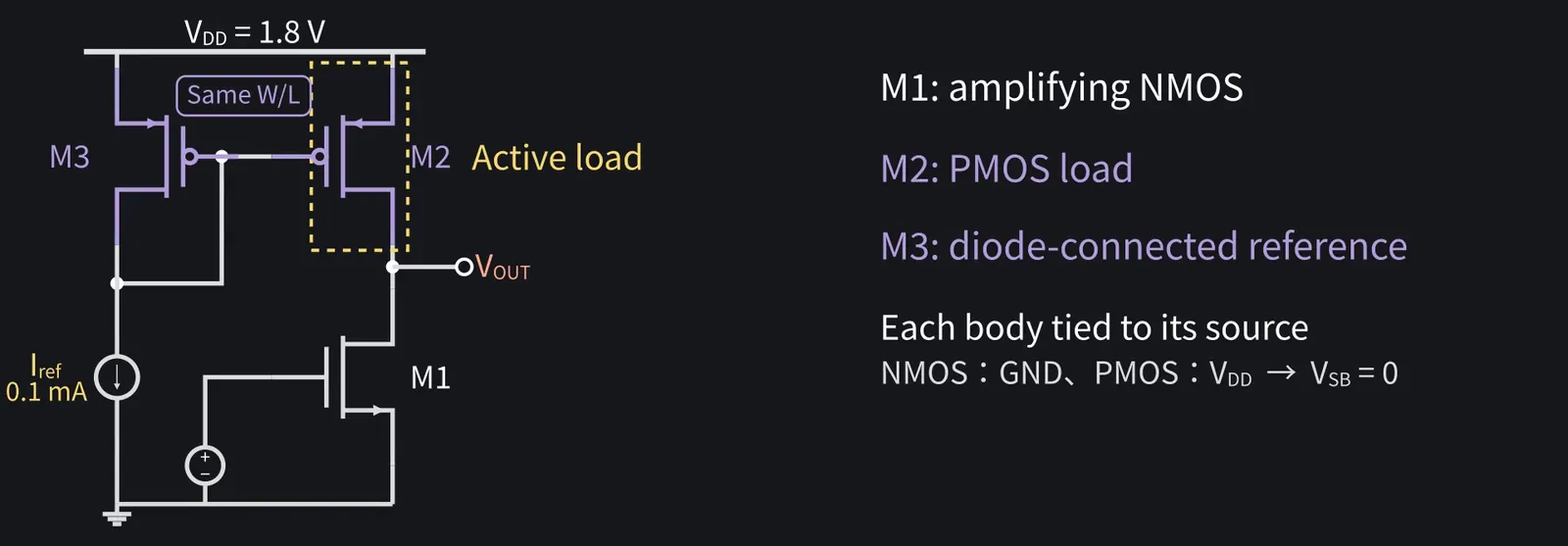
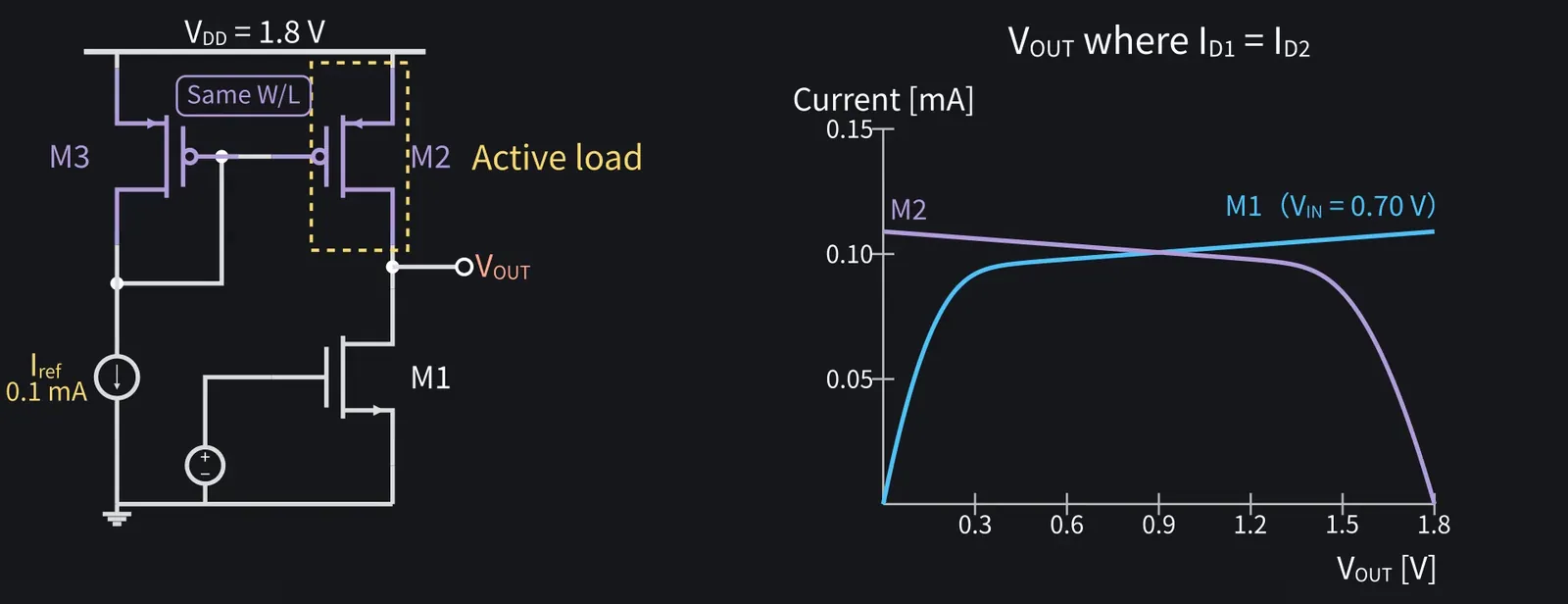
Zundamon
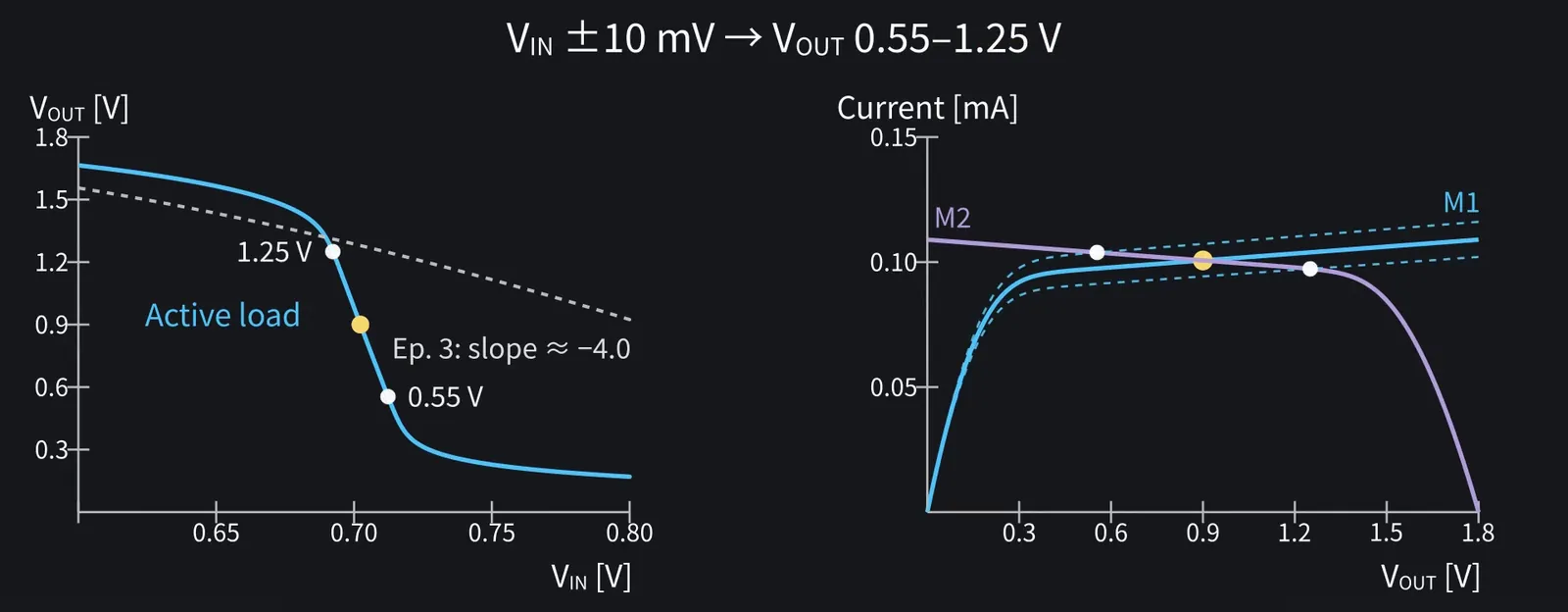
The intersection is the operating point!
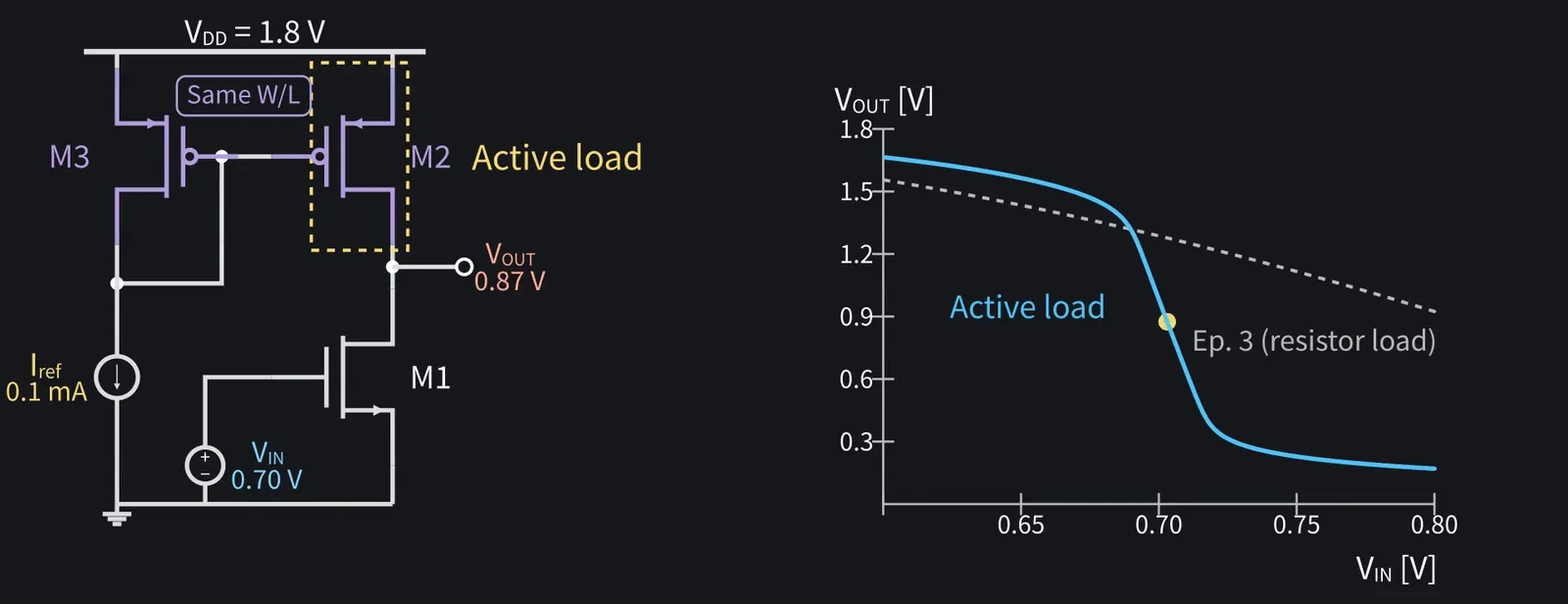
9Small-signal equivalent circuit and Av
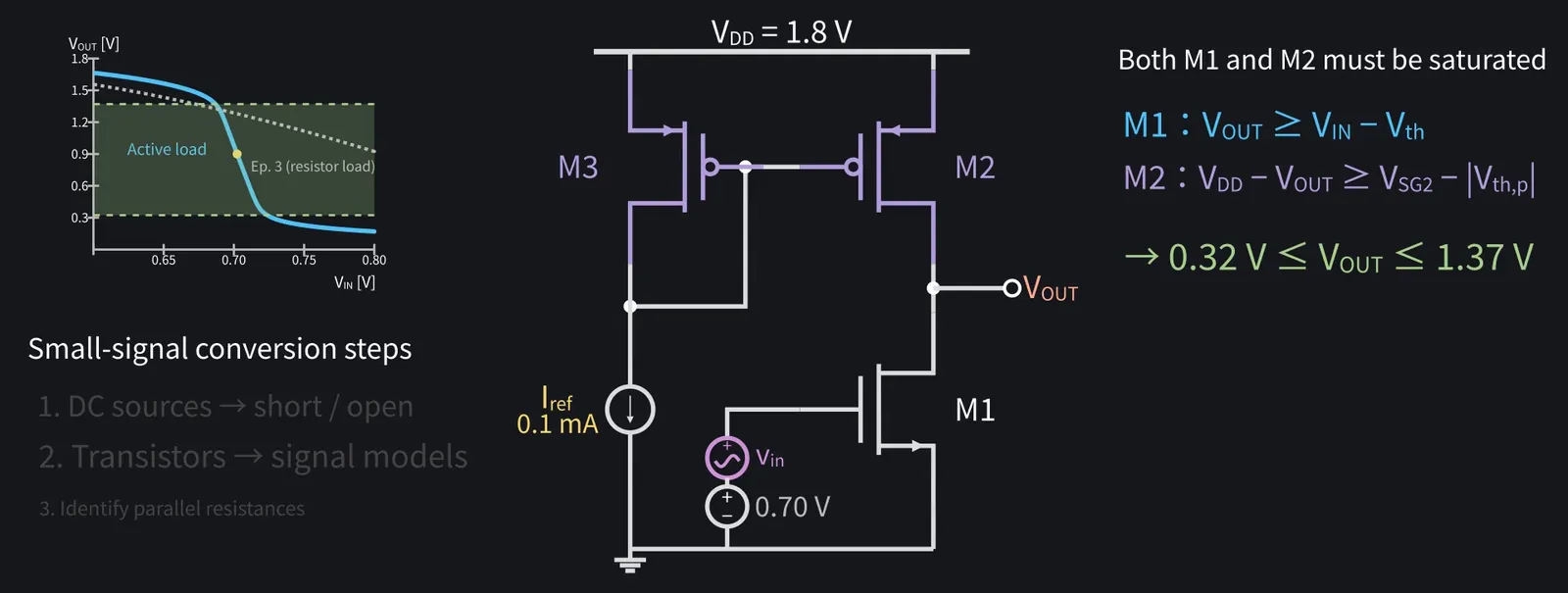
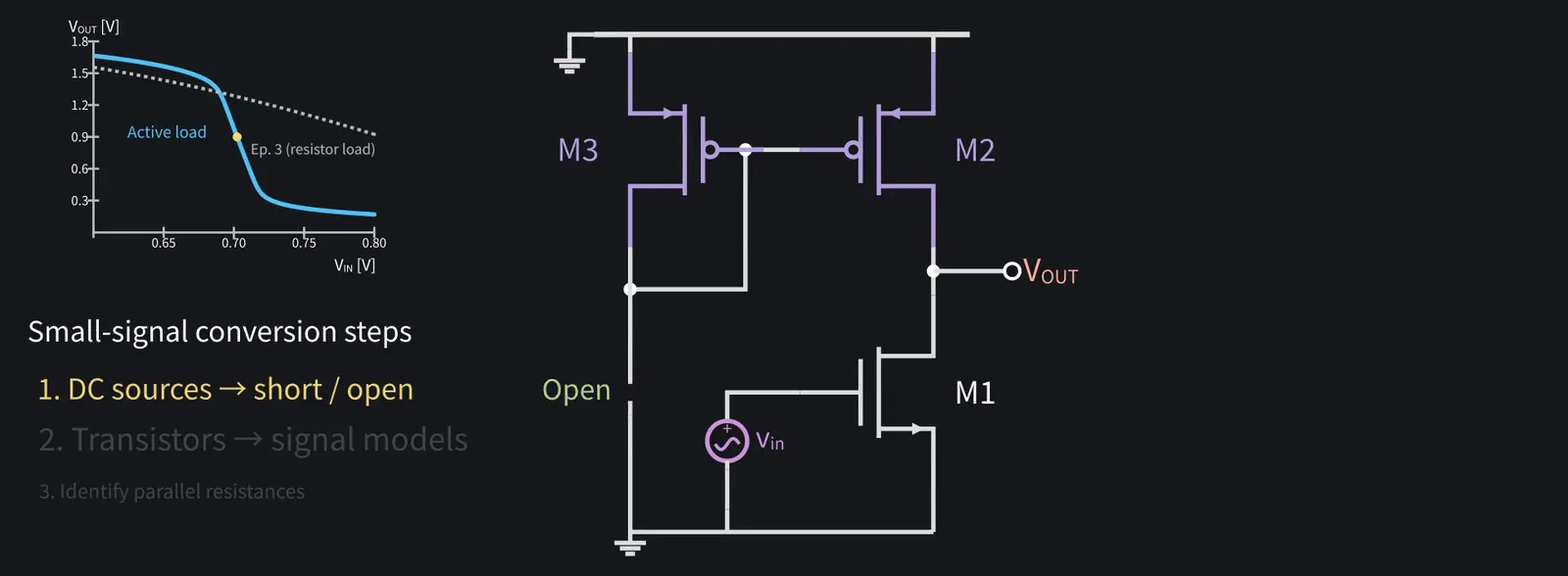
ZundamonQuestion
Doesn't opening Iref leave M2's gate floating?
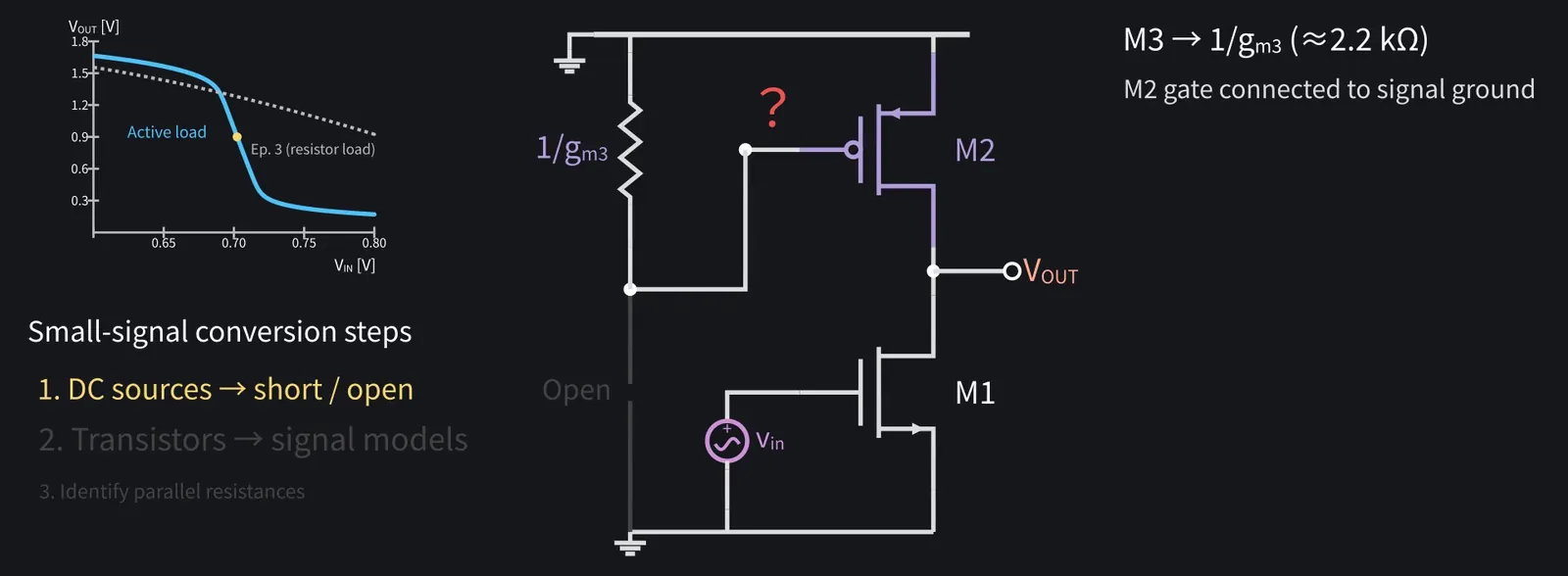
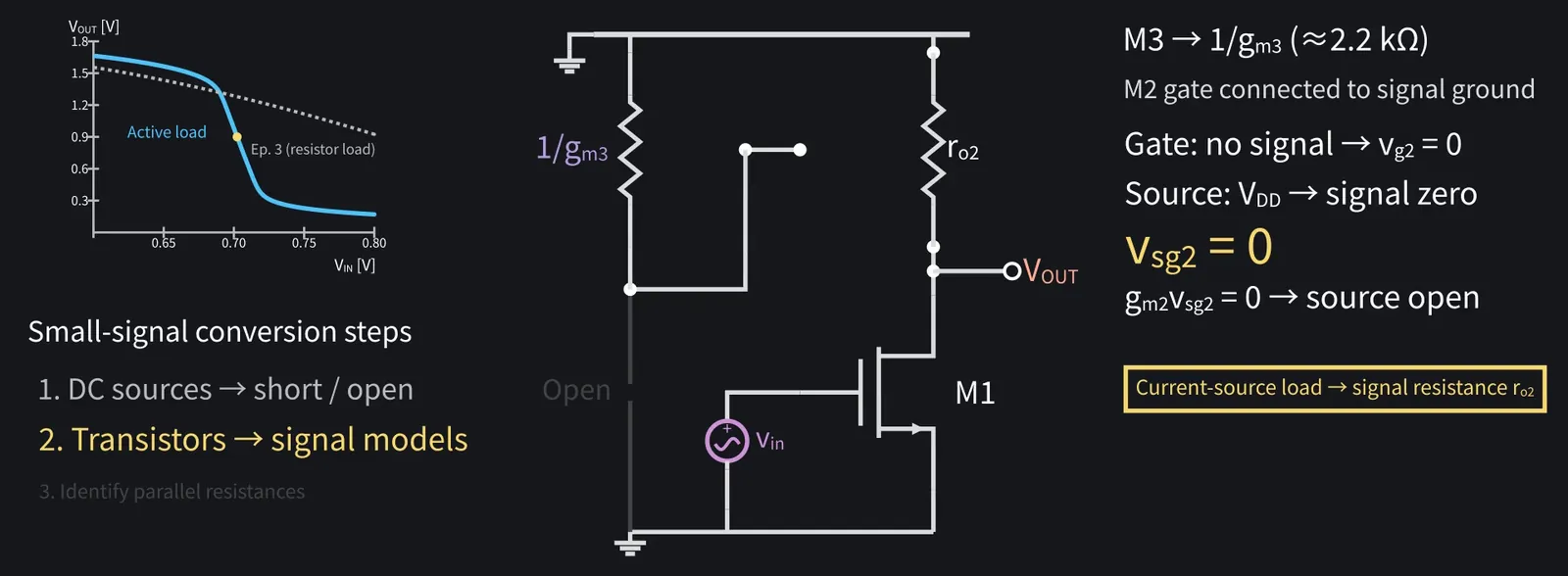
Zundamon
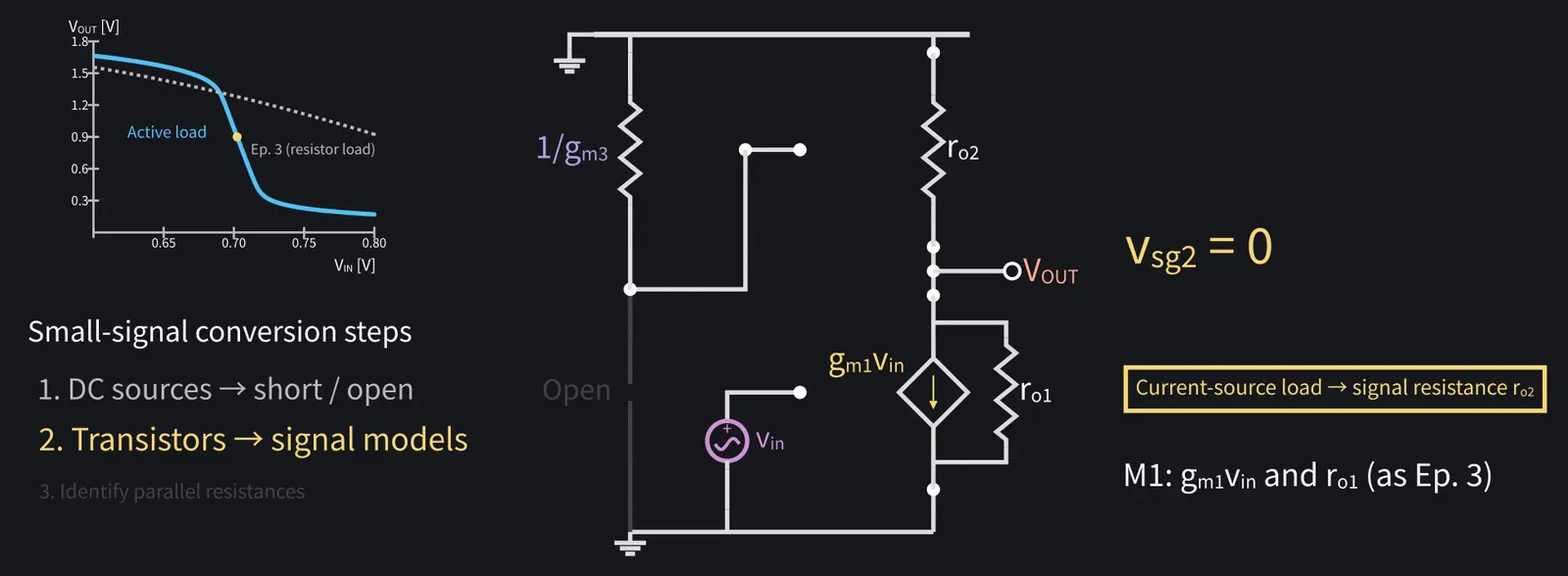
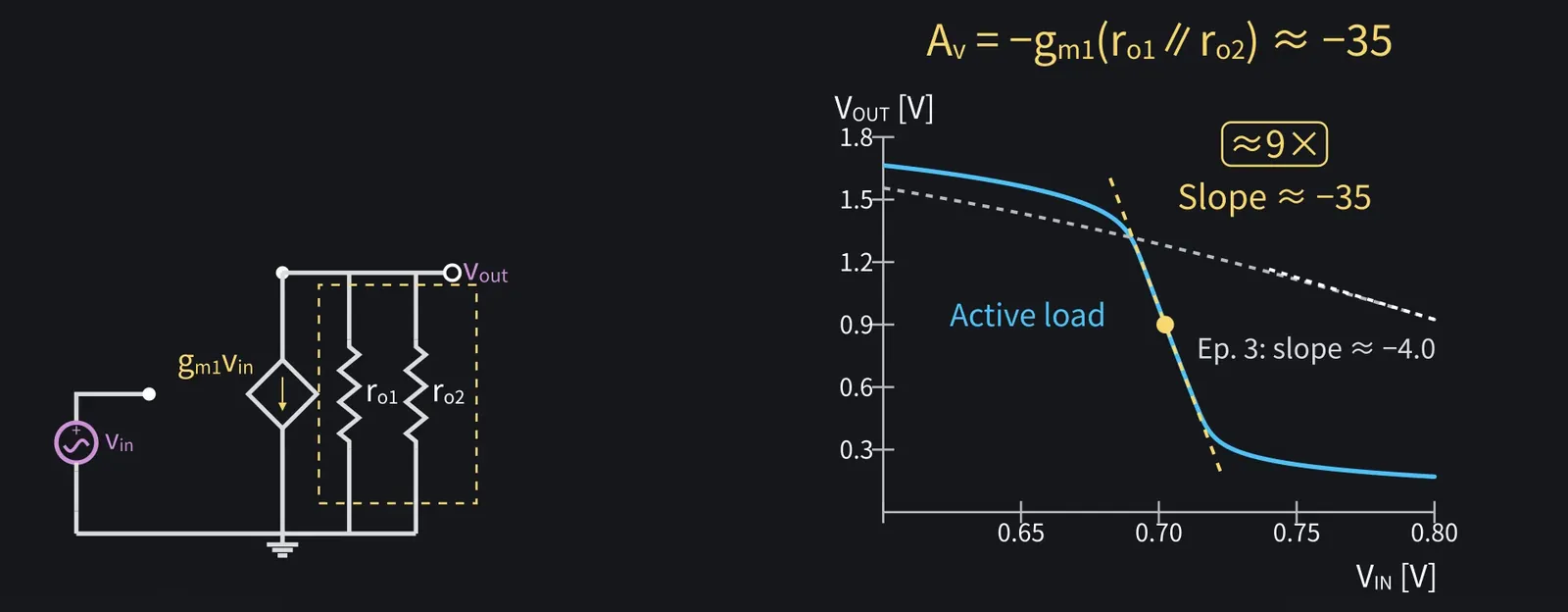
So the current-source load looks like resistance ro2 for small signals!
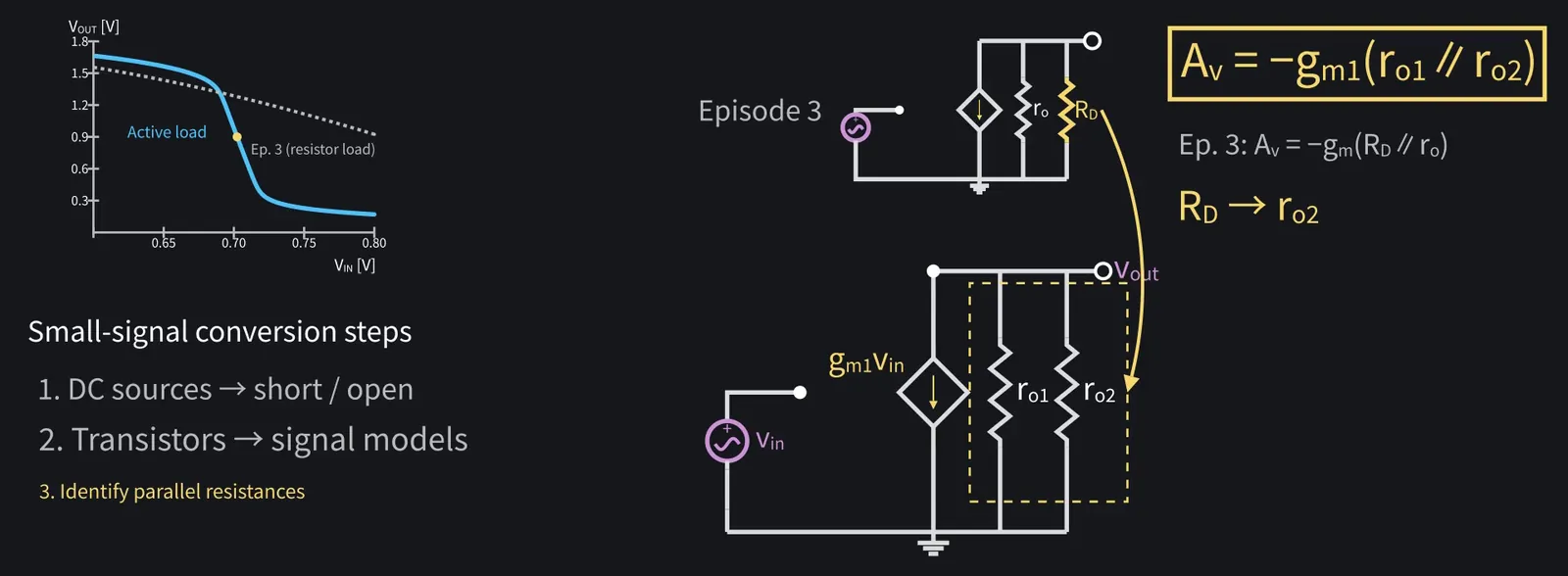
10Intrinsic gain and a numerical example
ZundamonQuestion
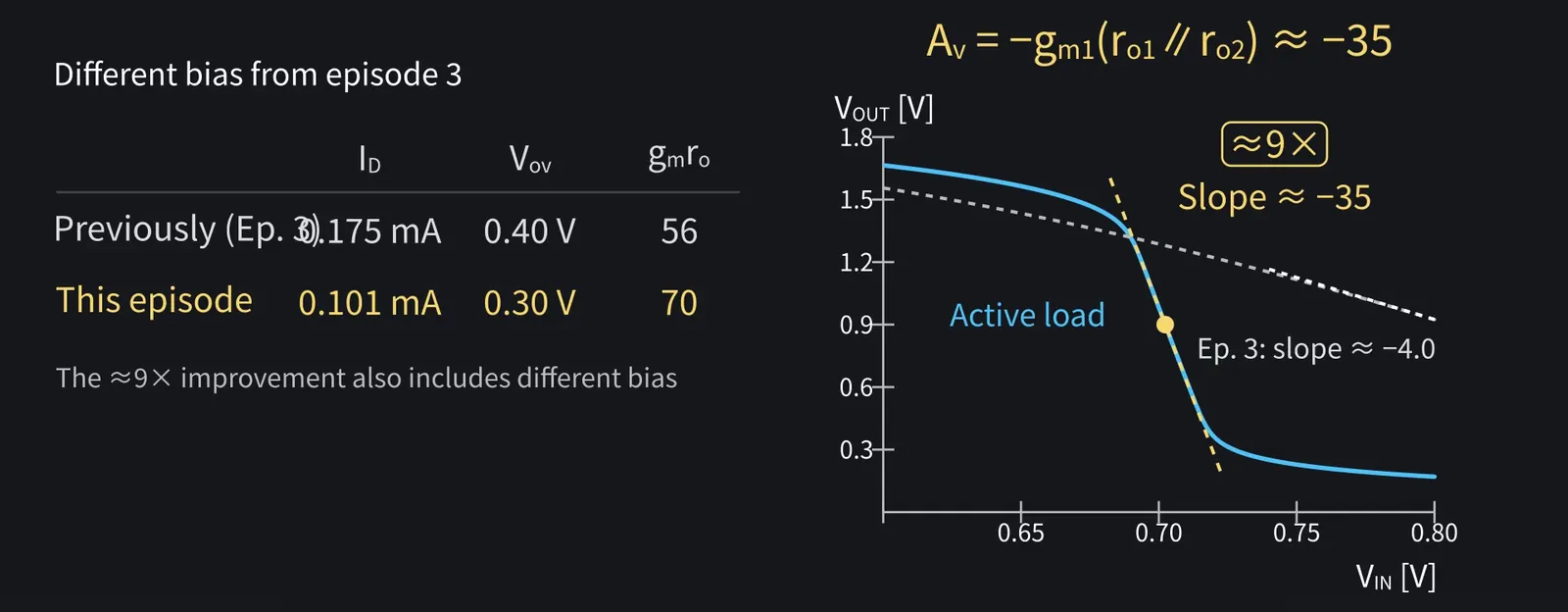
How does that compare with gm·ro for an ideal source load?
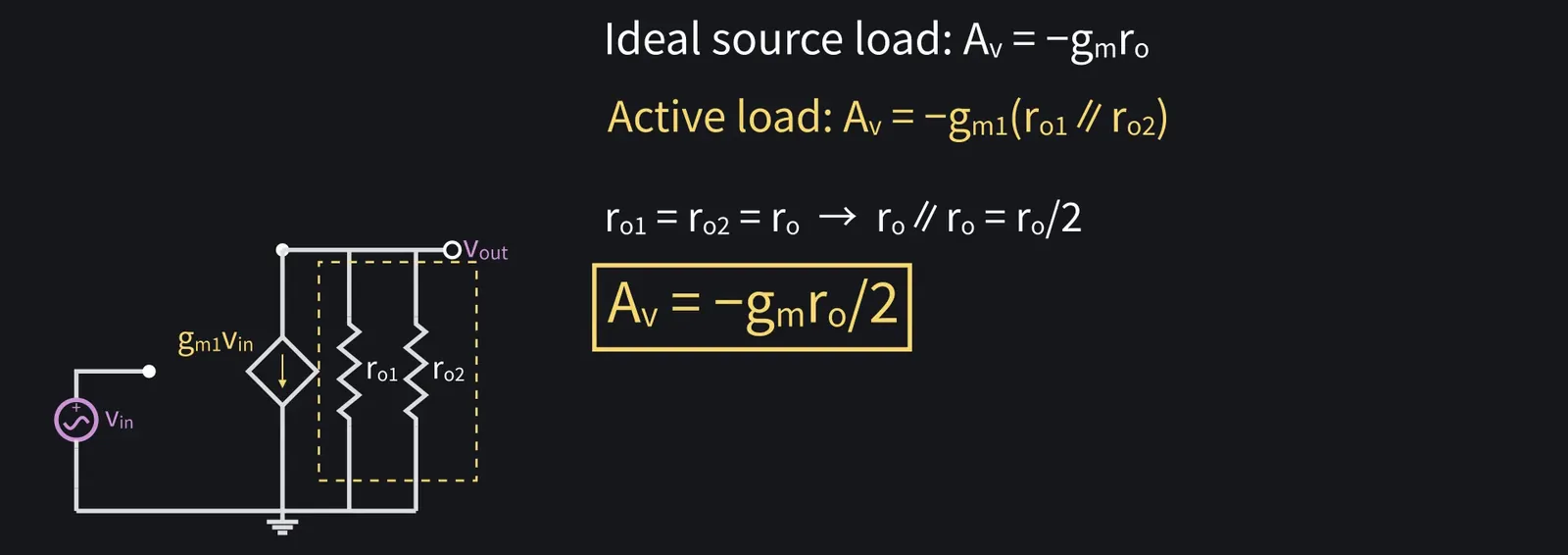
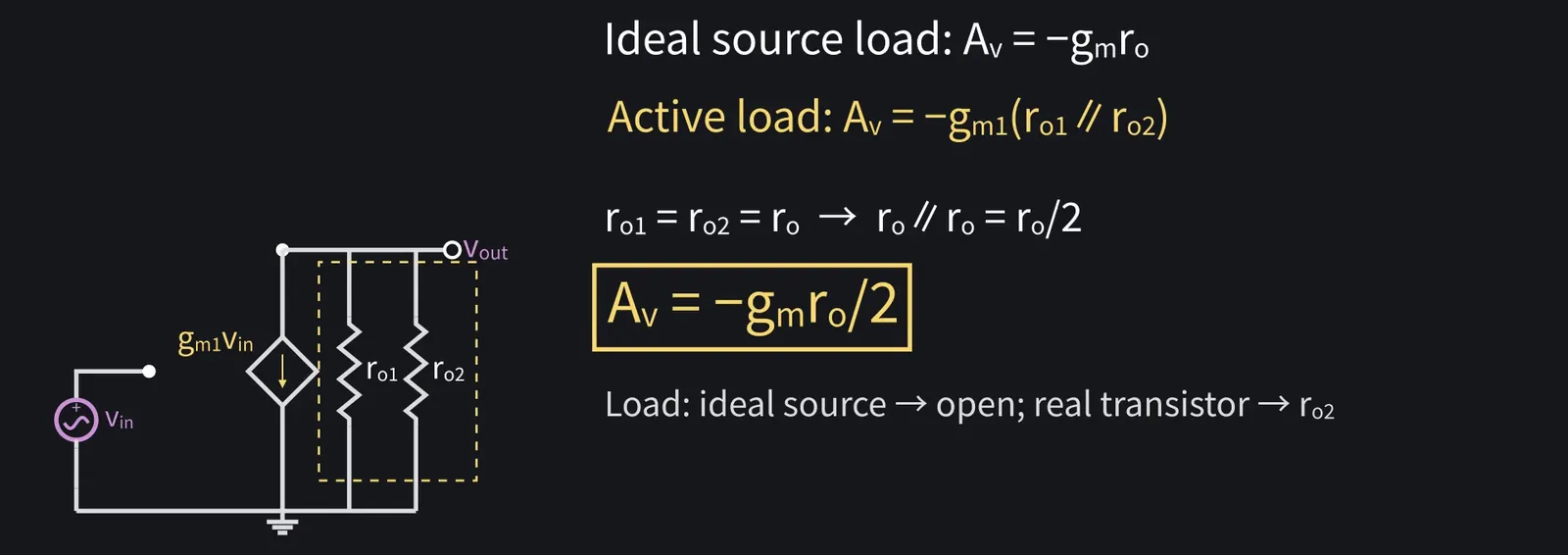
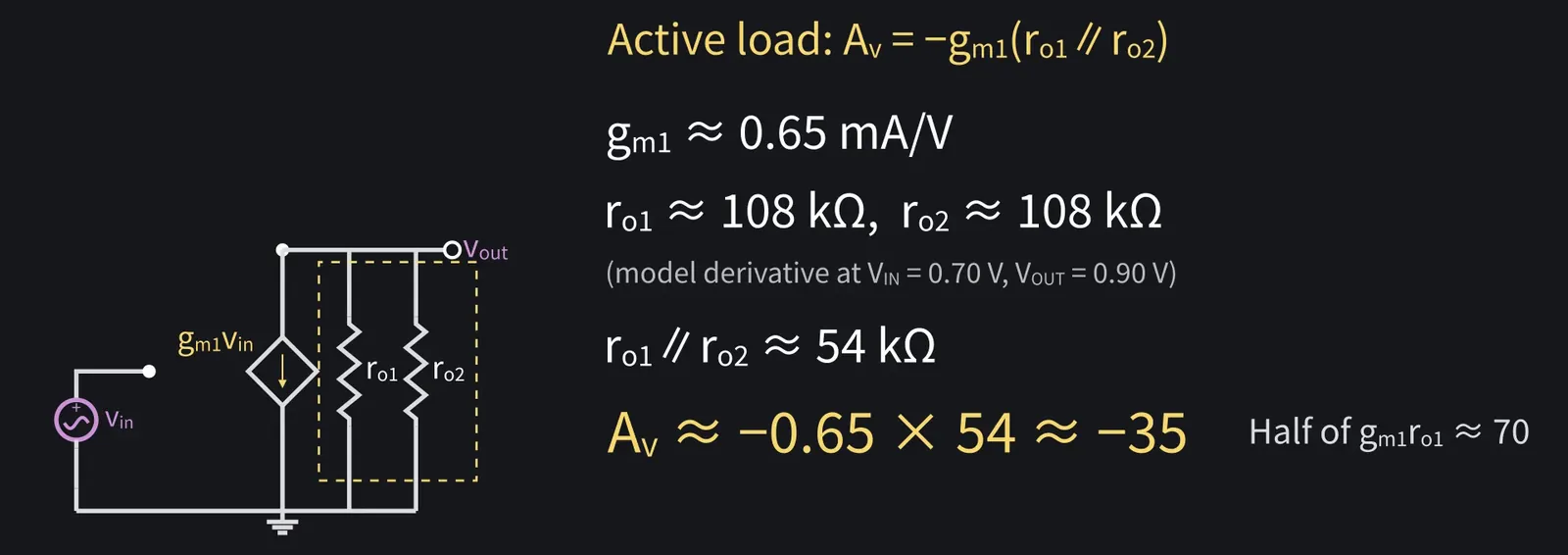
Zundamon
It matches the graph's slope! About nine times episode three's −4!
11Setting the operating point
12Summary
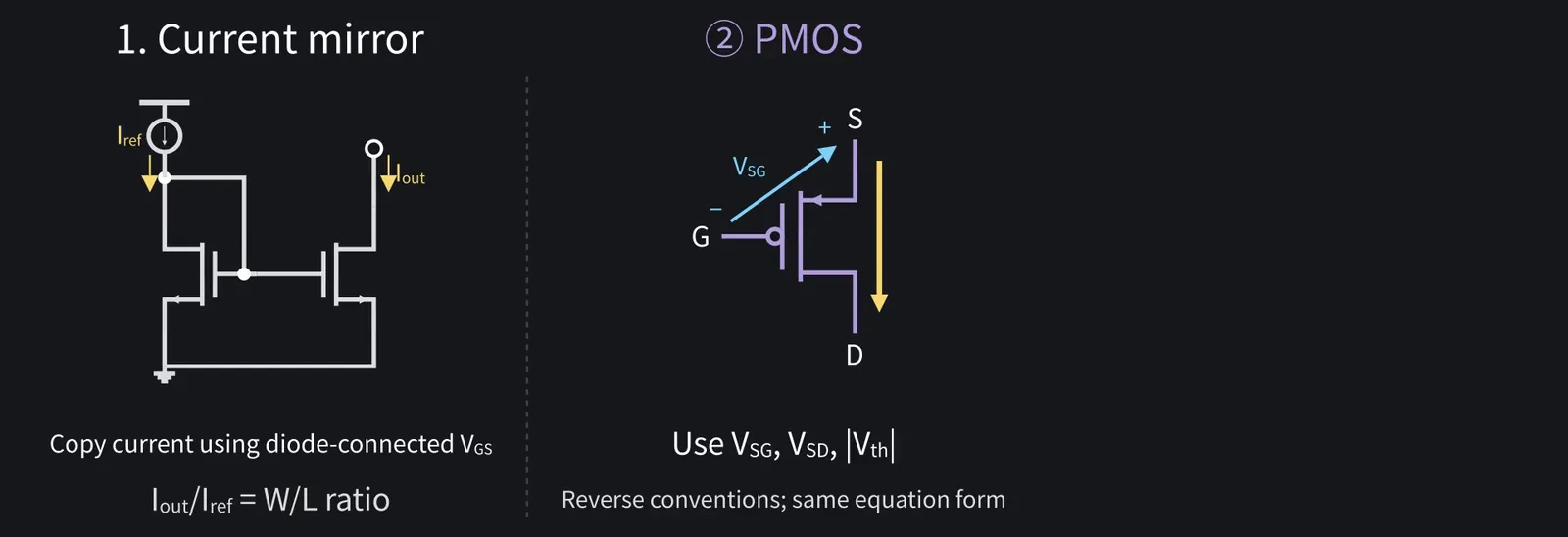
Zundamon
Active-load common-source gain is −gm1(ro1∥ro2), nanoda!
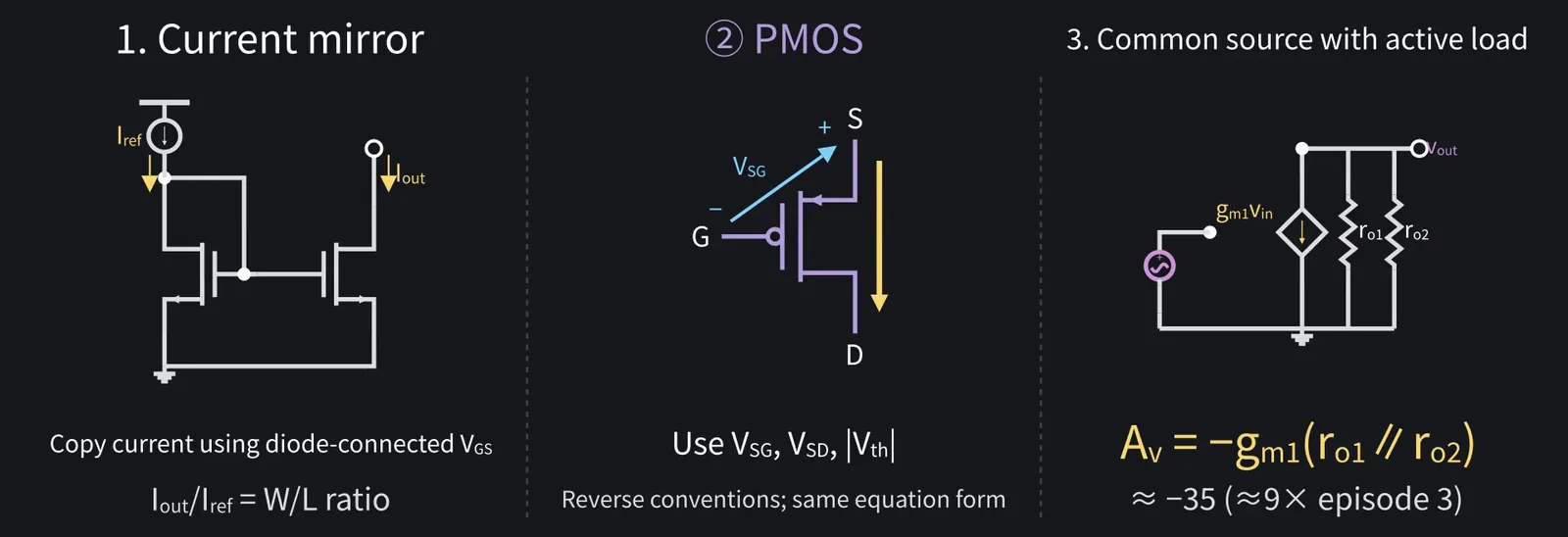
Zundamon
More gain with an active load! I'll include the saturation conditions in my report!
Zundamon
Thanks for reading, nanoda!