Keio CSG

Keio Computing and Sensing Group

Research in LiDAR sensing, hardware-efficient AI, and autonomous systems security.

Top-tier venues: CVPR · NDSS · VLSI · ISSCC
Topic
Venue

Sensor

Ghost-FWL: A Large-Scale Full-Waveform LiDAR Dataset for Ghost Detection and Removal teaser
CVPR 2026 Accepted

Ghost-FWL

K. Ikeda, R. Hara, R. Nagata, O. Sako, Z. Ding, T. Kado, I. Fujioka, T. Beppu, M. Isogawa, K. Yoshioka

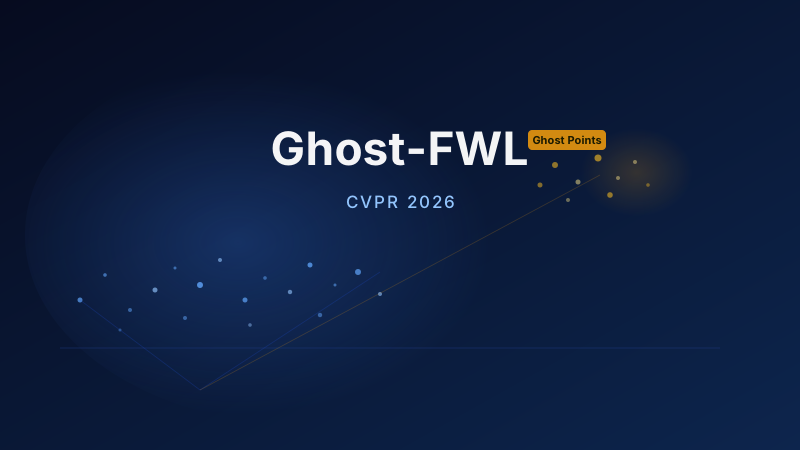
The first large-scale annotated mobile full-waveform LiDAR dataset for ghost artifact detection and removal, with 24,412 frames and 7.5 billion peak-level annotations — 100× more than prior work. Ghost points arise from multi-path reflections off glass and reflective surfaces, degrading 3D mapping and object detection in autonomous driving. Includes FWL-MAE pretraining and transformer-based detection baselines across Ghost, Object, Glass, and Noise categories.

自動運転LiDARで発生するガラス等の多重反射による幽霊点群(ゴースト)を検出・除去するための世界初の大規模モバイルFWLデータセット。24,412フレーム・75億ピークのアノテーションを収録し従来最大比100倍の規模を誇る。FWL-MAE事前学習とTransformerベースラインも提供し、自動運転の3Dマッピング・物体検出精度向上に貢献する。
LiDARSecurityDataset
Neural Reconstruction of LiDAR Point Clouds under Jamming Attacks via Full-Waveform Representation and Simultaneous Laser Sensing teaser
arXiv 2026 Preprint

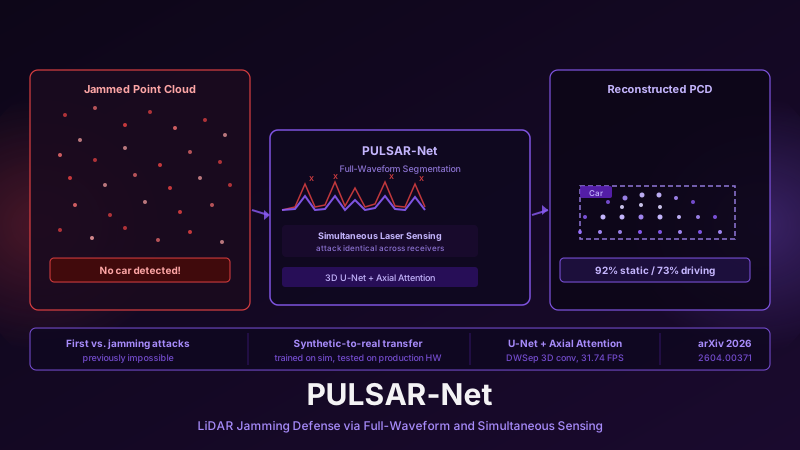
PULSAR-Net

R. Yoshida, T. Sato, W. Zhang, Y. Hayakawa, S. Nagai, T. Kado, T. Beppu, I. Fujioka, Y. Zhong, K. Yoshioka

PULSAR-Net, the first effective defense against LiDAR jamming attacks that blind sensors by flooding them with high-frequency laser pulses. By leveraging intermediate full-waveform data (normally discarded after peak detection) and simultaneous multi-laser sensing patterns, a 3D U-Net with axial spatial-temporal attention segments attack pulses from legitimate reflections directly in the waveform domain. Trained exclusively on synthetic data, PULSAR-Net achieves 92% and 73% point-cloud reconstruction rates for vehicles erased by attacks in real-world static and driving scenarios respectively.

高頻度レーザーパルスでLiDARを完全に盲目にするジャミング攻撃に対する世界初の有効な防御手法PULSAR-Netを提案。通常廃棄される中間フルウェーブフォームデータと同時マルチレーザーセンシングの空間時間相関を活用し、軸方向アテンション付きU-Netで攻撃パルスを正当反射から分離する。合成データのみで訓練しながら、実世界の静止・走行シナリオで92%・73%の点群再構成率を達成した。

LiDARSecurity
LiDAR Beacon: A Long-Range LiDAR Fiducial Marker for GPS-Free Autonomous Localization of Construction Machinery teaser
Sensors J. 2026 Published

LiDAR Beacon

O. Sako, K. Koide, K. Yoshioka

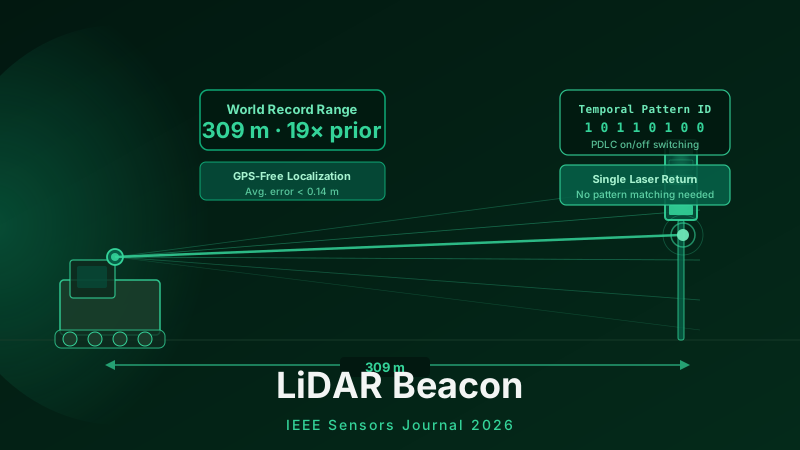
A LiDAR fiducial marker achieving 309m recognition distance — approximately 19× longer than prior work — by encoding IDs into temporal reflection patterns using a single laser return on a PDLC film. Integrated into an autonomous localization system enabling GPS-free, sub-meter accurate positioning of construction machinery in GPS-denied environments such as tunnels and open terrain.

LiDARの1点反射だけでIDを識別できる新方式の基準マーカー「LiDAR Beacon」を開発。PDLCフィルムの透明/不透明切替による時間的反射パターンを利用し、従来比約19倍となる世界最長309mの識別距離を実現した。GPS・トータルステーション不要の自律測位システムを構築し、砂地環境での長距離走行後も平均誤差0.14m以内の高精度を達成している。

LiDARLocalizationConstruction
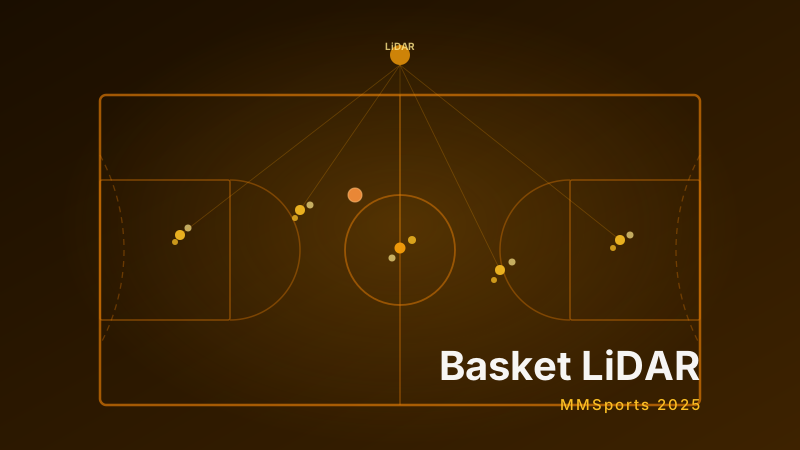
Basket LiDAR: 3D Basketball Player Tracking via LiDAR Sensing teaser
MMSports 2025 Published

Basket LiDAR

R. Hayashi, K. Torimi, R. Nagata, K. Ikeda, O. Sako, T. Nakamura, M. Tani, Y. Aoki, K. Yoshioka

3D basketball player tracking using LiDAR sensing for sports analytics. Enables precise real-time localization of players and ball during games, providing rich spatial data for performance analysis and coaching insights.

LiDARセンシングを用いたバスケットボール選手の3D追跡システム。試合中の選手とボールをリアルタイムで精密に3次元位置推定し、スポーツアナリティクスのための高密度空間データを取得する。コーチングや戦術分析への実用的活用を見据えたシステム構築を行った。

LiDARSports
On the Realism of LiDAR Spoofing Attacks against Autonomous Driving Vehicle at High Speed and Long Distance teaser
NDSS 2025 Published

LiDAR Spoofing (High Speed)

T. Sato, R. Suzuki, Y. Hayakawa, K. Ikeda, O. Sako, R. Nagata, Q. Chen, K. Yoshioka

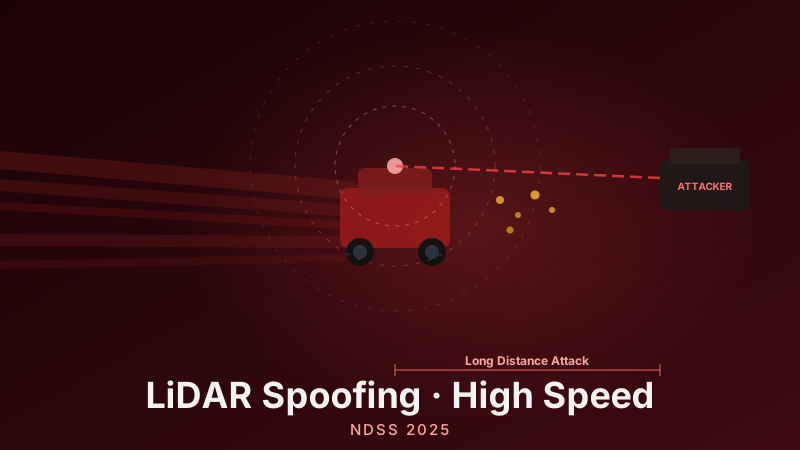
Examines the practical feasibility of LiDAR spoofing attacks on autonomous driving vehicles at realistic high speeds and long distances. Reveals that spoofing remains effective under conditions previously assumed to be safe, challenging existing security assumptions.

高速走行・長距離条件下での自動運転車両に対するLiDARスプーフィング攻撃の現実的な有効性を検証した研究。これまで安全と想定されていた条件下でも攻撃が成立することを明らかにし、既存のセキュリティ前提を覆す実験的証拠を提示する。

LiDARSecurity
SLAMSpoof: Practical LiDAR Spoofing Attacks on Localization Systems Guided by Scan Matching Vulnerability Analysis teaser
ICRA 2025 Published

SLAMSpoof

R. Nagata, K. Koide, Y. Hayakawa, R. Suzuki, K. Ikeda, O. Sako, Q. Chen, T. Sato, K. Yoshioka

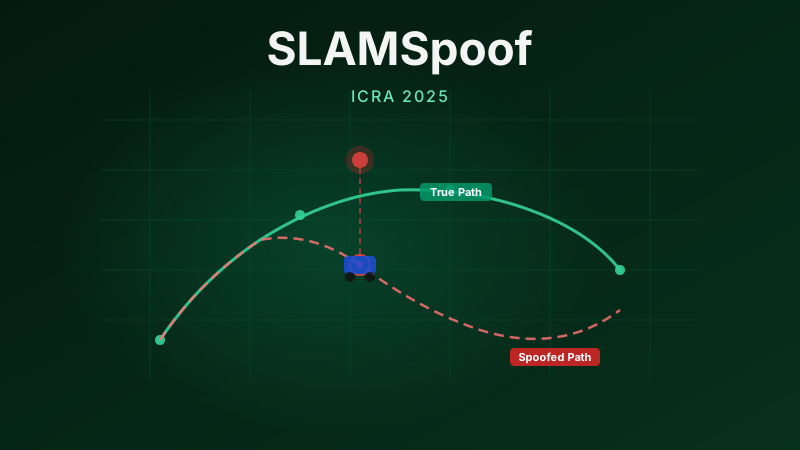
Practical LiDAR spoofing attacks targeting SLAM-based localization systems, guided by scan matching vulnerability analysis. Demonstrates that adversaries can manipulate vehicle localization by injecting carefully crafted ghost points into LiDAR scans.

スキャンマッチングの脆弱性解析に基づく、SLAM型自己位置推定システムへの実践的LiDARスプーフィング攻撃を提案。慎重に設計した偽造点群の注入により、車両の自己位置認識を攻撃者の意図通りに操作できることを実証した。自動運転システムの安全設計に重要な知見を与える。

LiDARSecurity
Optical LiDAR Communication: Repurposing Existing LiDAR Sensors for Infrastructure-to-Vehicle Communication teaser
RA-L 2025 Published

Optical LiDAR Comm

K. Ikeda, Y. Hayakawa, R. Suzuki, S. Nagai, O. Sako, R. Nagata, R. Yoshida, K. Yoshioka

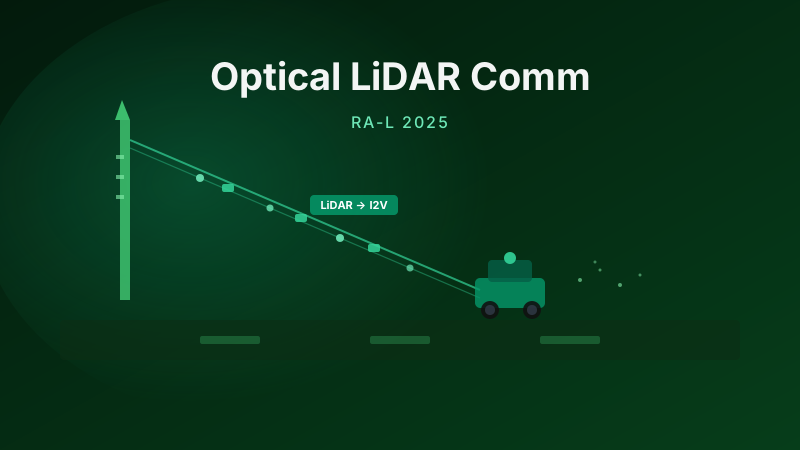
Enables infrastructure-to-vehicle messaging by repurposing existing LiDAR sensors for optical communication, eliminating the need for dedicated communication hardware. Demonstrates practical V2I data transfer using commodity automotive LiDAR units.

既存の車載LiDARセンサを光通信チャネルとして転用し、インフラ・車両間通信(I2V)を実現する手法を提案。専用通信ハードウェアを不要とし、市販LiDARユニットのみで実用的なデータ転送を実証した。スマートインフラ連携の低コスト実装に向けた新たなアプローチを示す。

LiDARCommunication
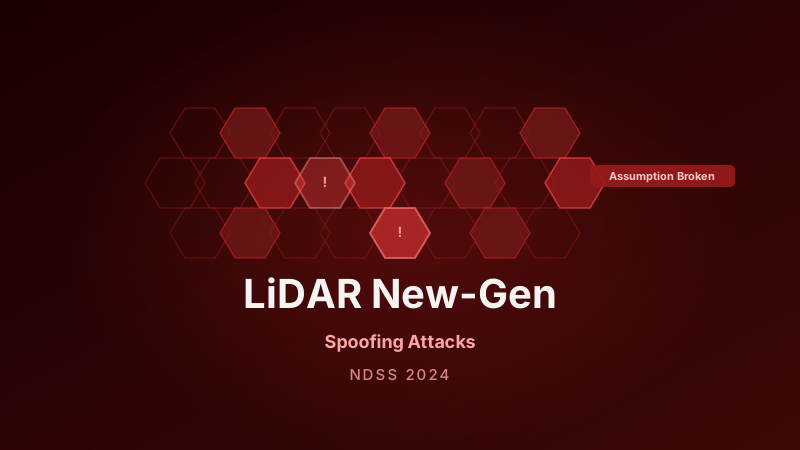
LiDAR Spoofing Meets the New-Gen: Capability Improvements, Broken Assumptions, and New Attack Strategies teaser
NDSS 2024 Published

LiDAR New-Gen Spoofing

T. Sato, Y. Hayakawa, R. Suzuki, Y. Shiiki, K. Yoshioka, Q. Chen

Reveals that next-generation LiDAR sensors designed for better range and resolution inadvertently open new spoofing attack surfaces. Demonstrates improved attack capabilities that invalidate prior safety assumptions and introduces novel strategies that bypass state-of-the-art countermeasures, exposing critical security implications for the evolving autonomous vehicle ecosystem.

次世代LiDARセンサに対するスプーフィング攻撃の能力向上と新たな攻撃戦略を明らかにした研究。従来の安全仮定が成立しなくなることを示し、既存の対策を無効化する手法を複数提案している。次世代センサのセキュリティ設計指針を与える重要な知見を含む。

LiDARSecurity

Circuit

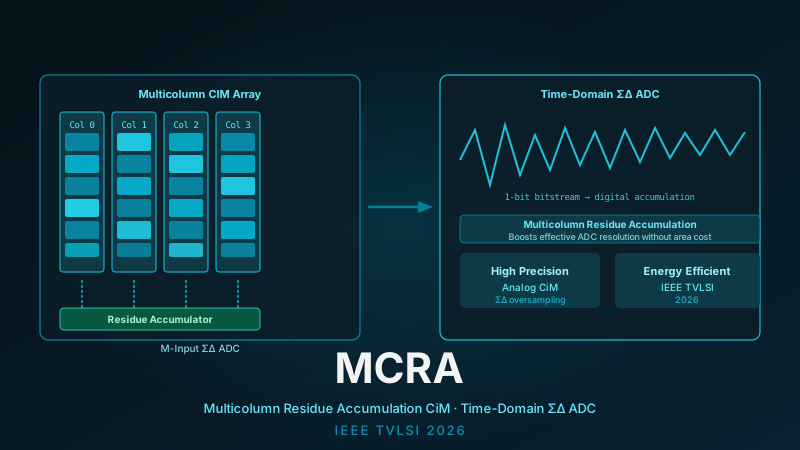
MCRA: Multicolumn Residue Accumulation Analog Compute-in-Memory Architecture With Time-Domain M-Input ΣΔ ADC teaser
TVLSI 2026 Published

MCRA

X. Li, W. Zhang, S. Ando, Z. Wang, J. Lin, K. Yoshioka

A multicolumn residue accumulation analog compute-in-memory architecture using a time-domain M-input ΣΔ ADC to achieve high-precision analog computation. Residues from multiple columns are accumulated sequentially to boost ADC effective resolution without proportional area cost, enabling energy-efficient on-chip inference for edge AI.

時間領域M入力ΣΔ ADCを用いたマルチカラム残差累積型アナログCIMアーキテクチャ。複数列の残差を逐次累積することでADC精度を効率的に向上させ、高精度なアナログ計算とエネルギー効率の両立を実現。エッジAIデバイス向けに最適化された次世代CIM設計手法を提案する。

CIMHardware
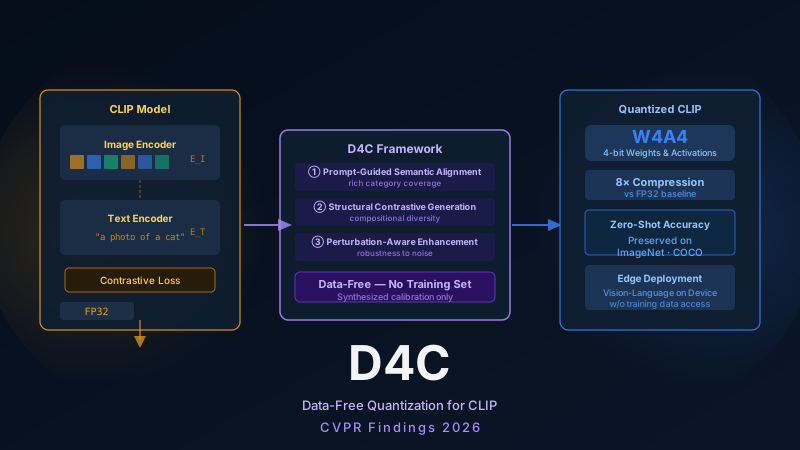
D4C: Data-Free Quantization for Contrastive Language-Image Pre-training Models teaser
CVPR Findings 2026 Accepted

D4C

W. Zhang, Y. Zhong, Z. Ding, X. Li, K. Yoshioka

Addresses data-free quantization of CLIP vision-language models by tackling the core challenge of insufficient semantic diversity in synthesized calibration samples. D4C combines prompt-guided semantic alignment, structural contrastive generation for compositional diversity, and perturbation-aware enhancement — enabling effective W4A4 CLIP compression without original training data.

元データを使わずにCLIP(視覚・言語基盤モデル)を量子化するD4Cフレームワーク。合成サンプルの意味多様性不足という課題に対し、プロンプト誘導型セマンティックアライメント・構造的コントラスト生成・摂動ロバスト化の3要素で解決する。W4A4でのCLIP圧縮をはじめてデータなしで実現した。

HardwareEdge AITransformer
BitROM: Weight Reload-Free CiROM Architecture Towards Billion-Parameter 1.58-bit LLM Inference teaser
ASP-DAC 2026 Published

BitROM

W. Zhang, X. Li, S. Ando, K. Yoshioka

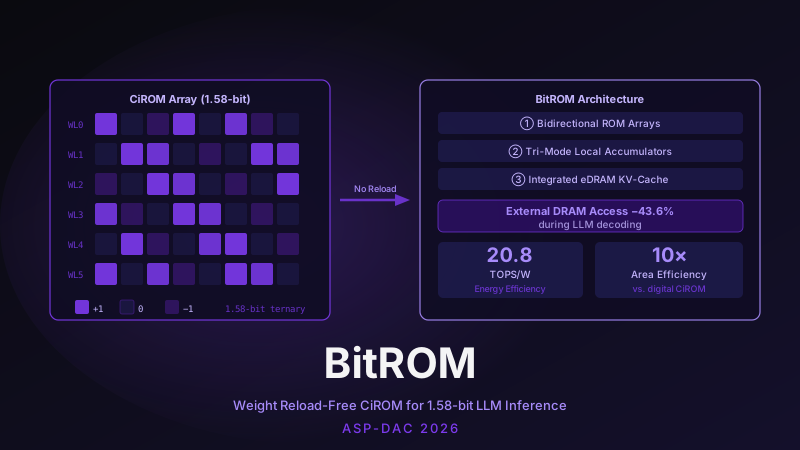
A weight reload-free Compute-in-Read-Only-Memory (CiROM) architecture for billion-parameter LLM inference using 1.58-bit (ternary) weights. Integrates bidirectional ROM arrays, tri-mode local accumulators, and eDRAM KV-cache management, reducing external DRAM access by 43.6% during decoding. Achieves 20.8 TOPS/W and 10× area efficiency improvement over prior digital CiROM designs.

1.58ビット(三値)重みを用いた10億パラメータ規模LLM推論をウェイトリロードなしで実現するCiROMアーキテクチャ。双方向ROMアレイ・三値局所アキュムレータ・KVキャッシュ用eDRAMを統合し、外部DRAMアクセスを43.6%削減。20.8 TOPS/Wの高効率と先行デジタルCiROM比10倍の面積効率を達成する。

CIMHardwareEdge AI
ASiM: Modeling and Analyzing Inference Accuracy of SRAM-Based Analog CiM Circuits teaser
TVLSI 2025 Published

ASiM

W. Zhang, S. Ando, Y.C. Chen, K. Yoshioka

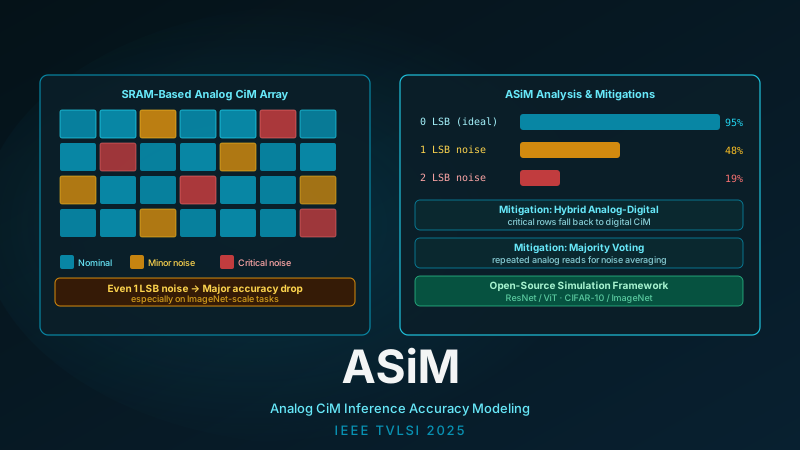
A simulation framework for modeling and analyzing how analog noise impacts inference accuracy in SRAM-based compute-in-memory (CiM) circuits. Reveals that even 1 LSB of analog noise can significantly impair performance on complex tasks like ImageNet, and evaluates mitigation strategies — hybrid analog-digital execution and majority voting — to recover accuracy while preserving CiM energy efficiency benefits.

SRAMベースのアナログCiM回路における推論精度影響をモデル化・解析するシミュレーションフレームワーク。アナログノイズが1LSBでもImageNet等の複雑タスクで精度を大幅低下させることを示し、ハイブリッドアナログ-デジタル実行や多数決投票による軽減策を評価。省エネ効果を保ちながら精度を確保する設計指針を提供する。

CIMHardware
AHCPTQ: Accurate and Hardware-Compatible Post-Training Quantization for Segment Anything Model teaser
ICCV 2025 Published

AHCPTQ

W. Zhang, Y. Zhong, S. Ando, K. Yoshioka

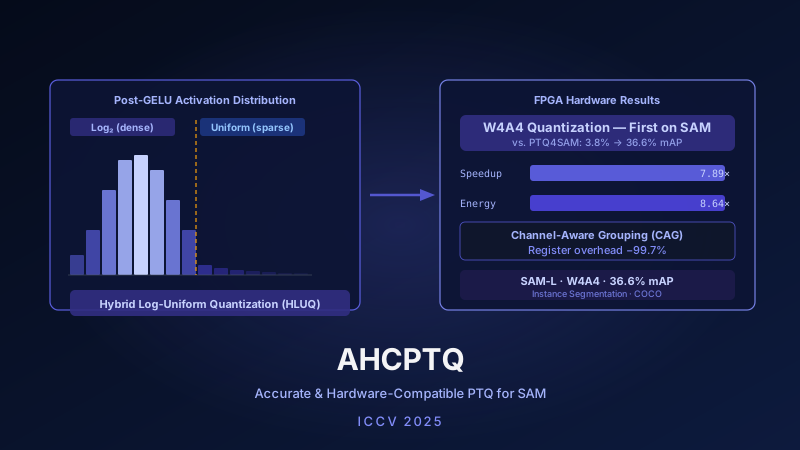
Enables the first functional 4-bit post-training quantization of the Segment Anything Model (SAM) via two hardware co-designed innovations: Hybrid Log-Uniform Quantization (HLUQ) for heavy-tailed post-GELU activations, and Channel-Aware Grouping (CAG) cutting on-chip register overhead by 99.7%. FPGA deployment achieves 7.89× speedup and 8.64× energy efficiency over float at W4A4 with 36.6% mAP.

Segment Anything Model(SAM)の世界初4ビット量子化PTQを実現するハードウェア協調設計手法。post-GELUの重尾分布に対応するHybrid Log-Uniform量子化と、チャネルグルーピングによるオンチップレジスタ削減(−99.7%)を組み合わせる。FPGA上でW4A4動作時に浮動小数点比7.89倍の高速化・8.64倍の省エネを達成し、36.6% mAPを維持。

HardwareEdge AITransformer
A 4541 TOPS/W Saliency-Aware Analog Computing In-Memory Macro with Charge-Domain Saliency Detector teaser
ESSERC 2025 Published

Saliency-Aware CIM

S. Ando, S. Miyagi, W. Zhang, Y.-C. Chen, K. Yoshioka

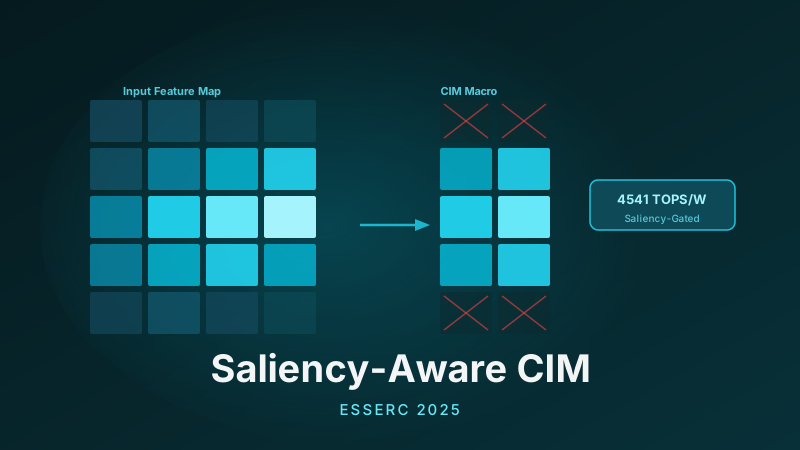
A 4541 TOPS/W analog compute-in-memory macro featuring a charge-domain saliency detector that dynamically skips computation on non-salient regions. Achieves state-of-the-art energy efficiency for vision inference at the edge.

顕著性検出器を内蔵した4541 TOPS/Wのアナログコンピュートインメモリマクロ。電荷ドメインで非顕著領域の演算を動的にスキップし、視覚推論における圧倒的なエネルギー効率を実現する。エッジAIデバイスの次世代設計に向けた画期的なアーキテクチャを提案する。

CIMHardwareEdge AI
A 818-4094 TOPS/W Capacitor-Reconfigured CIM Macro for Unified Acceleration of CNNs and Transformers teaser
ISSCC 2024 Published

CR-CIM

K. Yoshioka

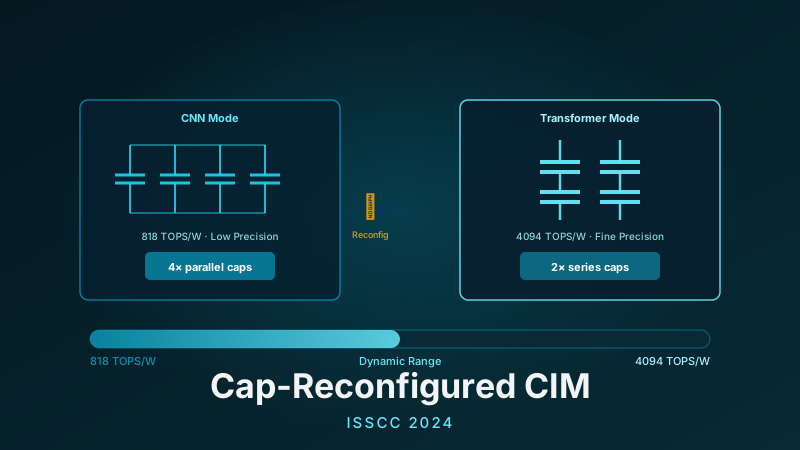
A capacitor-reconfigured compute-in-memory macro achieving 818–4094 TOPS/W for unified acceleration of both CNNs and Transformers. Dynamic capacitor reconfiguration adapts analog compute precision to each layer's bit-width requirements, enabling the first analog CIM to handle Transformer inference while delivering 10× energy efficiency over prior work in CNN mode at 4094 TOPS/W.

CNNとTransformerの両モデルを統一的に加速する818〜4094 TOPS/Wのキャパシタ再構成型コンピュートインメモリマクロ。層ごとのビット幅要件に合わせてキャパシタ構成を動的に切り替えることで、幅広いモデルアーキテクチャに対応したオンチップ推論を実現する。CNNモードでは従来比10倍のエネルギー効率4094 TOPS/Wを達成。

CIMHardwareEdge AI
OSA-HCIM: On-The-Fly Saliency-Aware Hybrid SRAM CIM with Dynamic Precision Configuration teaser
ASP-DAC 2024 Published

OSA-HCIM

Y.C. Chen, S. Ando, D. Fujiki, S. Takamaeda-Yamazaki, K. Yoshioka

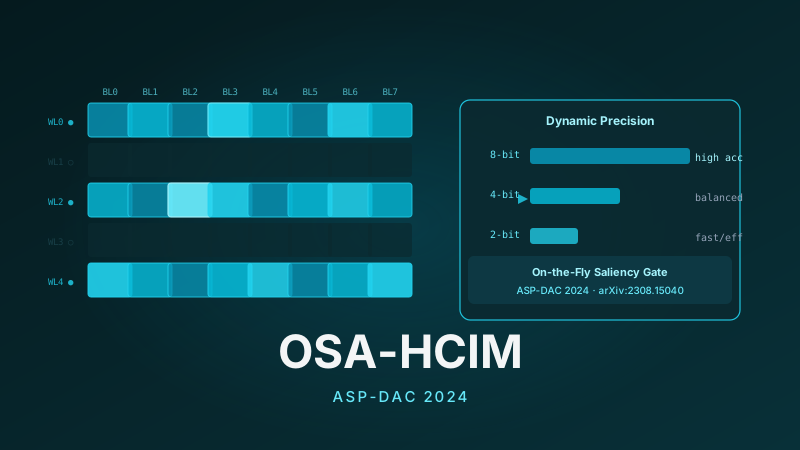
A hybrid SRAM compute-in-memory macro with on-the-fly saliency detection and dynamic precision configuration. Reduces computation by skipping non-salient activations while maintaining inference accuracy through adaptive bit-width selection.

オンザフライ顕著性検出と動的精度設定を備えたハイブリッドSRAMコンピュートインメモリマクロ。非顕著な活性化をスキップしつつ適応的なビット幅選択で精度を維持する。エッジデバイスでの高効率・高精度推論の両立を実現する新しい設計手法を提案する。

CIMHardware
PACiM: A Sparsity-Centric Hybrid Compute-in-Memory Architecture via Probabilistic Approximation teaser
ICCAD 2024 Published

PACiM

W. Zhang, S. Ando, Y.C. Chen, S. Miyagi, S. Takamaeda-Yamazaki, K. Yoshioka

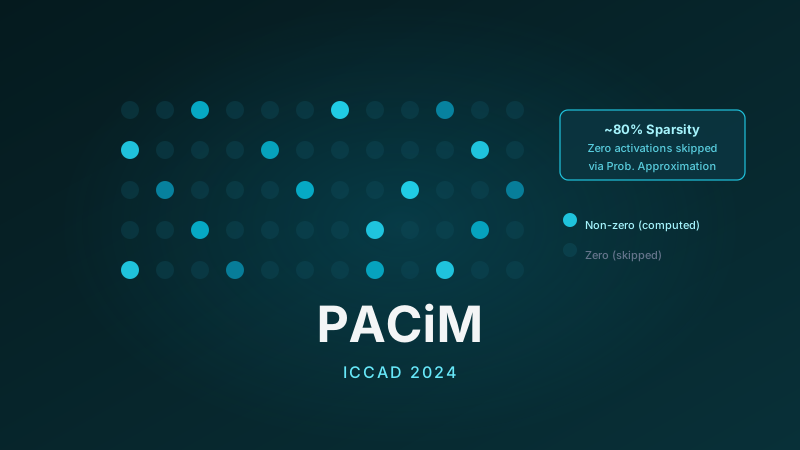
A sparsity-centric hybrid compute-in-memory architecture using probabilistic approximation (PAC) to convert vector operations into scalar computations, halving memory transfers by eliminating LSB transmission. Achieves 14.63 TOPS/W in 65 nm CMOS with 4× lower approximation error than prior methods, maintaining ResNet-18 ImageNet accuracy.

確率的近似(PAC)によりベクトル演算をスカラー演算に変換し、スパース性を最大限活用するハイブリッドCIMアーキテクチャ。最小有効ビットの省略でメモリ転送量を半減し、従来比4倍の近似誤差低減を実現。65nm CMOSで14.63 TOPS/Wを達成し、ResNet-18でImageNet精度を維持する。

CIMHardware